



How does an IE3 electric motor compare to other motor efficiency classes?
When evaluating motor efficiency standards, a high efficiency motor IE3 delivers notable energy savings compared to older classifications like IE1 and IE2, while offering a balanced cost-performance ratio against newer IE4 motors. IE3 motors typically achieve efficiency levels ranging from 90% to 96% depending on power ratings, meeting the premium efficiency benchmarks established by IEC 60034-30-1. This makes them particularly attractive for industrial operations seeking to reduce electricity costs without the premium price tag of super-premium efficiency classes. For procurement managers navigating today's energy landscape, understanding these distinctions directly impacts both operational budgets and sustainability compliance.
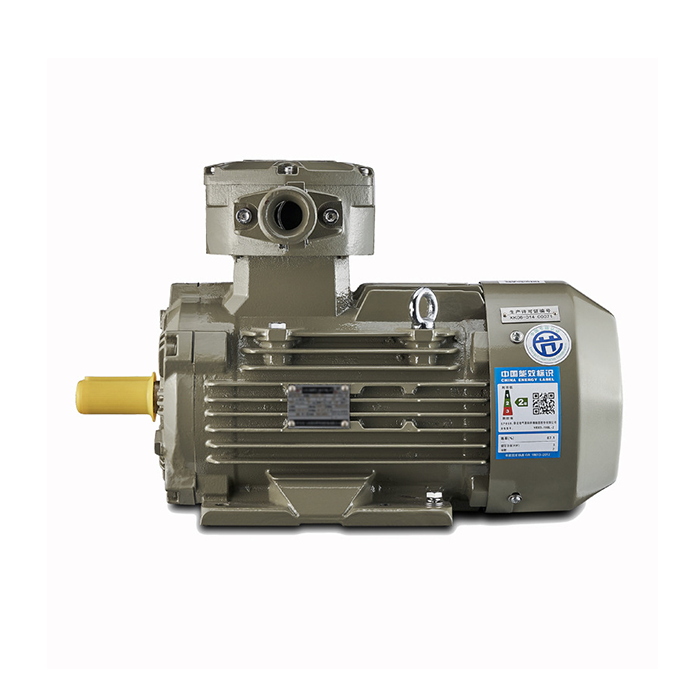
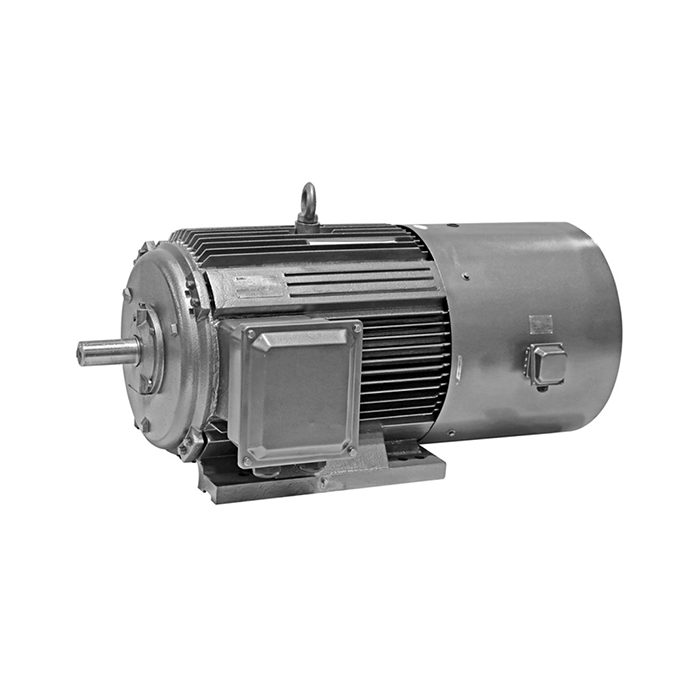
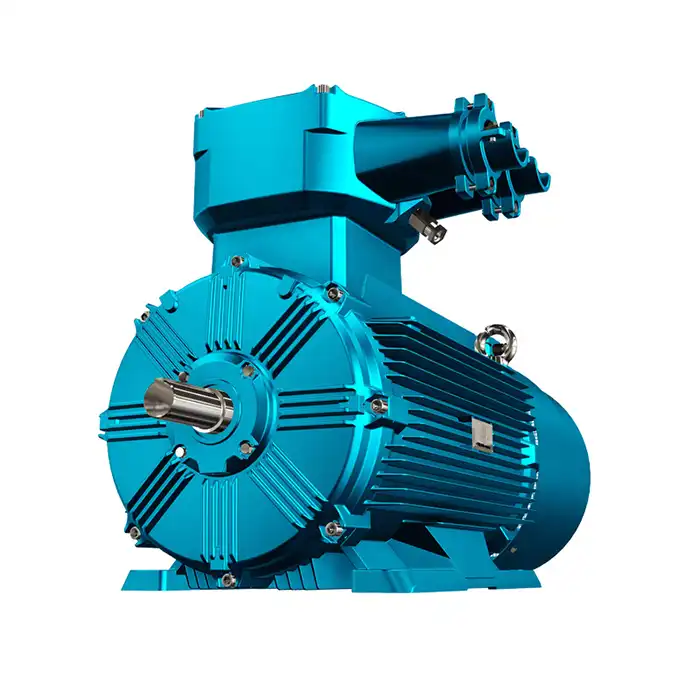
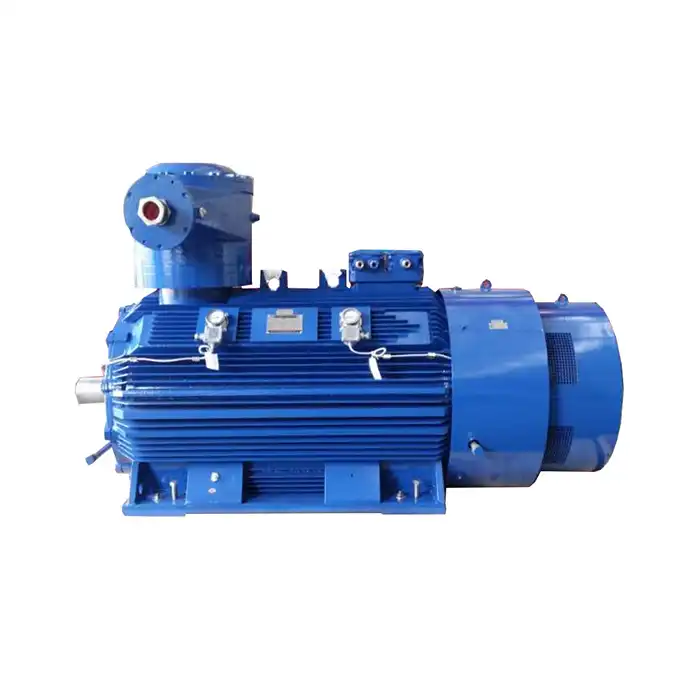
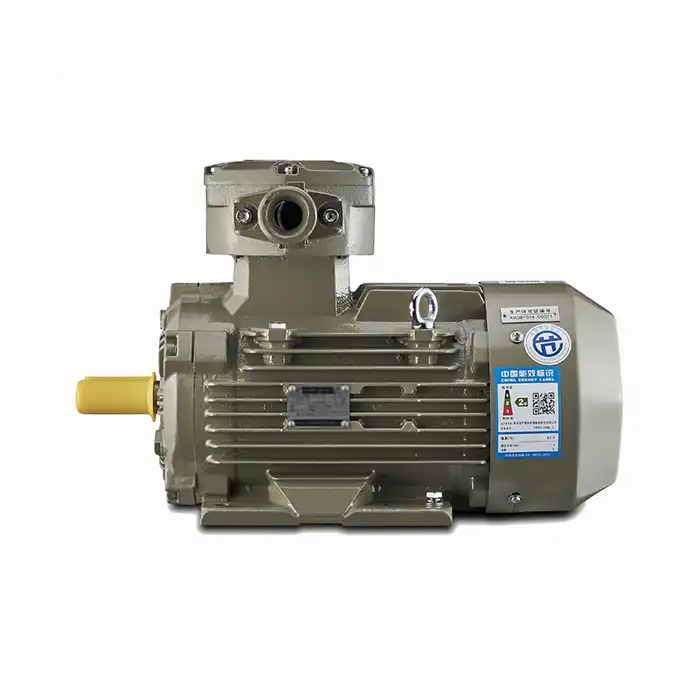
Series:YBX3
Voltage range:380V,660V,415V,380/660V,660/1140V
Power range:0.55-630 kW
Application:places where explosive gas mixtures exist in petroleum, chemical, mining, metallurgy, electric power, machinery and other industries.
Advantage: fully enclosed, self-fan cooling, squirrel cage type, high efficiency.
Explosion-proof mark: Ex d I Mb, Ex d IIB T4 Gb, Ex d IIC T4 Gb
Others: SKF, NSK, FAG bearings can be replaced according to customer requirements.
Understanding IE3 Electric Motors and Efficiency Classes
The International Electrotechnical Commission set up a widely consistent rating system to make it easier for industrial buyers to compare the performance of motors in a fair way. IE1 motors have a normal level of power and are often found in older systems. IE2 motors built on this base with designs that were more efficient. The high efficiency motor IE3 classification is the highest level of efficiency. It uses modern materials and electromagnetic designs that are designed to lose as little energy as possible through heat and friction.
What Defines Premium Efficiency Standards?
IE3 units and other high-efficiency motors work so well because of a number of technology improvements. Higher-grade electrical steel with lower core losses, precision-engineered rotor holes that improve magnetic flux distribution, and improved winding configurations that lower resistance losses are all things that manufacturers use. Together, these parts of the system turn electricity input into mechanical output with as little waste as possible. The IEC 60034-30-1 standard sets clear efficiency goals for motors in a range of power levels, making standards that are used all over the world.
The Global Efficiency Classification Spectrum
After IE3, the performance ladder keeps going up. In terms of speed, IE4 motors are about 2 to 3 percent better than similar IE3 motors, which means they are very efficient. As IE5 classes come out, they push the limits even further, but they are still hard to get and cost a lot more. Knowing where IE3 fits in this range helps buyers balance their need for efficiency with their price. Most industry uses find the best level of performance at IE3, where gains in efficiency are enough to cover the costs of investment without needing the specialty parts that make IE4 more expensive.
Regulatory Drivers Behind Efficiency Standards
Governments worldwide mandate minimum efficiency levels for industrial motors. US Department of Energy, EU regulations, and Asian systems have progressively tightened requirements. IE3 is now the minimum efficiency for new installations in many power ranges. Electric motors consume approximately 40% of global electricity, making efficiency improvement critical for reducing carbon emissions and easing grid strain for high efficiency motor IE3 adoption.
IE3 vs Other Motor Efficiency Classes: Detailed Comparison
When you compare efficiency classes, you can see big changes in how they work that have an impact on your bottom line. Compared to IE2 or IE1 motors that do the same job, a high efficiency motor IE3 uses significantly less electricity, which results in lower monthly energy bills.
Efficiency Gains and Energy Consumption
At $0.10 per kWh, a 55kW IE1 motor running 6,000 hours annually costs about $34,000. IE2 reduces to $32,500 saving $1,500. High efficiency motor IE3 further reduces to $31,200 saving another $1,300 annually. These savings accumulate significantly over a 15-year motor life. A 150kW motor continuously running in a water treatment plant saves at least $50,000 upgrading from IE2 to high efficiency motor IE3, demonstrating substantial long-term financial benefits.
Design Innovations and Technical Distinctions
IE3 motors feature improved ventilation systems maintaining optimal temperatures, preventing insulation and bearing overheating. High efficiency motor IE3 designs use copper rotor bars instead of aluminum, reducing resistance and improving power factor. Thinner stator laminations with tighter precision minimize eddy current losses. These technological improvements support the higher performance standards defining high efficiency motor IE3 classification, delivering measurable efficiency gains over previous generations through better materials and optimized thermal management.
Cost Considerations and Lifecycle Economics
Initial price difference remains the primary purchasing barrier. High efficiency motor IE3 may cost 15–25% more than an equivalent IE2 unit. However, lifecycle economics show payback periods typically ranging 18–36 months based on operating hours and local electricity rates from energy savings, reduced cooling requirements, and improved reliability. Continuously running motors recover high efficiency motor IE3 investment faster than intermittent-duty applications, making the upgrade economically attractive for most industrial operations.
When IE3 Offers Optimal Value?
The most useful level for most industry uses is the high efficiency motor IE3 rating. IE4 motors offer small improvements, but they usually come with higher prices that make return times too long. IE3 technology has grown up to the point where many companies make solid goods at reasonable prices. When it comes to supply chain access, IE3 motors are better because they have shorter wait times and more voltage and mounting options. Companies that use motors at more than 50% load for more than 4,000 hours a year find that IE3 motors give them better returns than leaving older IE1 or IE2 equipment in use.
Benefits and Applications of IE3 Motors in B2B Industrial Settings
Industrial buying teams are under more and more pressure to cut costs while still keeping their promises to be environmentally friendly. Premium economy motors meet both needs at the same time by lowering carbon emissions and energy use without affecting performance.
Operational Cost Reduction
Electricity typically constitutes 95% or more of motor total ownership cost. High efficiency motor IE3 directly attacks this cost component. Facilities upgrading dozens of motors across multiple production lines to IE3 efficiency can realize over $100,000 annual savings. These savings flow directly to operating margins, improving competitiveness without operational changes or production cuts. The cumulative effect of high efficiency motor IE3 across large motor fleets significantly impacts bottom-line financial performance for industrial operations.
Regulatory Compliance and Sustainability
High efficiency motor IE3 adoption helps organizations meet sustainability targets. Reduced energy consumption directly lowers Scope 2 greenhouse gas emissions, moving organizations closer to net-zero goals. Many jurisdictions now mandate high efficiency motor IE3 for new installations, making IE3 the compliance baseline rather than optional upgrade. Strategic efficiency investments improve ESG reporting metrics, increasingly important to stakeholders, investors, and customers evaluating supply chain partners for environmental responsibility.
Industry-Specific Applications
High efficiency motor IE3 units serve diverse industries through versatility. HVAC fans and blowers run continuously, making efficiency gains highly valuable. Food processing benefits from IP65-rated enclosures protecting internal components during washdown for high efficiency motor IE3. Water treatment plant pump motors operate 24/7, where small efficiency improvements generate substantial savings. Chemical production values robust construction and thermal management extending equipment life in aggressive environments for high efficiency motor IE3 applications requiring durability.
XCMOTOR YBX3 Series for Hazardous Environments
XCMOTOR YBX3 series exemplifies practical IE3 implementation for hazardous areas. Covering 0.55 kW to 630 kW, these explosion-proof high efficiency motor IE3 units serve petroleum, chemical, mining, metallurgy, and power generation facilities with explosive gas mixtures. Fully enclosed self-fan cooling design achieves IE3 performance while meeting Ex d I Mb, Ex d IIB T4 Gb, and Ex d IIC T4 Gb certifications. Voltage options include 380V, 660V, 415V, 380/660V, and 660/1140V. Premium SKF, NSK, or FAG bearings specified by application.
Real-World Performance Validation
A Midwest manufacturing plant replaced twenty old IE1 motors with high efficiency motor IE3 units. Annual energy consumption decreased by 180,000 kWh, saving approximately $18,000 annually at local utility rates. An industrial refrigeration company upgrading compressor motors to high efficiency motor IE3 saved 22% on energy costs compared to previous IE2 equipment, with reduced unexpected downtime from longer bearing life due to better thermal management. A water authority recovered IE3 motor investment in 26 months through energy savings and reduced maintenance.
How to Choose and Procure the Right IE3 Motor for Your Business?
To choose the right motor specs, you need to match the technical needs with the needs of the application. When this process is rushed, motors that are too big work inefficiently or units that are too small fail before they should.
Performance Criteria and Technical Specifications
Accurately determine power requirements avoiding oversizing for high efficiency motor IE3. Motors below 50% load lose efficiency and power factor, negating IE3 benefits. Verify voltage compatibility with facility power distribution. XCMOTOR offers high efficiency motor IE3 for 380V, 400V, 415V, 660V, and 1140V. Duty cycle matters—continuous operation justifies investment faster than intermittent service. IP55 suits indoor use; IP65 provides washdown protection. Insulation Class F or H ensures reliability in sustained high-temperature conditions for high efficiency motor IE3.
Certification Standards and Compliance
Verify high efficiency motor IE3 carries IEC 60034-30-1 certification confirming IE3 efficiency levels. CE mark indicates European safety and environmental compliance. CCC mark permits China sales. Explosion-proof approvals required for hazardous areas. XCMOTOR YBX3 line features Ex d ratings for mining, chemical, and oil industries. Documentation must include efficiency test results from accredited labs proving published specifications reflect actual performance rather than theoretical figures for high efficiency motor IE3 compliance verification.
Evaluating Manufacturer Credentials
Long-term high efficiency motor IE3 satisfaction depends on manufacturer reputation and support capability. Inspect production quality through facility tours. Reliable suppliers explain core assembly, vacuum pressure impregnation, rotor balancing, and quality control steps. Warranty terms demonstrate product durability confidence; full coverage against premature failure provides risk mitigation. Technical support access proves critical for installation troubleshooting. XCMOTOR offers weekend support aligning help availability with business schedules for high efficiency motor IE3 users needing responsive assistance.
Supply Chain Considerations
Lead times and delivery reliability affect high efficiency motor IE3 project scheduling and inventory planning. Suppliers stocking popular configurations enable faster deployment than build-to-order models requiring longer manufacturing. Volume discounts become significant when replacing multiple motors simultaneously, improving project economics for high efficiency motor IE3 fleet upgrades. Shipping logistics matter particularly for large frame motors. XCMOTOR provides free delivery on all products, simplifying procurement and eliminating freight cost surprises for high efficiency motor IE3 purchases.
Procurement Best Practices
Obtain detailed written quotations specifying all technical parameters, warranty provisions, and delivery schedules for high efficiency motor IE3. Request efficiency test data and certification evidence before finalizing purchase orders. Look beyond initial price to consider total cost of ownership. A slightly more expensive high efficiency motor IE3 with better performance and longer life often proves more economical. Establish clear commissioning support expectations for specialized applications like VFD integration or hazardous area installation. Negotiate payment terms aligning with project milestones.
Overcoming Challenges and Maximizing the Value of IE3 Motor Investments
Upgrading to high-efficiency motors can sometimes run into problems that lower the predicted results. Being aware of these problems ahead of time lets you make effective plans to deal with them.
Common Implementation Pitfalls
Oversizing high efficiency motor IE3 wastes potential when safety factors stack unnecessarily. A motor at 40% load delivers far below rated efficiency, possibly worse than correctly sized IE2. Installing IE3 without addressing worn belts, misaligned couplings, or restricted airflow wastes gains. Underestimating foundation modifications for physically different IE3 units causes project delays.
Professional Installation and Commissioning
Installation quality directly affects high efficiency motor IE3 service life. Shaft alignment must stay within 0.05 mm tolerance preventing bearing damage. Electrical connections require proper torque and phase verification. Verify motor ratings against ambient temperature; blocked cooling paths cause failure. Commissioning should include vibration analysis, thermal imaging, and current measurement establishing baseline data for future monitoring.
Maintenance Strategies for Extended Service Life
High efficiency motor IE3 units need less maintenance but skipping care accelerates wear. Follow bearing lubrication schedules using manufacturer-recommended greases; over-greasing causes churning losses, under-greasing accelerates failure. Thermal monitoring detects developing problems early. Vibration analysis identifies imbalance or bearing wear when correction is inexpensive. Keeping motors clean prevents insulation degradation. XCMOTOR motors feature premium SKF, NSK, or FAG bearings.
Smart Technology Integration
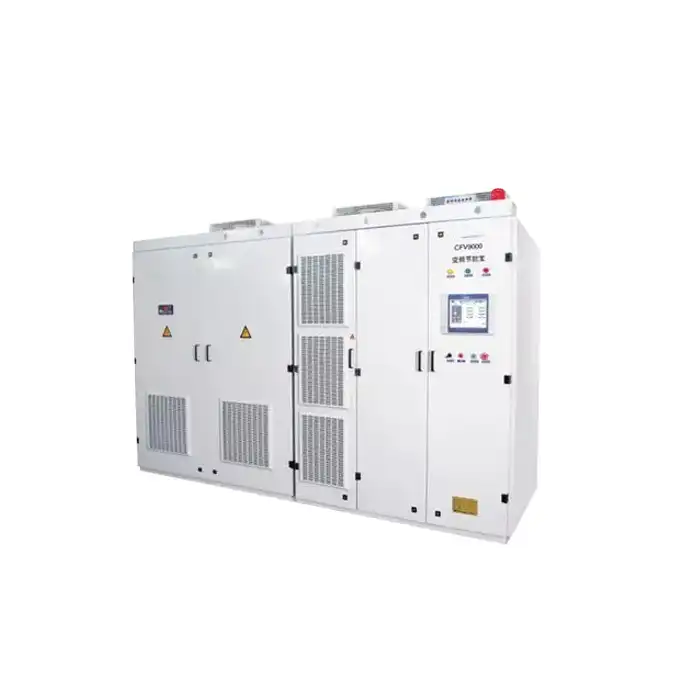
Modern condition monitoring enhances high efficiency motor IE3 lifecycle management. IoT-enabled sensors continuously record vibration, temperature, and power consumption feeding predictive algorithms. These systems alert teams to developing problems days before failure, enabling scheduled corrections rather than emergency repairs. Pairing variable frequency drives with high efficiency motor IE3 optimizes energy under varying loads, particularly valuable in HVAC systems with seasonal demand fluctuations.
Future-Proofing Efficiency Investments
IE4 and emerging IE5 standards push efficiency boundaries, raising questions about IE3 longevity. Current market trends suggest IE3 will remain viable for many years for high efficiency motor IE3. IE4 motors have longer payback periods for many applications and higher initial cost. IE3 motors enjoy broader availability and lower prices due to more mature supply chains. IE3 remains regulatory baseline in most jurisdictions with higher classifications optional. Companies can confidently invest in high efficiency motor IE3 technology knowing it fits current regulations and delivers solid returns without overpaying for unproven technology.
Conclusion
When you compare motor efficiency classes, you can see that high efficiency motor IE3 units are a good compromise between speed, cost, and supply. When compared to IE1 and IE2 motors, they save a lot of energy. In continuous-duty uses, they usually pay for themselves in less than three years. IE4 motors offer marginal gains but extended payback. Mature IE3 technology delivers reliable, cost-effective efficiency for HVAC, water treatment, and process industries. Proper IE3 selection, installation, and maintenance yields strong returns while meeting evolving environmental standards.
FAQ
1. What energy cost savings can I expect upgrading from IE2 to IE3 motors?
Savings depend on the size of the motor, how often it is used, and the cost of energy in your area. When you switch a 75 kW motor that runs 6,000 hours a year from IE2 to IE3 economy, you usually save $1,500 to $2,500 a year. Savings go up proportionally with bigger motors and continued running. For correct projections, figure out your personal case by using real load profiles and energy rates.
2. Are IE3 motors compatible with variable frequency drives?
Yes, when matched correctly, most high efficiency motor IE3 units work well with VFDs. Make sure that the motor's insulation class (usually F or H) can handle voltage spikes from the VFD. In some situations, motors that are made to work with inverters and have stronger shielding systems are more useful. Before making a final choice, look at the manufacturer's specs and VFD compatibility documents.
3. Do certification standards vary between regions?
Even though IEC 60034-30-1 offers worldwide harmonization, there are differences between regions. The North American NEMA Premium efficiency level is similar to IE3 in general, but the particular limits are a little different. The Chinese GB18613-2020 guidelines are very similar to the IEC classes. European rules say that many apps must use IE3 at least as efficiently as possible. Always make sure that motors have the right licenses for where they will be used.
Upgrade Your Operations with XCMOTOR High Efficiency Motor IE3 Solutions
Are you ready to lower your energy costs and make your business more reliable? XCMOTOR is an expert at providing high efficiency motor IE3 solutions that are specifically designed for tough industrial uses. Our YBX3 series units range from 0.55 kW to 630 kW and can handle dangerous conditions in the mining, chemical, oil, and power production industries. We keep a large collection so that we can send quickly. We also back every product with full warranties and offer dedicated technical help, even on weekends. Whether you need a new motor for a single vehicle or improvements to the efficiency of your whole fleet, our team can help you choose the best options for your needs.
Email us at xcmotors@163.com to talk about your case with experts who have worked with industrial power equipment problems before. Find out why purchasing managers choose XCMOTOR as their high efficiency motor IE3 provider for products that offer performance, dependability, and value.
References
1. International Electrotechnical Commission. "IEC 60034-30-1: Rotating Electrical Machines - Part 30-1: Efficiency Classes of Line Operated AC Motors." Geneva: IEC, 2014.
2. De Almeida, Anibal T., Fernando J.T.E. Ferreira, and João A.C. Fong. "Standards for Efficiency of Electric Motors." IEEE Industry Applications Magazine, vol. 17, no. 1, 2011, pp. 12-19.
3. U.S. Department of Energy. "Premium Efficiency Motor Selection and Application Guide: A Handbook for Industry." Washington, DC: DOE Office of Industrial Technologies, 2014.
4. European Commission. "Commission Regulation (EU) No 640/2009: Implementing Directive 2005/32/EC with Regard to Ecodesign Requirements for Electric Motors." Official Journal of the European Union, 2009.
5. Bonnett, Austin H., and Cyrus Yung. "Increased Efficiency Versus Increased Reliability: Comparing Motor Technologies." IEEE Transactions on Industry Applications, vol. 44, no. 6, 2008, pp. 1840-1852.
6. Ferreira, Fernando J.T.E., and Aníbal T. de Almeida. "Novel Multiflux Level, Three-Phase, Squirrel-Cage Induction Motor for Efficiency and Power Factor Maximization." IEEE Transactions on Energy Conversion, vol. 23, no. 1, 2008, pp. 101-109.