



How Does a Low Voltage Induction Motor Work?
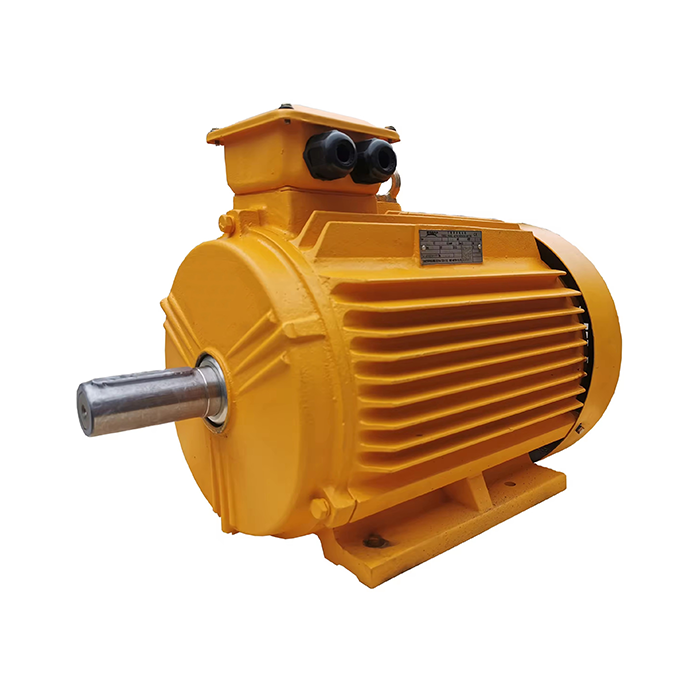
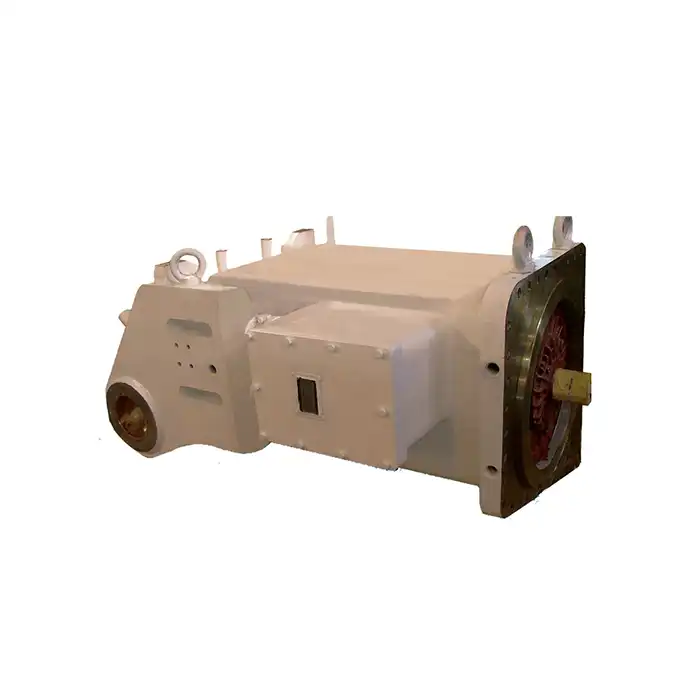
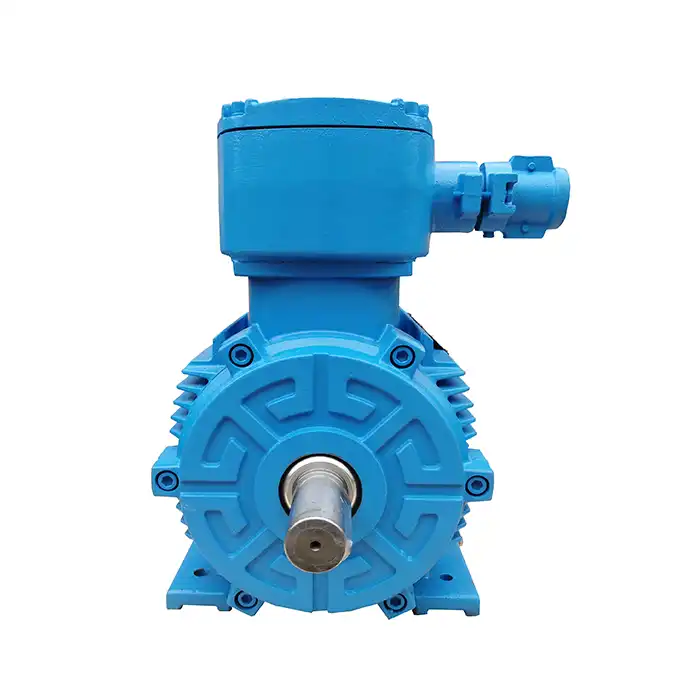
A low voltage induction motor operates through electromagnetic induction, where alternating current supplied to the stator windings creates a rotating magnetic field. This field induces current in the rotor, generating torque that causes rotation. The motor runs slightly below synchronous speed due to slip, which is essential for continuous torque production. These motors typically operate within voltage ranges of 380V to 690V, making them suitable for diverse industrial applications requiring reliable, cost-effective power solutions.
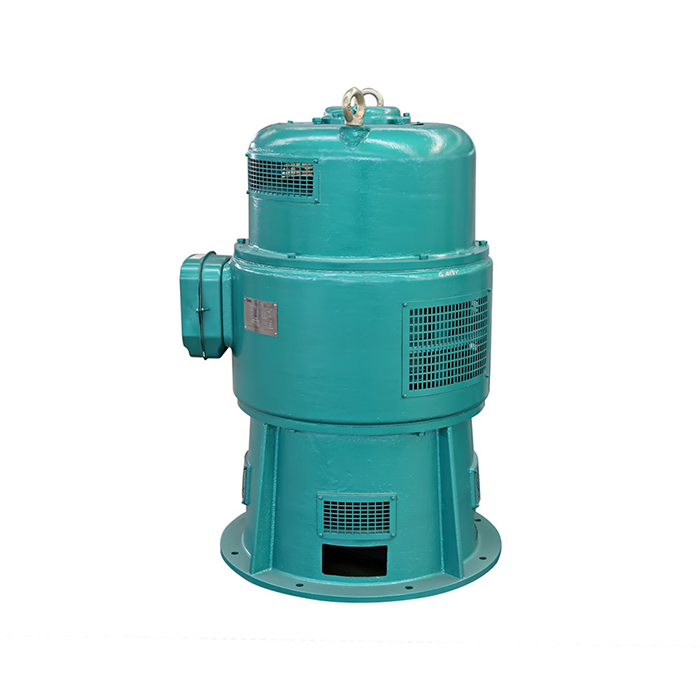
Series:YRQ
Voltage range:380V±5%
Power range:45-800kW
Protection level:IP23
Application:YRQ(JR) series medium-sized motors can drive a variety of different machinery, such as fans, compressors, water pumps, crushers, ball mills, cutting machine tools, transportation machinery and other equipment, and can be used in coal mines, machinery industries, power plants and various industrial and mining enterprises. Used as prime mover.
Advantage: The JR series medium-sized motors have very powerful driving capabilities and can not only drive conventional mechanical equipment, but also some complex mechanical equipment. For example, it can drive heavy machinery such as ships, cranes, and wind turbines, as well as small household appliances, purifiers, compressors, etc.
Others: SKF, NSK, FAG bearings can be replaced according to customer requirements.
Introduction
Low voltage induction motors are fundamental components in modern industrial and manufacturing operations, known for their robustness and efficiency. Every day, facilities across the United States rely on these motors to power everything from assembly lines to water treatment systems. This guide aims to provide B2B procurement professionals with a comprehensive understanding of how these motors work, their applications, and key considerations for selecting the right models.
Through my years of working with industrial power equipment, we've seen how the right motor selection can dramatically impact operational performance and cost. By exploring their operating principles, advantages, and comparative insights, procurement teams can make informed decisions that optimize both performance and budget. This guide offers practical advice on sourcing, supplier evaluation, and post-purchase support to facilitate seamless integration into industrial workflows. Whether you're replacing aging equipment or expanding production capacity, understanding these motors is crucial.
Understanding Low Voltage Induction Motors: Basic Concepts
Voltage Range and Definition
Low voltage induction motors work with voltages between 380V and 690V, which makes them different from high voltage units that go over 1kV. Our YQR series motors work at 380V±5% and have stable performance in a range of commercial settings. This voltage rating has a direct effect on the size of motors, the amount of insulation needed, and the safety rules that must be followed in buildings.
Core Construction Elements
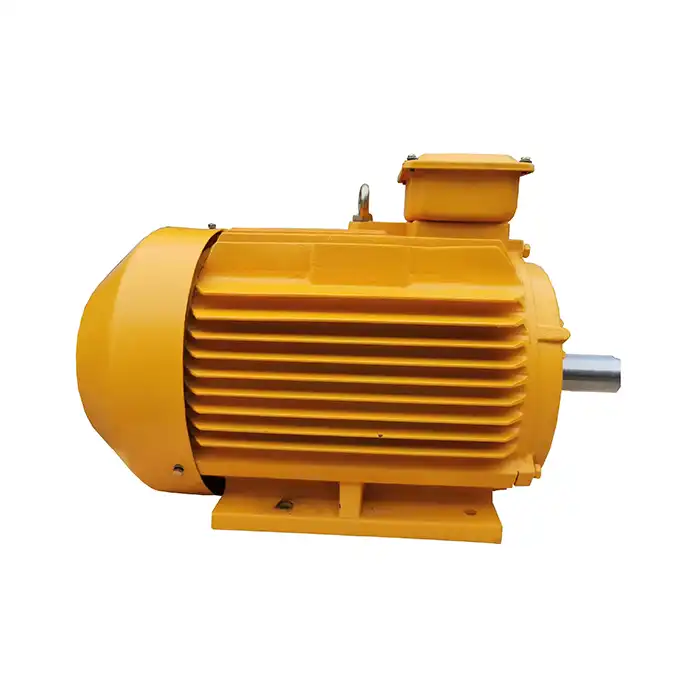
The stator, the rotor, and the windings are the three main parts of the low voltage induction motor. The copper windings inside the stator, which stays still, receive electricity. Our motors have copper rotor and stator windings that make them more efficient. They are also made with a cast iron frame that makes them last longer. The rotor is inside the stator and turns when the magnetic fields interact. It is supported by high-quality bearings from SKF, NSK, or FAG, which can be changed based on customer needs.
Electromagnetic Induction Principle
Michael Faraday found electromagnetic induction, which is the basic idea behind how it works. A rotating magnetic field is made when alternating current flows through the stator windings. This field goes through the rotor conductors and causes voltage and current to flow through them. The rotor current and magnetic field interact to create mechanical torque, which turns the rotor even though it is not physically connected to an electrical source.
Slip and Torque Generation
When buying workers look at motor performance, they need to understand slip. The frequency and pole number are used to figure out the synchronous speed, which is the speed of the spinning magnetic field. The rotor always turns a little slower than this synchronous speed. This difference, called slip, is usually between 2% and 5% when the load is full. Slip is needed to keep making torque; without it, the rotor would not receive any current and would not make any torque. This feature changes how well the motor works and how much heat it makes while it's running.
Detailed Working Mechanism of Low Voltage Induction Motors
Power Supply and Magnetic Field Formation
When three-phase alternating electricity comes in through the power source and into the stator windings, the mechanism starts to work. Our YQR motors can work with 50Hz or 60Hz frequencies and have 2, 4, 6, or 8 poles, depending on the speed you want. Three different magnetic fields are made by the three-phase source. These fields are 120 degrees apart in both time and space. When these fields come together, they make a single magnetic field that spins around the rotor at the same speed. This spinning field is smooth and steady, which makes it possible for rotor induction to work.
Rotor Induction and Torque Production
Through electromagnetic induction, the rotating magnetic field creates an electric field that flows through the rotor's conductors. Induced current can flow because the rotor wires are connected in closed loops. The current in the rotor makes its own magnetic field, which interacts with the field of rotation in the stator. Lenz's law says that the rotor tries to follow the spinning magnetic field, which makes torque in the machine. Our precisely balanced wheels make sure that the machine runs smoothly and with little sound while it's working all the time. The amount of torque a motor puts out depends on slip, the load, and the design parameters of the motor.
Single-Phase vs Three-Phase Motors
Three-phase low voltage induction motor units are the most common type used in industry because they work better than other types. They keep the torque steady, work more efficiently, and start consistently when they're loaded. Our YQR series has a three-phase design and can deliver power outputs ranging from 45kW to 800kW, which are good for tough industrial tasks. Single-phase motors are easier to use and less expensive, but they need ways to start and produce pulsing power, which means they can only be used for smaller tasks below 3kW, like home appliances.
Efficiency and Energy Losses
Motor efficiency has a direct effect on running costs, which is especially important because, according to industry studies, energy costs make up about 97% of lifecycle costs. Copper losses happen in windings, iron losses happen in magnetic cores, friction losses happen in bearings, and windage losses happen because of air resistance. Copper windings, advanced winding technology, and automatic rotor balancing during production are some of the ways that our motors are very efficient. Maintaining efficiency requires the right amount of load—motors that are running at less than 50% capacity are less efficient.
Low Voltage Induction Motor vs Other Motor Types: A Comparative Analysis
Voltage Level Considerations
By comparing voltage levels, you can find specific uses for each one. Low voltage induction motors (less than 1kV) are easier to install, cost less to run, and need less maintenance than medium voltage motors, which need special switchgear. Medium voltage motors (1kV to 13.2kV) work well in high-power situations (above 1MW) where lowering the current is worth the extra complexity. Our 380V motors are the best balance for power levels between 45kW and 800kW, and they work with standard industrial power distribution systems all over the US.
Synchronous vs Induction Motors
Synchronous motors can run at synchronous speed without slip, so they can be used to precisely control speed and fix power factor problems. However, they need extra excitation devices, which raises the cost of purchase and makes upkeep more difficult. Induction motors are easier to build, cheaper, and protect against overloading by increasing the slip. Induction motors are more reliable and offer better value for money in situations where precise speed synchronisation is not needed. Our S1 continuous duty cycle motors can handle constant loads like those found in fans, pumps, and compressors, where synchronous operation doesn't offer much of an advantage.
Maintenance Requirements Comparison
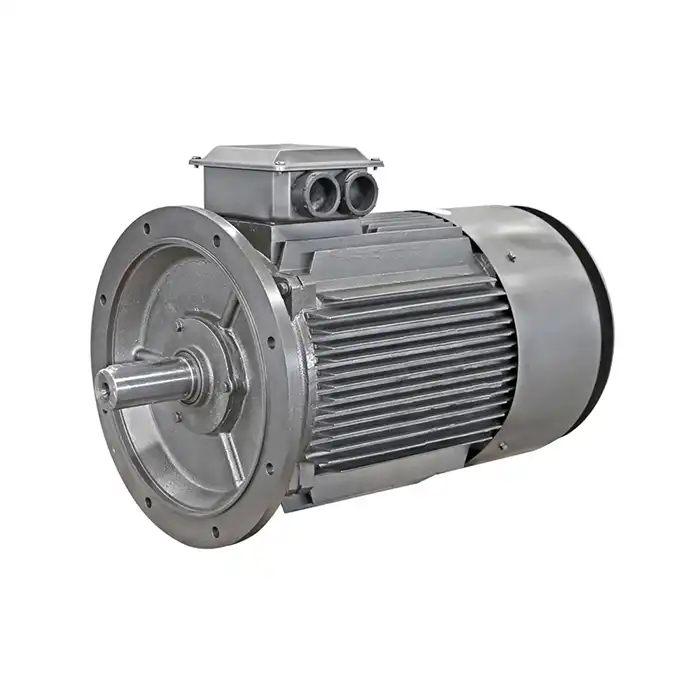
Because they are simple and strong, induction motors don't need much upkeep. They work well for decades because they don't have any brushes, commutators, or permanent magnets that wear out. The most important maintenance task is replacing the bearings, which can be done easily with standard tools. Our different mounting options—foot-mounted, flange-mounted, or foot-flange mounted—make it easy to install and service a wide range of machines. Because they are more reliable, they cost less to own overall than more complicated motors that need specialised maintenance knowledge.
Practical Applications and Benefits of Low Voltage Induction Motors in Industry
Industrial Applications Across Sectors
Our JR line motors power a wide range of machines in many fields. In factories, they power things like fans, compressors, water pumps, crushers, and ball mills that are needed to make things. These low voltage induction motors are used in material handling for conveyor systems that move parts along assembly lines. For cutting, drilling, and grinding, machine tools need power that stays steady. The speed range of 500 to 1500 rpm can handle a wide range of loads, and the power range of 45kW to 800kW can power anything from small extras to main production drives.
Coal mining operations benefit from the tough design and IP23 protection make it good for coal mine companies that work in dusty, tough conditions. Power companies use these motors for extra systems like moving cooling water, moving fuel, and getting rid of ash. Many businesses in the mining and industrial sectors depend on motors to work well as prime movers. When they break down without warning, it costs a lot to stop production. Our motors work well in these tough conditions, keeping up their performance even when the temperature changes, the motors vibrate, and the duty cycle goes on and on.
Cost-Efficiency and Energy Savings
The economic benefits go beyond the cost of the original buy. High efficiency cuts down on electricity use, which lowers monthly utility bills for as long as the motor is in use. Since energy costs make up 97% of lifecycle costs, even small changes in efficiency save a lot of money. Our copper rotor and stator windings are more efficient than aluminium ones, which means they produce less heat and last longer. When facilities standardise on certain motor specs, ordering in bulk can save them even more money.
Reliability directly saves money for the low voltage induction motor because it means less downtime. Every break in production costs money because of the output that is lost and the costs that come from workers who aren't working and supplies that are late. At every step of the production process, from carefully die-casting the motor frames to final performance checks, we make sure that the motors meet all of the requirements before they are shipped. This quality assurance cuts down on failures related to infant mortality that slow things down during important initial service periods.
Environmental Compliance and Sustainability
Today's environmental laws put more and more emphasis on saving energy and lowering emissions. Motors that are more efficient use less energy, which lowers the pollution from power plants and helps companies meet their green goals. Our motors help businesses show they care about the earth and follow rules about using less energy. The S1 continuous duty cycle lets the machine run at full power without lowering its output, which increases output per kilowatt-hour used. This efficiency is in line with global efforts to get businesses to use less energy.
Customization and Scalability Options
Procurement professionals like options that are flexible and meet unique business needs. Customers can choose from SKF, NSK, or FAG bearings for our motors, which works with their existing maintenance plans and extra parts stock. The 45kW to 800kW power range lets you standardise on a single product family while still being able to adjust the capacity to fit different needs. Different equipment connections can be used with multiple mounting setups that don't need to be custom made. This makes it easier to buy things, keep track of inventory, and train people to do maintenance across all facilities.
Buying Guide: Procuring Low Voltage Induction Motors for Industrial Use
Determining Power Requirements
Accurate power specifications keep things from not working well enough or being too big for their needs. Figure out how much power is needed by looking at the load's force, speed, and duty cycle. Our motors keep putting out their rated power when they are on S1 duty, which is good for loads that don't change. For applications with changing loads, motors that are built for peak demand or variable frequency drives that control motor speed may be needed. The 45–800kW range covers most industrial needs, with the right choice depending on the characteristics of the driven equipment.
Environmental Conditions Assessment
The operating setting has a big effect on the choice of motor and how long it lasts. Our basic motors can work in temperatures ranging from -20°C to +40°C, which is enough for most indoor uses. Applications that are outside or in very cold or hot conditions may need special heating or insulation elements. The IP23 protection class keeps out solid items bigger than 12 mm and water spray up to 60 degrees from the vertical. This is enough for many industrial settings. Conditions that are worse need better protection rates.
Supplier Evaluation Criteria
Choose dependable suppliers to make sure the standard of the products and ongoing help. Check out suppliers based on their production processes, quality certifications, and ability to make things. Precision die-casting, advanced winding technology, and automatic rotor assembly with balancing are some of the cutting-edge tools we use in our making. At every step of the production process, we test the low voltage induction motors carefully to make sure they meet the requirements before they are shipped. With this quality control, defects and warranty claims are kept to a minimum.
Pricing and Total Cost of Ownership
The initial buying price is only a small part of the total costs over the product's lifetime. Look at the total cost of ownership, which includes the price you paid for it, how much it cost to install, how much energy it used over its projected lifetime, and how much it cost to maintain. Motors with higher efficiencies cost more at first, but they save you money in the long run because they use less electricity. When all products are delivered for free, the landed cost goes down, which makes budgeting easier.
Warranty terms show how reliable you can expect the product to be and how confident the manufacturer is in it. Full guarantees that cover problems with the way the product was made protect against the costs of failure too soon. Find out what the guarantee covers, how to file a claim, and how long it usually takes for an answer before you buy. As part of our promise to keep customers happy, we will quickly fix any technical problems and honour our guarantee responsibilities.
Conclusion
Low voltage induction motors are still very useful in many industries because they are easy to use, reliable, and inexpensive. Procurement experts can make smart choices when they understand how things work, like electromagnetic induction, spinning magnetic fields, slip and torque generation, and so on. When compared to other types of motors, there are clear benefits, such as easier maintenance, stronger construction, and direct mains operation without the need for complicated controllers. Versatility is shown by applications in manufacturing, mining, power generation, and moving materials. The best performance is guaranteed by careful selection that takes into account power needs, environmental conditions, and the supplier's abilities. Facilities are trying to become more environmentally friendly and efficient, and these motors help them do both by using less energy and lasting longer.
FAQ
1. What maintenance practices sustain motor efficiency?
Lubricating bearings on a regular basis stops friction losses and wear before it's time. Check the insulation around the windings once a year with megger testing to find wear and tear before it fails. Keep the cooling vents and outside surfaces clean so that heat can escape properly. During operation, keep an eye on vibration and temperature to spot problems before they get worse. Depending on how often and where they are used, bearings should be replaced every so often. These steps make low voltage induction motors last longer and keep them working at their rated efficiency throughout service.
2. How does efficiency compare to other motor types?
Depending on their size and form, modern induction motors can be as efficient as 92 to 96%. This works just as well as brushless motors and is easier to put together. Synchronous motors might be a little more efficient, but they need extra tools to get them going. When it comes to efficiency, the right size and load are key—motors that are going at 75 to 100% of their maximum load work best. When it comes to induction motors, our copper windings and precise manufacturing make them work better.
3. Can motors be customized for unique requirements?
Options for customisation meet specific operational needs. Bearing choices let customers choose between SKF, NSK, and FAG names. Mounting arrangements change based on how the equipment connects. The voltage requirements fit how the power is distributed in the area. Extreme temperatures need a certain kind of insulation. Our engineering team works with customers to come up with solutions that meet the specific needs of each application while still meeting high standards for quality and efficiency in manufacturing.
Partner with XCMOTOR for Reliable Industrial Motor Solutions
It is XCMOTOR's speciality to help industrial sites find power equipment options that work well and last a long time. Our YQR line low voltage induction motors, which range from 45kW to 800kW and work with 380V, can be used in a wide range of industrial, mining, and process industries. We know that decisions about procurement have an effect on operational reliability and how well the budget is used.
Shaanxi Qihe Xicheng Electromechanical Equipment Co., Ltd. promises to quickly answer technical questions before the sale and give full support after the sale. Only parts from well-known names go into our original goods, so you can be sure of their quality and durability. Our 30-day return policy protects your investment, and free shipping makes things easier. Dedicated support works on both Saturday and Sunday, because factories need to keep running all the time.
We help you find the best motor solutions for your business, whether you're upgrading existing equipment or making more things. For full quotes and scientific information, please email us at xcmotors@163.com. We are a seller of low voltage induction motors with a lot of experience, so we can give procurement workers the knowledge and high-quality products they need.
References
1. Chapman, S.J. (2011). Electric Machinery Fundamentals, Fifth Edition. New York: McGraw-Hill Education.
2. Bose, B.K. (2006). Power Electronics and Motor Drives: Advances and Trends. Burlington: Academic Press.
3. Nasar, S.A. & Boldea, I. (2006). Electric Drives, Second Edition. Boca Raton: CRC Press.
4. Almeida, A.T., Ferreira, F.J.T.E., & Both, D. (2005). "Technical and Economical Considerations in the Application of Variable-Speed Drives with Electric Motor Systems." IEEE Transactions on Industry Applications, 41(1), 188-199.
5. Hughes, A. & Drury, B. (2013). Electric Motors and Drives: Fundamentals, Types and Applications, Fourth Edition. Oxford: Newnes.
6. Boldea, I. & Nasar, S.A. (2010). The Induction Machines Design Handbook, Second Edition. Boca Raton: CRC Press.