



Globe Valves for Steam Applications: The Ultimate Guide
If you manage a steam system—whether in a power plant, refinery, or food processing facility—you already know that one leaking valve can cost thousands of dollars in wasted energy and unplanned downtime. A properly selected globe valve for steam line service is not just a component; it is a pressure and flow control device that directly affects operational safety and energy efficiency. This guide covers everything from valve selection criteria and material specifications to maintenance practices and procurement strategy, drawing on verified industry standards including ASME B16.34, API 602, and ISO 5208.
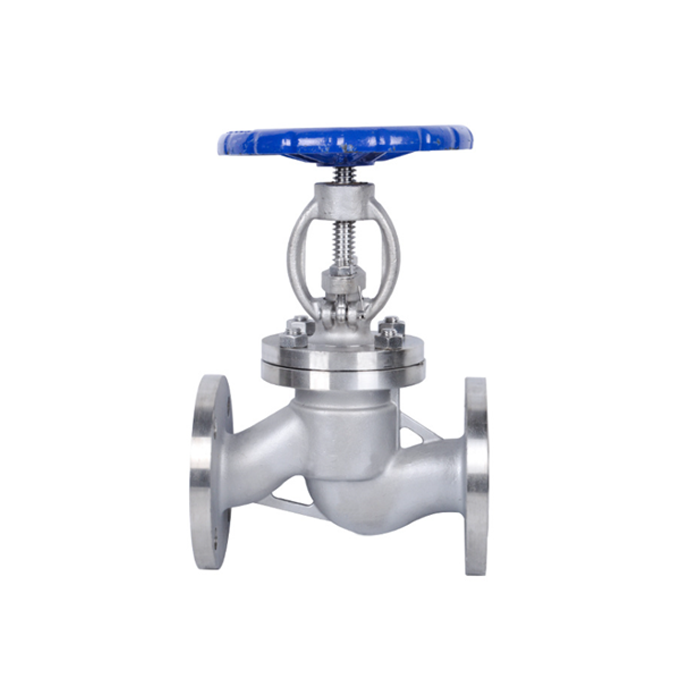
Series:J41
Diameter:DN10~DN600,
PN:16;25;40
Application specification: Design, manufacture:GB12235 Length of the structure:GB12221 Connecting flange: JB/T79/82~1994,GB9113,HG20592-20635 Valve inspection and test:JB/T9092-1999,GB13927
Understanding Globe Valves for Steam Lines
How Globe Valves Work in Steam Service
A globe valve controls the flow by moving a disk up and down against a ring seat that stays in place. This action in a straight line makes throttling very accurate, which is exactly what high-pressure steam systems need. When working with turbine bypass lines or boiler feedwater isolation, being able to change the flow slowly instead of all at once lowers pressure spikes and keeps equipment further downstream safe. The Valve Manufacturers Association of America says that around 30% of industrial process valve installations in thermal power uses are globe valves.
Material Selection for High-Temperature Steam
What the body of a valve is made of decides how long it will last. Carbon steel ASTM A216 WCB can handle temperatures from -29°C to 425°C and is often used for superheated steam lines. SS316 stainless steel is better than carbon steel at protecting trim parts from rust and sulfide attack when they are exposed to wet or acid steam. Graphite or flexible graphite packing keeps the stem seal tight even when the temperature changes, which is a common way for high-temperature service parts to fail.
End Connections and Dimensional Standards
There are three types of end links for globe valves used with steam: flanged, butt-weld, and socket-weld. Flanged links that meet GB9113 or HG20592-20635 standards make it easy to take things apart for checking. Face-to-face measurements set out in GB12221 make sure that drop-in replacements can work with current pipe layouts. Confirming measurement standards before placing an order is important for procurement engineers working on foreign projects because it keeps them from having to make expensive changes in the field.
Comparing Globe Valves to Other Valve Types in Steam Applications
Globe Valves vs. Gate Valves
Gate valves are made to work either fully open or fully closed. When high-velocity steam partially opens a gate valve, it causes the disk to vibrate and the seat to wear out faster. A globe valve for steam line control, on the other hand, keeps the disk stable against the seat shape when it's only partially open. This makes the valve last a lot longer. Power plant maintenance records consistently show that globe valves last two to three maintenance cycles longer than gate valves in continuous throttling service.
Globe Valves vs. Ball and Butterfly Valves
Ball valves can be turned quickly in quarter turns, but they can't handle fine flow resolution in steam uses. Butterfly valves are cheap and light, but they don't work well at shutting off tightly when pressures are higher than PN25 without special seat materials. When it comes to shutdown, globe valves, especially those that meet ISO 5208 Rate A leakage rating, work better over a wider pressure range. Because of this, they are the best choice for gas petrochemical plants to use to separate boilers and handle high-pressure steam with steam globe valve specification.
Direct Acting vs. Indirect Acting Globe Valves
Direct-acting globe valves move the disk straight through the stem, so the reaction is quick and reliable. When there is a lot of differential pressure, indirect acting or pilot-operated designs work well because they use process pressure to help with seating. In turbine bypass systems with pressure differences that can go above 100 bar, an indirect acting design cuts the cost and power needed by the actuator. If you choose the wrong type here, the actuators will be too big or the seat will wear down too quickly.
Key Specifications and Maintenance of Globe Valves in Steam Lines
Pressure and Temperature Ratings
The J41 series globe valve can handle pipe sizes from DN10 to DN600 and has pressure ratings of PN16, PN25, and PN40. It can handle temperatures from -29°C to 425°C, so it can be used for everything from cold isolation to superheated steam service. GB12235 is used for design and production, GB12221 is used for structural length, and JB/T79/82-1994, GB9113, and HG20592-20635 are used for linking flanges. JB/T9092-1999 and GB13927 say how to check and test valves. With these qualifications for multiple standards, the J41 series can be used for both Chinese power projects and foreign sale deals.
Common Failure Modes and How to Prevent Them
There are three main ways that steam service globe valves break: seat erosion, stem packing leaks, and disk rust. Seat corrosion happens when the speed of the steam goes over the design range while the engine is being slowed down. If you choose a hardened seat inlay or Stellite overlay, the seat will last three to five times longer than a bare carbon steel seat. Using flexible graphite packing that is rated above the system's highest working temperature can help cut down on stem packing leaks. If you choose SS316 or Alloy 20 trim, you can stop disk corrosion in wet steam.
Maintenance Intervals and Replacement Criteria
Check the globe valve packing every 6 to 12 months in constant steam service, based on how often the temperature changes. Before leakage goes over ISO 5208 Rate A limits, a valve that has more than 0.5 mm of stem backlash or measurable seat face scoring should have its seat lapped. Do not try to fix the valve if the body wall thickness has dropped below 87.5% of normal due to corrosion. This is the ASME B31.1 minimum. Keeping correct maintenance logs for each valve tag number helps procurement teams plan ahead and avoid having to send out emergency orders.
How to Choose and Buy the Best Globe Valve for Steam Applications
Defining Your Process Requirements
Write down the maximum allowed working pressure (MAWP), the design temperature, and the necessary flow coefficient (Cv) before you call any globe valve for steam line suppliers. Every other choice, from body material to actuator size, is based on these numbers. If procurement engineers skip this step, they might order valves that are either too specific, which adds cost, or too low-rated, which poses a safety risk.
Evaluating Supplier Capability
A good provider should offer pressure hydrostatic testing at 1.5 times the rated pressure and give material test records (MTRs) that can be linked to the casting's heat number. For projects that will be exported, make sure that the supplier is ISO 9001 certified and can provide approvals for the region, like CE or CRN. Another useful filter is delivery time for non-standard flange designs. If a provider can't make a sample within 48 hours, it will cause your project to be late with steam globe valve specification.
Procurement Strategy for Large-Scale Orders
When you buy 100 or more frameworks, you should talk about volume price and a sale stock arrangement for common spare trim sets. This cuts the time it takes to respond to an emergency from weeks to hours. You can ask for CAD 3D models in STEP or IGES file so that they can be added to your plans of pipes and instruments. Making sure that spare parts are available, especially packing sets and disc/seat kits, before signing a supply deal keeps your repair team from having to rely on just one source.
Industry-Verified Product: J41 Series Globe Valve
The J41 series globe valve is made to handle tough steam service in the food processing, petrochemical, and power generation industries. It's a good choice for procurement experts because of the following basic things:
- Body material: ASTM A216 WCB carbon steel, suitable for -29°C to 425°C continuous service in superheated steam lines.
- Trim material: SS316 or Alloy 20, providing corrosion resistance in wet or chemically active steam environments.
- Packing: Flexible graphite, rated for high-temperature cycling without stem leakage.
- Leakage class: ISO 5208 Rate A, verified by hydrostatic testing at 1.5× rated pressure.
- Size range: DN10 to DN600 (½ inch to 24 inches), covering the full range from instrumentation branch lines to main steam headers.
- Pressure ratings: PN16, PN25, PN40; Class 150 to Class 900 available for international projects.
The J41 can handle turbine bypass isolation in power plants, high-pressure steam control in refineries, and hygienic sterilization steam control in food processing plants, all with the same set of specifications.
Quality control is done at every step of the production process. As required by API 598, the body of each valve is tested hydrostatically at 1.5 times its maximum pressure, and the seat leakage is tested. Real-time tracking from the raw casting to the finished valve is possible because production is watched by SAP. Face-to-face dimensions or flange configurations that aren't standard can be prototyped within 48 hours, and CAD drawings can be sent upon request.
Conclusion
Matching pressure class, temperature rating, body material, and trim specification to real working conditions is necessary when choosing the right globe valve for steam line service. The J41 series globe valve has ASTM A216 WCB bodies and SS316 trim, and it fits DN10 to DN600 and PN16 to PN40. It also meets GB12235, GB12221, and other flange standards. Long-term dependability depends on things like regular maintenance, clear process documentation, and a supplier whose testing skills have been checked. Failures in the field that cost a lot of money can be avoided by making the right choices during the buying stage.
FAQ
1.Can you modify valve face-to-face dimensions for tight piping spaces?
Yes. If you send us your dimensional model or pipe layout, we'll make a prototype of any non-standard face-to-face combinations within 48 hours. This is true for all sizes between DN10 and DN600, for both flanged and butt-weld end joints.
2.What certifications do your steam line globe valves carry?
These valves are all in line with ASME B16.34, API 602, and ISO 9001. Testing is done according to API 598 and ISO 5208 Rate A leaking rating. For projects that will be exported in Europe and North America, region-specific approvals like CE and CRN are available.
3.How quickly can you ship large orders internationally?
Stock models are sent out by air freight within 72 hours. Custom orders, like those with non-standard flanges or unique trim materials, are shipped within four weeks and come with all the paperwork needed to clear customs at each step of the way.
4.Do you provide CAD drawings for piping integration?
Yes. When you place your order, make sure you ask for 3D models in either STEP or IGES files, as well as installation guides and material test results. These files directly help your piping and instrumentation design teams.
5.What is the recommended maintenance interval for steam service globe valves?
Every 6 to 12 months, check the state of the packing and seat in constant high-pressure steam service. If stem leakage is found, the packing should be replaced. If scoring goes beyond the acceptable wear limits set by ISO 5208 Rate A, the seats should be lapped or replaced.
Get a Quote from XCMOTOR — Your Globe Valve for Steam Line Supplier
For steam line applications to power plants, refineries, and EPC contractors all over the world, XCMOTOR, run by Shaanxi Qihe Xicheng Electromechanical Equipment Co., Ltd., provides the J41 series globe valve for steam line globe valve. We answer technical questions within two hours, give discounts on orders of 100 units or more, and let you buy anything for 30 days. You can email our engineering team at xcmotors@163.com or go to motorxc.com to get specifications, CAD models, or a price for your unique project right away.
References
1. Valve Manufacturers Association of America. VMA Industry Report: Industrial Valve Market and Application Trends. 2022.
2. American Society of Mechanical Engineers. ASME B16.34: Valves—Flanged, Threaded, and Welding End. 2020.
3. American Petroleum Institute. API 602: Gate, Globe, and Check Valves for Sizes DN 100 and Smaller for the Petroleum and Natural Gas Industries. 2016.
4. International Organization for Standardization. ISO 5208: Industrial Valves—Pressure Testing of Metallic Valves. 2008.
5. American Society of Mechanical Engineers. ASME B31.1: Power Piping Code. 2022.
6. International Organization for Standardization. ISO 9001: Quality Management Systems—Requirements. 2015.