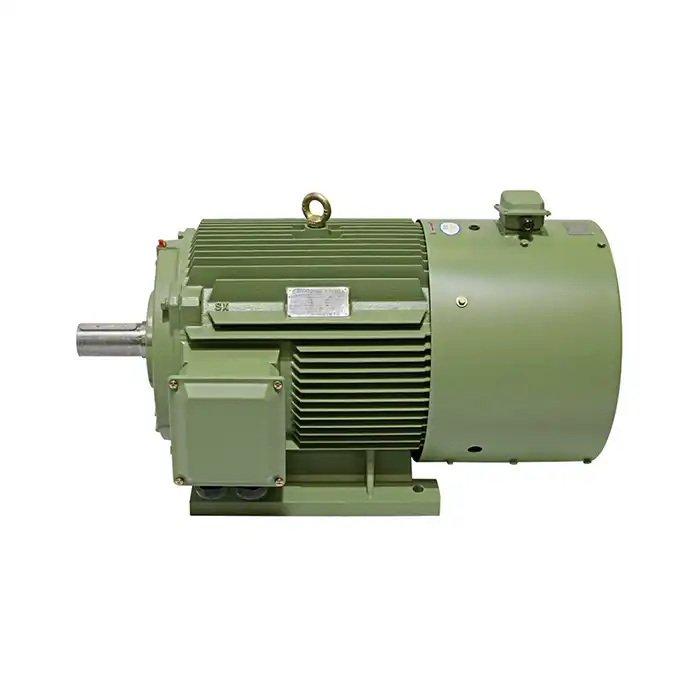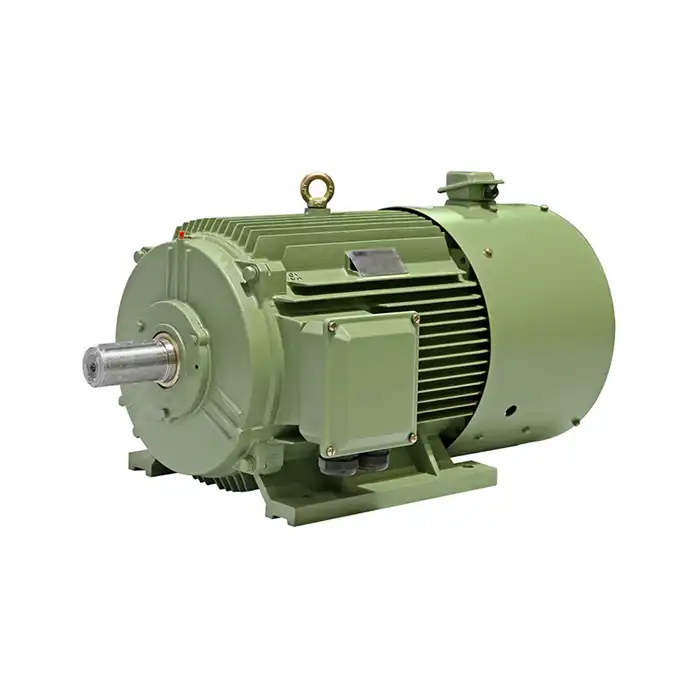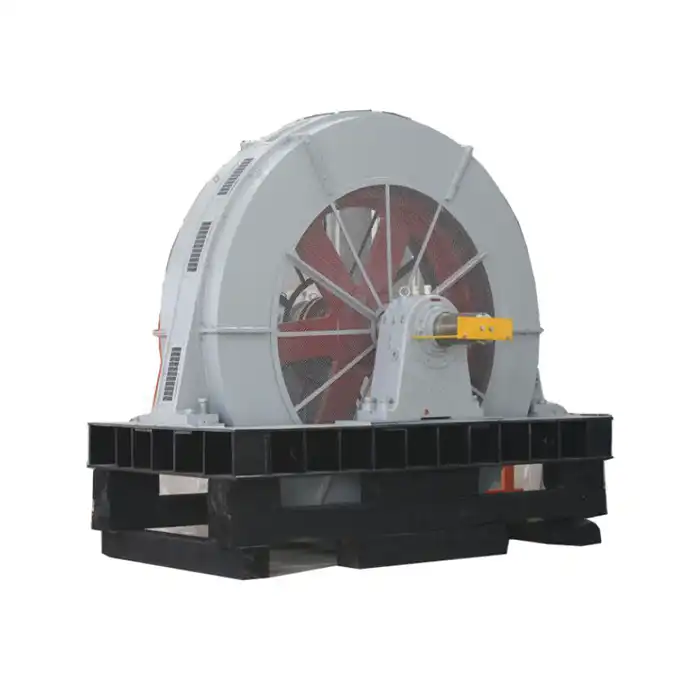




Can 200hp DC Motor Handle High Load Changes Efficiently?
Yes, a 200hp DC motor is great at smoothly handling changes in the load. These machines are made for industrial use and have great power and quick response times that let them easily adapt to changing working needs. These motors can handle big changes in load without losing steadiness because they have a small moment of inertia and great dynamic performance. Their complex control systems, which include armature and field control mechanisms, make sure that transitions are smooth even when the load changes quickly. This makes them essential for uses that need accuracy, dependability, and consistent performance in a range of working conditions.
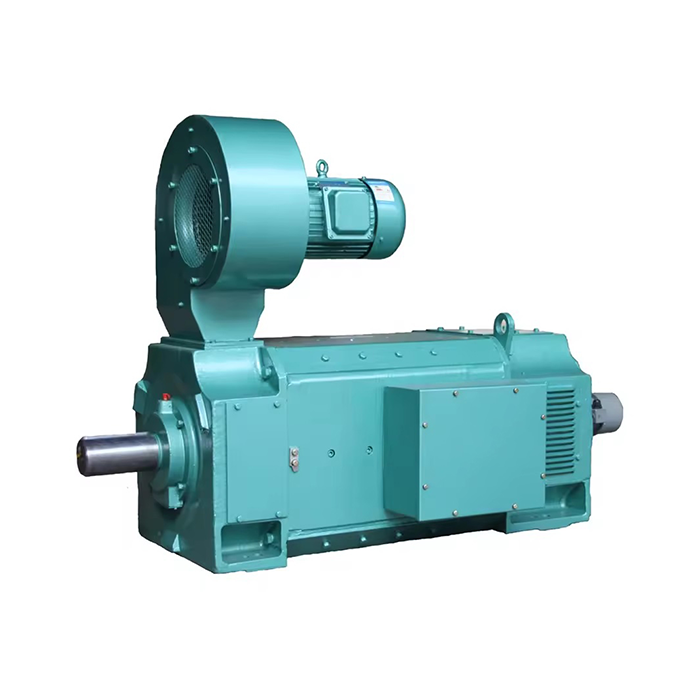
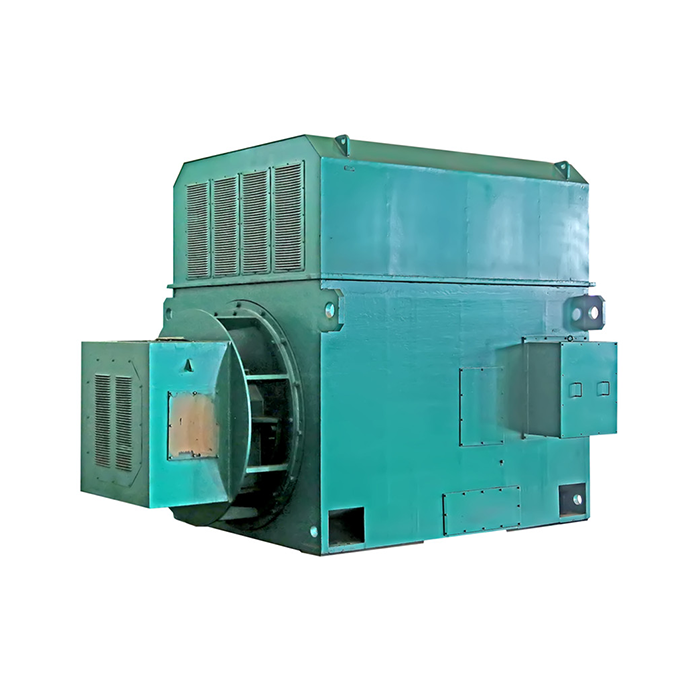
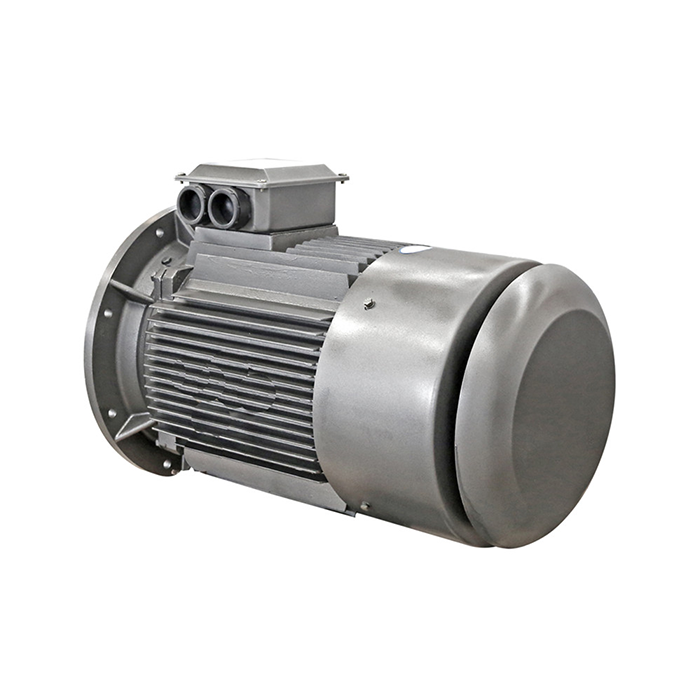
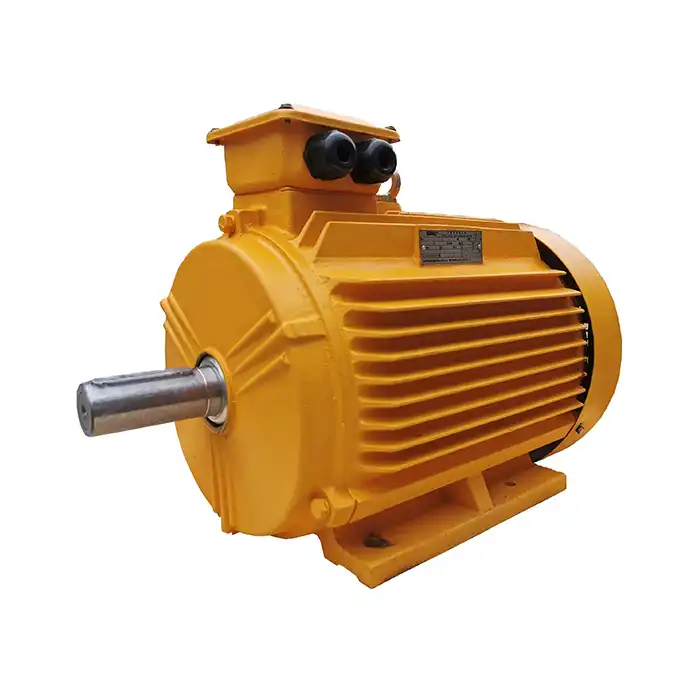
Series:Z4
Frame number: 100-450
Application:Z4 series motorsThis series of motors can be widely used in various industrial sectors such as metallurgical industrial rolling mills, metal cutting machine tools, papermaking, dyeing and weaving, printing, cement, and plastic extrusion machinery.
Power range:1.5-600kW
Voltage range: 160V,440V, etc.
Certificate: The performance of this series of motors not only complies with the national standard GB/T755 "Basic Technical Requirements for Rotating Electrical Machines", but also basically complies with the German VDE0530 standard.
Advantage:Z4 series DC motor has greater advantages than Z2 and Z3 series. It can not only be powered by DC unit power supply, but also suitable for static rectifier power supply. It has small moment of inertia, good dynamic performance, and can withstand high load change rates. It is especially suitable for control systems that require smooth speed regulation, high efficiency, automatic speed stabilization, and responsive response. It has reached the current international advanced level..
Others: SKF, NSK, FAG bearings can be replaced according to customer requirements.
Introduction
For industrial processes to run smoothly, power solutions must work consistently even when conditions change quickly. The 200hp DC motor has become a trusted worker in places like factories, energy installations, and process control, where the load changes all the time. Procurement workers who want to buy reliable, cost-effective tools that won't slow down production need to know how these motors react to changing demands.
This article talks about the technical side of handling loads in high-power DC motors. It looks at specs, control methods, and performance data from real-life situations. We'll look into how current DC motor designs get around old problems and keep working smoothly even in tough situations. We will do more than just technical analysis. We will also give B2B buyers useful buying insights, such as brand evaluation criteria, cost factors, and sourcing strategies, that will help them make smart choices. This complete guide will teach you how to choose motors that are both operationally efficient and will hold their value over time, whether you're changing old equipment or increasing your production capacity.
Understanding 200hp DC Motors and Their Load Handling Capabilities
Fundamental Specifications and Power Characteristics
About 149 kilowatts of mechanical power come from the 200hp DC motor, which makes it great for middle to heavy industrial uses. Motors in this class usually work with voltages between 160V and 440V, but their designs can be changed to fit different power source systems. The frame number 100-450 series is flexible across power ranges from 1.5kW to 600kW, so it can meet a wide range of practical needs.
Up to 95% of the power that these motors are supposed to use is actually used, which is a huge improvement over older versions. They can handle tough starting conditions and keep up a constant level of performance throughout operation thanks to their high starting torque and excellent speed control. The insulation class F rating makes sure that the device can be used safely at temperatures up to 155°C, and the IP23 rating keeps dust and water out of normal workplace settings.
Torque Dynamics and Speed Control Mechanisms
How well a load can be handled depends a lot on how the power responds. A 200hp DC motor makes an electromagnetic force when the current in the armature and the magnetic fields combine. This creates proportional relationships that make control very accurate. When loads quickly go up, the motor's driver changes the armature voltage or field current to keep the speed at the desired level, making up for the extra mechanical resistance.
Both armature control and field weakening are used to control the speed in these systems. The armature control changes the voltage that goes to the rotor windings, which lets the speed be changed smoothly over the lower working range. At higher speeds, field weakness lowers the excitation current, which makes the operating range bigger than the base speed values. These two methods work together to make flexible control systems that can adapt to changes in load in milliseconds. This stops speed drops that could mess up production processes.
Performance Optimization: Can 200hp DC Motors Break Load Change Bottlenecks?
Identifying Common Performance Bottlenecks
There are three main problems that industrial processes often face during load changes. Voltage dips happen when sudden current demands are higher than the power source can handle. This causes brief speed drops that throw off production schedules. When loads are cycled over and over, thermal stress builds up. If cooling systems aren't good enough, this can speed up the wear and tear on insulation and bearings. When acceleration forces are higher than the design limits for a structure, they cause shaking, shaft movement, and coupling stress.
These problems are taken care of by modern motor designs that use combined solutions. Better cooling systems that use forced air keep the same working temperatures even when they're under a lot of stress for a long time. Strong design with high-quality materials makes it resistant to vibration and shock loads. Power supply coordination makes sure that there is enough current during times of high demand, which stops voltage drops that hurt performance.
Advanced Control Methods for Smooth Load Transitions
Control methods that are very complex change how motors react to changing needs. Armature control systems keep an eye on changes in speed and make quick changes to the voltage to keep setpoints even if the load changes. In order to make sure that enough power is delivered at both low and high working speeds, field weakening circuits make sure that torque production is optimized across the speed range. Closed-loop feedback systems constantly compare actual performance to desired parameters, making changes in real time that get rid of hunting and instability.
Digital controllers that handle multiple sensor inputs at the same time are used in modern applications. Tachometers give accurate information about speed, and current monitors pick up changes in load before they show up as a change in speed. Temperature tracking lowers output when safe limits are reached, which stops thermal harm. These combined systems make motors that can automatically adjust to changing conditions without any help from a user. This increases uptime and keeps equipment from breaking down because of stress.
Comparative Analysis for Procurement: Choosing the Right 200hp DC Motor
Evaluating Torque Stability and Load Adaptability
When buying a 200hp DC motor, sourcing teams should look at how stable the torque is when the load changes quickly. For heavy-duty industrial uses like rolling mills, elevators, and mining systems that need to keep running all the time, motors that are built with stable speed control and good heat reduction work best.
Comparing Maintenance Requirements and System Compatibility
Another important issue is how well it works with current drive systems and how easy it is to maintain over time. Before buying a 200hp DC motor, buyers should look at how long the brushes last, how well the driver works with the motor, and how easy it is to get replacement parts. Equipment with standard parts and repair support that is easy to get to can help cut down on downtime and total running costs.
Energy Efficiency and Total Cost of Ownership
The cost of running a motor over its lifetime is usually ten times or more the cost of buying it, so figuring out how efficient it is is very important. A 200hp DC motor that runs for 4,000 hours a year at $0.10 per kWh uses about $60,000 in electricity a year, assuming it is 90% efficient. Costs go down by $3,000 a year when efficiency is raised to 95%, so the higher original investment is paid back in a few years. To get accurate payback times, energy cost estimates should use job cycles and local utility rates that are based on real life.
The total cost of ownership includes the price paid for the item, the cost of installation, the amount of energy used, expected upkeep, and repairs that come up out of the blue. Motors that meet foreign standards like GB/T755 and VDE0530 are usually more reliable, which lowers the number of failures and the money lost on them. Bearings of good quality from companies like SKF, NSK, or FAG last longer between repairs and keep expensive breakdowns from happening. When you balance all of these factors in a full review, you can see the real economic value that goes beyond just comparing prices.
Procurement Strategies for 200hp DC Motors with High Load Efficiency
Supplier Selection and Evaluation Criteria
Picking the right provider affects both the short-term success of the project and the long-term happiness of the operations. Reliable wholesalers make sure that all of their products meet quality standards, give correct technical information, and back up their products with useful warranties. When evaluating a vendor, you should look at their track record of performance, their technical skills, and customer examples from similar projects.
Before laying out specific criteria for suppliers, buying teams can make more confident choices when they know what sets great sellers apart from just-good ones. Here are the main things that set dependable 200hp DC motor sellers apart:
- Technical Expertise: Suppliers should hire informed employees who can talk about application needs, suggest the right specs, and fix problems that come up during installation. Having access to application engineers who know how manufacturing processes work adds a lot of value above and beyond just selling products.
- Delivery Reliability: Deliveries that are always on time keep projects on track and work from stopping. Operational excellence is shown by suppliers who keep enough inventory on hand to ship common setups right away while also keeping in touch with makers for special orders.
- After-Sales Support: Full support, including installation instructions, help with setup, and guarantee service, is very helpful when problems happen. Suppliers who are available on Saturday and Sunday reduce the cost of downtime when equipment breaks down.
- Quality Assurance: Thorough review upon arrival, proper storage, and careful treatment protect the quality of the motor from the time it is made until it is delivered. Suppliers who use quality control systems make sure that products are always in good shape, which lowers the death rate for babies.
These things work together to make sure that procurement teams get not only good items, but also whole solutions that meet real operating needs and last a long time.
Customization Options and Bulk Purchasing Benefits
Standard catalog items work well for many uses, but unique setups get the best results for certain needs. Motors are customized for each application by their voltage ratings, mounting setups, shaft configurations, and safety class improvements. Upgrading bearings to high-quality names makes them more reliable in harsh conditions. Continuous duty rates for high-temperature uses can be extended with better cooling systems. When suppliers offer customization services, buying teams can be very clear about what operations are needed instead of having to settle for solutions that are close to what is needed.
When you buy in bulk, you have more power to negotiate prices and terms. Price cuts that lower the cost per unit are acceptable when a single customer buys a lot of the same units or units with different setups. When you combine shipping, you save money on freight costs and make the getting process easier. Setting up favorite seller relationships for regular needs shortens the buying process and may lead to extra benefits, such as getting priority when supplies are low or longer payment terms that make managing cash flow easier.
Future Trends and Technological Innovations Impacting 200hp DC Motors
Digital Control Systems and Smart Motor Technologies
New digital technologies are turning standard motor control into smart systems that give operators a whole new level of awareness. Microprocessor-based controls handle many feedback messages at the same time, using complex methods to continually improve performance. Adaptive control methods change parameters automatically based on load conditions, keeping efficiency high even when working conditions change without any help from a person. Predictive maintenance programs look at patterns of shaking, changes in temperature, and electrical properties to figure out when a part will break down before they do for the 200hp DC motor.
Connectivity features let you watch and diagnose things from afar, which changes the way care is done. Real-time data streams show how things are running, how much energy they're using, and how they're performing overall. Cloud-based analytics systems collect data from many motors in different locations and find general problems and ways to make things better. Mobile apps let repair workers keep an eye on important factors and get alerts from anywhere, so they can quickly fix problems as they arise.
IoT Integration and Operational Intelligence
Internet of Things technologies put monitors inside motor systems to collect detailed information about how they work. Temperature monitors in the bearings, windings, and cooling air streams pick up on temperature changes that could mean there are problems with greasing or ventilation. Vibration monitors use frequency analysis to find imbalances, misalignments, and worn bearings. Monitoring current and voltage shows electrical problems that could mean the insulation is wearing down or the control system isn't working right.
Integrated sensor networks send data to analytics engines, which turn it into knowledge that can be used. Machine learning systems set a standard for performance and then mark differences that could mean problems are starting to appear. When help is needed, automated reporting systems let the right people know, putting problems in order of severity and possible effect. This operational information makes it possible to switch from reactive maintenance, which fixes problems after they happen, to proactive tactics, which stop problems before they affect production.
Advanced Materials Enhancing Performance and Durability
New discoveries in materials science make motors work better and last longer. Modern magnetic materials raise the flux density, which lets smaller packages make more force. Better shielding systems can handle higher temperatures and electrical stress, which lets more power be put into a smaller space. Bearing materials and lubricants make repair times longer and cut down on energy loss due to friction.
Using lightweight building materials lowers the rotor's friction, which improves its dynamic reaction when speeding up or slowing down. Composite materials are stronger than metals and lighter, and they don't rust in harsh settings. These improvements in materials have made it possible for motors to offer the same performance in smaller, lighter packages. This makes installation easier and lowers the structural requirements while also making the motors more reliable and efficient.
Conclusion
The 200hp DC motor works very well in situations where it needs to reliably respond to changing loads. By paying close attention to specs, control strategies, and upkeep procedures, these motors work reliably for decades in a wide range of industrial settings. To be successful at procurement, you need to balance technical needs with total ownership costs, check the competence and support skills of providers, and choose configurations that work best in real-world situations. As technologies change, keeping up with new developments helps you make smart strategic choices that keep your competitive edge while minimizing implementation risks.
FAQ
1. How efficiently do these motors handle sudden load increases?
Modern 200hp DC motors can adapt to changes in load in milliseconds thanks to advanced control systems that check the speed and change the power delivery automatically. Their low moment of inertia and great dynamic properties let them quickly adapt to changes in load without causing big changes in speed, so the process stays stable even when changes are very big.
2. What distinguishes brushed from brushless configurations?
Brushed motors use carbon brushes that touch a commutator to switch electricity. They are simple and cheap, but the brushes need to be replaced every so often. Brushless designs use electrical commutation to remove physical touch. This lowers upkeep and increases service life, but they cost more at first.
3. How can procurement teams identify reliable suppliers?
Check out a vendor's technical knowledge, track record of delivery, infrastructure for after-sales assistance, and quality testing methods. Check for certifications like CE and CCC, read the warranty terms carefully, and ask for examples from customers who have used the supplier's products in similar ways to get a full picture of their skills.
Partner With XCMOTOR for Superior Industrial Motor Solutions
Motor providers for industrial operations need to know both how to meet technical needs and how to run a business. XCMOTOR offers complete power equipment options because we know a lot about how to use power equipment in business settings and want our customers to be successful. Our stock of 200hp DC motors includes Frame 100-450 series versions that can be used in rolling mills for metals, machine tools, papermaking equipment, and many other tough situations. The power of these motors goes from 1.5kW to 600kW, and the voltage can be 160V or 440V. They meet both GB/T755 and VDE0530 foreign standards.
We have high-quality motors in stock that can be used with both DC units and static rectifier power sources. These motors have low moment of inertia and good dynamic performance that can handle fast load changes. At full load, each unit is up to 95% efficient, which cuts down on energy costs while maintaining steady performance. We're not just committed to selling products; we also offer dedicated expert help on Saturday and Sunday, full warranties, and 30-day open purchase returns that remove all procurement risk. Contact our team at xcmotors@163.com to talk about your unique needs with experts who can help you find the best options for your needs. XCMOTOR is a reliable manufacturer that can help you find a single new motor or set up whole production lines with the right tools. They offer great service and high-quality equipment.
References
1. Chapman, Stephen J. Electric Machinery Fundamentals, 5th Edition. McGraw-Hill Education, 2012.
2. Hindmarsh, John and Renfrew, Alasdair. Electrical Machines and Drives: Fundamentals and Advanced Modelling, 3rd Edition. Springer International Publishing, 2014.
3. Kenjo, Takashi and Naganori, Seiichi. Permanent-Magnet and Brushless DC Motors. Clarendon Press Oxford, 1985.
4. National Electrical Manufacturers Association. NEMA Standards Publication MG 1-2016: Motors and Generators. National Electrical Manufacturers Association, 2016.
5. Sen, Paresh Chandra. Principles of Electric Machines and Power Electronics, 3rd Edition. John Wiley & Sons, 2013.
6. Wildi, Theodore. Electrical Machines, Drives, and Power Systems, 6th Edition. Pearson Education, 2006.