



ATEX High-Voltage Increased-Safety Motor: What Should Buyers Check?
A buyer should check six things on a high-voltage increased-safety motor. These are the site's hazardous-area zone, the full ATEX marking with its certificate scope, the voltage and power match with the grid and driven machine, the cooling and enclosure design, the test records for each unit, and the supplier's engineering support. A certificate alone does not prove that the exact motor you receive is covered. I wrote this guide for OEM, EPC, and plant buyers who must defend a motor choice to engineers, auditors, and end users. Each section turns one check into a question you can ask before you place an order.
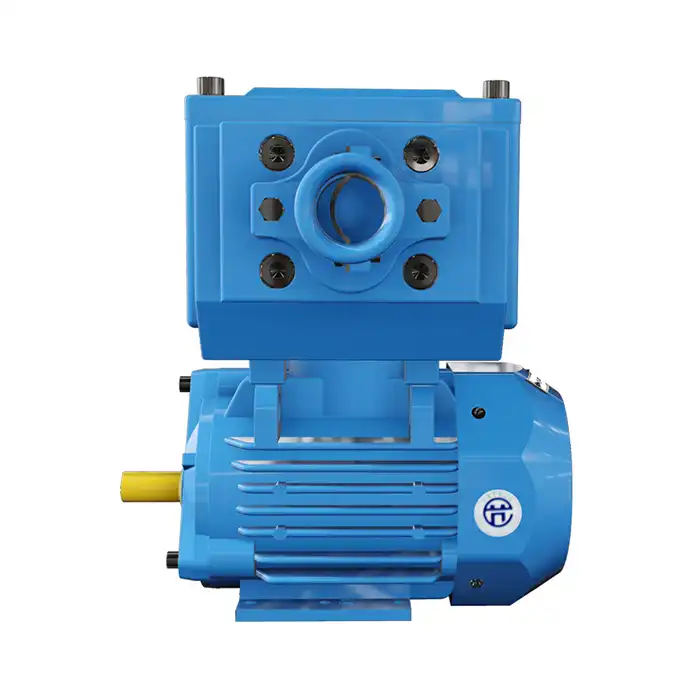
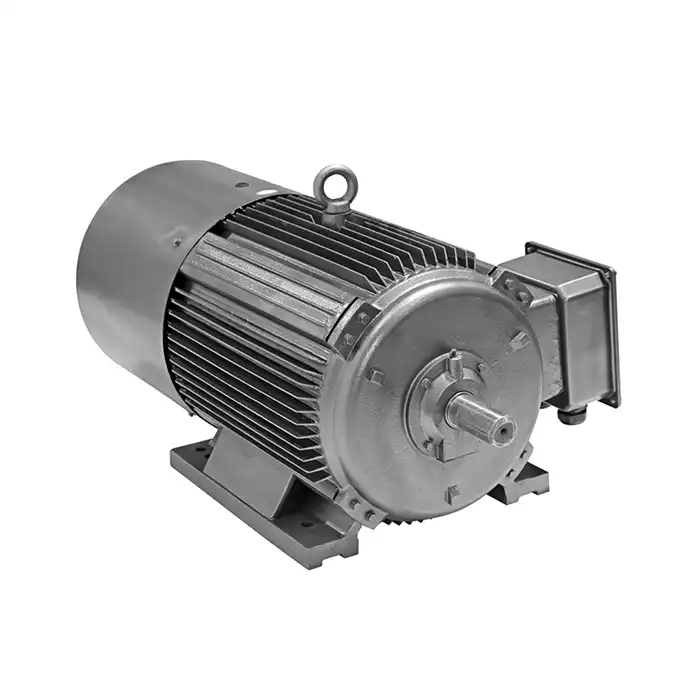
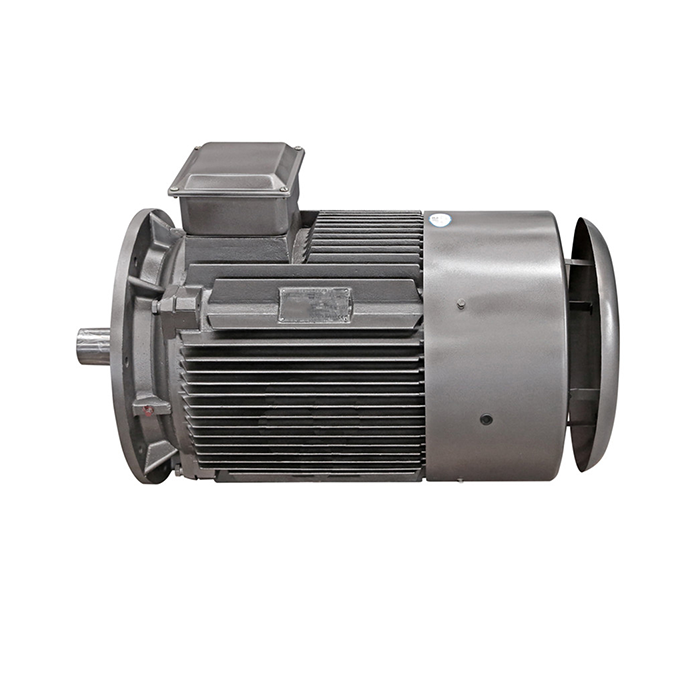
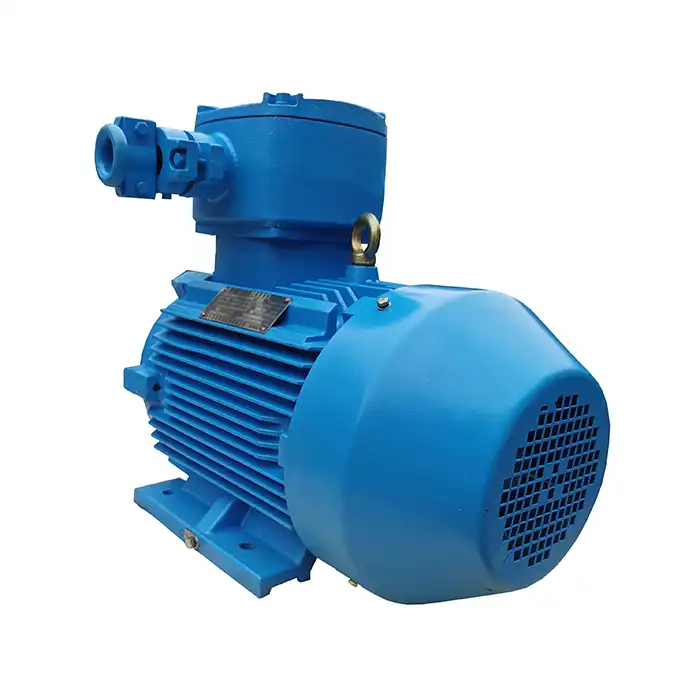
Series:YBX5
Voltage range:380V,660V,415V,380/660V,660/1140V
Power range:0.55-630 kW
Application:places where explosive gas mixtures exist in petroleum, chemical, mining, metallurgy, electric power, machinery and other industries.
Advantage: fully enclosed, self-fan cooling, squirrel cage type, high efficiency.
Explosion-proof mark: Ex d I Mb, Ex d IIB T4 Gb, Ex d IIC T4 Gb
Others: SKF, NSK, FAG bearings can be replaced according to customer requirements.
Confirm the Hazardous-Area Classification Before You Choose a Motor
Zone 1 and Zone 2 Are Not Interchangeable
Start with the site's hazardous-area classification, because it drives every later choice. Zone 1 describes a place where an explosive gas atmosphere is likely to appear occasionally in normal operation. Zone 2 describes a place where it is unlikely to appear in normal operation and, if it does, lasts only a short time. Zone 1 equipment needs Category 2G, while Zone 2 equipment can be Category 3G. A Zone 2 motor therefore cannot enter a Zone 1 area just because the rest of its nameplate looks right. I ask the end user or design institute for the signed area classification drawing before I quote any high-voltage increased-safety motor.
Gas Group and Temperature Class Must Match the Gas
Zone is only the first filter. The gas group (IIA, IIB, or IIC) must cover the most easily ignited gas on site, and the temperature class must keep the surface below that gas's ignition temperature. T4, for example, limits the maximum surface temperature to 135 °C. Many OEM specifications for compressors, fans, and pumps call for Ex e II T4 Gb, so I compare the nameplate against the specification line by line. If the process gas list is incomplete, I ask the process engineer to confirm it before the datasheet is frozen. Changing the temperature class of a high-voltage increased-safety motor after production starts usually means a redesign, not a new label.
Site Conditions Change the Motor Design
Ambient temperature, altitude, humidity, corrosive air, and outdoor exposure all shape the design. Many motors are rated for a 40 °C ambient, so a hot compressor house may call for a different temperature rise margin. Altitude thins the air and weakens cooling, so mines and plateau sites need an altitude statement on the datasheet. I also ask whether the motor sits indoors or outdoors, since IP55 and IP56 differ in how they handle water jets. For a US site, ask the authority having jurisdiction whether ATEX or IECEx documents are accepted. NFPA 70 (the NEC) governs hazardous locations there, and many owners expect local listing for a high-voltage increased-safety motor.
Verify ATEX, IECEx, and Ex e Documentation
Read the Complete Marking, Not Just "Ex e"
IEC 60079-7 defines the increased-safety concept, and IEC 60079-0 sets the general rules. A full marking shows the equipment group, category, protection type, gas group, temperature class, and equipment protection level. For a Zone 1 motor, I look for Category 2G and level Gb. Then I match the certificate number on the nameplate to the certificate itself and check the issue date and special conditions. A statement such as "complies with a national standard" is not a certificate, and a quote that cites an outdated standard edition deserves a question. Ask for the certificate number, scope, and validity before you send a purchase order for any high-voltage increased-safety motor.
Make Sure the Certificate Covers Your Exact Configuration
A certificate covers a defined configuration. Heaters, temperature sensors, cable glands, fans, and terminal boxes may carry their own approvals, and a change to any of them can fall outside the original scope. If you plan to run the motor on a variable frequency drive, ask whether the certificate lists drive operation, the speed range, and the drive type. Ex e motors also rely on protective devices, so ask for the tE time and the starting-current ratio. These two values let your electrical engineer set the relay so it trips before the surface temperature reaches its limit on your high-voltage increased-safety motor.
Build a Document Package an Auditor Will Accept
EPC buyers often lose time at handover when one document is missing. Ask for the ATEX certificate, the IECEx certificate if the destination requires it, the declaration of conformity, outline and terminal-box drawings, wiring diagrams, manuals, and a routine test report for each serial number. Type-test information shows that the design was verified, while routine reports show that your unit was tested. If the owner requires a third-party inspector at the factory, settle that in the technical agreement. For Eurasian Economic Union markets, EAC Ex certification under TR CU 012/2011 applies, and older GOST R Ex certificates no longer count on a high-voltage increased-safety motor project.
Match Electrical and Mechanical Specifications to the Machine and Grid
Voltage, Power, and Tolerance Must Cover the Grid
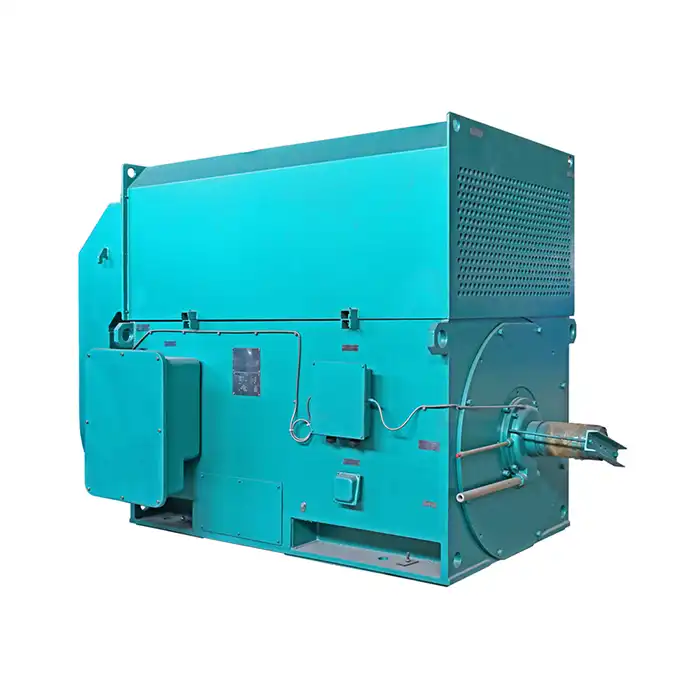
Voltage mismatch causes more trouble than many buyers expect. Torque rises with the square of voltage, so at 110% voltage it reaches about 121%, and starting current climbs as well, adding heat and mechanical stress. The YAKK series from XCMOTOR covers six voltage steps, each with a ±5% tolerance: 3000 V, 3300 V, 6000 V, 6600 V, 10000 V, and 11000 V. Power runs from 200 kW to 3550 kW, and speed from 500 to 3000 rpm. Check these numbers against the project grid, the starting method, and the load torque curve before you freeze the datasheet for a high-voltage increased-safety motor.
Frame, Rotor, Bearings, and Terminal Box
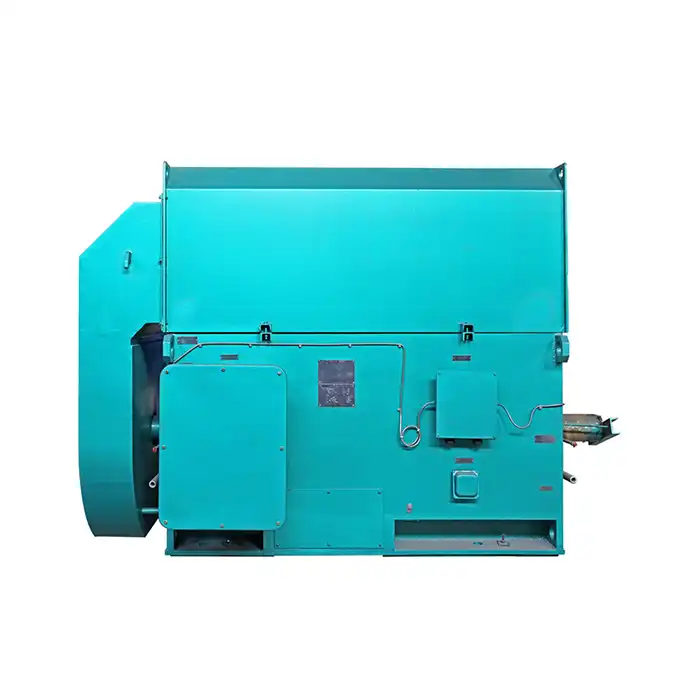
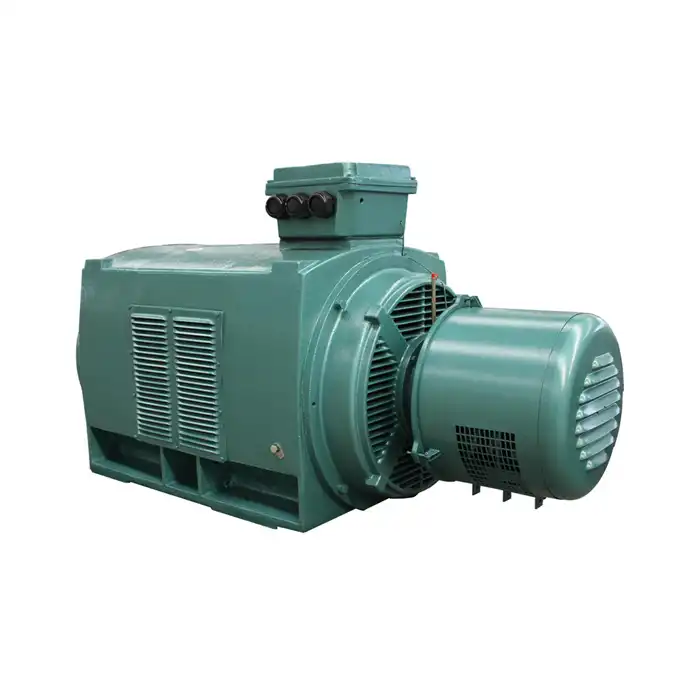
Mechanical checks decide whether the motor fits your base frame and runs smoothly. The YAKK high-voltage increased-safety motor factory direct uses a cast iron frame, a precision-balanced rotor, and a terminal box built for easy, secure connections. Its winding insulation is class F, with class H optional, and protection is IP55 or IP56, with higher ratings on request. The series references GB 10068 for vibration. Bearing brand can change to match customer requirements, which suits OEMs that standardize spare parts. Also confirm shaft dimensions, foot mounting, coupling, and axial thrust. Many OEM specifications set a vibration limit such as 2.8 mm/s for a high-voltage increased-safety motor, so ask how and where the factory measures it.
IC611 Cooling for Sites Without Water Lines
The YAKK series uses IC611 cooling, a closed-circuit design in which a machine-mounted air-to-air heat exchanger cools the internal air. Because it needs no cooling water, the skid carries no water piping, and site installation gets simpler. Keep the air path clear of walls and ducts, and leave room for fan and heat-exchanger maintenance. Ask about an anti-condensation heater too, which keeps winding insulation dry during idle periods in humid climates. A heater is an accessory, so it must appear in the certified configuration. Good cooling holds winding temperature inside the insulation class limit, and winding temperature is what Ex e protection relies on in a high-voltage increased-safety motor.
Compare Protection Types and Check Application Fit
Ex e Versus Ex d and Standard Motors
Ex e prevents sparks, arcs, and hot surfaces from forming by controlling clearances, creepage distances, winding temperature, and terminal design. Ex d, the flameproof concept, allows an internal explosion inside a certified enclosure and keeps it from reaching the outside. A standard industrial motor has no hazardous-area assessment, however well its voltage and power match. Intrinsic safety suits low-energy instruments, not motors at 3–11 kV. Ask the design institute which protection type the project datasheet names, then compare enclosure design, maintenance access, certification scope, and lifecycle cost rather than purchase price alone. That comparison keeps a high-voltage increased-safety motor from being swapped for a different protection type by accident.
Industries Where These Motors Run
The YAKK series is listed for oil and gas, chemical and petrochemical plants, mining operations, pulp and paper mills, and water treatment facilities. Each site stresses the motor differently. Chemical plants add corrosive vapor, humidity, and continuous duty. Oil and gas projects set detailed rules for gas group, temperature class, earthing, and cable glands. Mines may add methane, coal dust, vibration, and restricted access, and dust atmospheres fall under Zones 21 and 22, which can call for a different protection concept than gas. Share this site data with the supplier early so each high-voltage increased-safety motor is quoted correctly the first time.
Driven Equipment: Fans, Compressors, Pumps, and Crushers
The series suits ventilators, compressors, water pumps, crushers, cutting machinery, and transportation machinery. The driven load decides the starting duty. A large fan has high inertia and a long acceleration time, so every start loads the winding with heat. A centrifugal pump often starts against a throttled valve, while a crusher can demand high torque at start. Send the supplier load torque curves, inertia, starts per hour, and duty cycle. OEMs that want a second source for a high-voltage increased-safety motor should also compare foot dimensions, shaft extension, and the cooling air path on drawings before sample approval, since those interfaces must line up the first time.
Judge Installation Support, Supplier Capability, and the Final Decision
Installation, Commissioning, and Maintenance
Before shipment, confirm foundation dimensions, shaft height, cable entry, terminal-box orientation, lifting points, and earthing. At commissioning, check the certificate against the nameplate, check terminal torque, measure insulation and winding resistance, confirm phase sequence and rotation, and set the protection relay from the tE data. In service, track vibration, bearing temperature, lubrication, cooling passages, and insulation resistance. Follow the approved procedure for high-voltage testing. If you see an unexplained temperature rise, or you need to replace a certified part, contact the manufacturer first, since an unapproved change can affect the certified status of a high-voltage increased-safety motor.
Supplier Testing, Documents, and Logistics
A supplier needs engineering ability, not only a price list. XCMOTOR's production process includes no-load tests for basic function, full-load tests for performance under working conditions, and vibration analysis, and the company lists ISO 9001:2015 for quality management. Ask for the routine test record of the exact serial number you will receive, and ask whether windings come from the same plant in every batch, since process differences affect consistency. Large high-voltage increased-safety motor factory direct also need a transport plan, so request weights, lifting-point drawings, and packing method, with freight and lifting as separate quote lines. Get lead time, warranty handling, and spare-parts terms in writing.
Build a Simple Evaluation Matrix
Here is how I compare high-voltage increased-safety motor quotes in two steps.
- Pass or fail items: ATEX or IECEx certificate valid for the exact configuration, correct zone, gas group, and temperature class, matching voltage, power, speed, IP rating, and cooling method, plus approvals for every accessory. A single failure removes the quote, no matter how low the price is, because a rejected motor delays the whole machine.
- Weighted items: lead time, price, payment terms, warranty length, spare-parts support, service response time, and the supplier's record with motors in the same power range. Assign weights with your technical and purchasing teams before anyone opens a quote, so the scoring reflects project priorities. Record the weights.
- Documents to hold before approval: written technical clarification, signed datasheet, certified drawings, test-report templates, and confirmation from the end user or EPC contractor. Avoid generic certificates, unclear drive limits, and incomplete drawings, because each one tends to surface during commissioning, which is when a fix costs the most time and money.
This matrix keeps each decision on record and easy to defend in an audit.
Conclusion
Choosing a high-voltage increased-safety motor starts with the site, not the catalog. The zone, gas group, and temperature class set the requirements, and the certificate must cover the exact configuration, including accessories and any drive use. Voltage tolerance, power, speed, cooling, enclosure rating, and mechanical fit then decide whether the motor works with the grid and the driven machine. Ex e, Ex d, and standard motors follow different protection routes, so the project datasheet should name the one it requires. Installation checks, routine test records, transport details, and a scored comparison reduce handover risk. A buyer who gathers these records before ordering gives engineers, auditors, and end users the same evidence to review.
FAQ
1. What does increased safety mean?
Increased safety, marked Ex e, is a protection concept defined in IEC 60079-7. The motor is built so it does not produce arcs, sparks, or excessive surface heat in normal service. Designers achieve this by controlling clearances, creepage distances, winding temperature, and terminal design. That is why Ex e motors depend on a correctly set protection relay.
2. Can I use a Zone 2 motor in a Zone 1 area?
Only if its certificate and marking cover Zone 1. Zone 1 equipment needs Category 2G and level Gb, while Zone 2 allows Category 3G. Using a Zone 2 motor in Zone 1 leaves the installation without valid approval. Check the nameplate and the certificate, not the datasheet alone.
3. Which documents should I request for a high-voltage increased-safety motor?
Request the ATEX certificate, the IECEx certificate if the destination needs it, the declaration of conformity, certified drawings, wiring diagrams, manuals, and routine test reports by serial number. Also ask for the tE time, drive limits, and written warranty terms.
Request a Configuration Review for Your High-Voltage Increased-Safety Motor
XCMOTOR, operated by Shaanxi Qihe Xicheng Electromechanical Equipment Co.,Ltd., can review your datasheet for a YAKK high-voltage increased-safety motor and reply with a quotation. Send the zone, gas group, temperature class, voltage, power, and delivery location to xcmotors@163.com. As a high-voltage increased-safety motor supplier, we offer original products, free delivery, 30-day returns, and support on Saturdays and Sundays.
References
1. IEC 60079-7: Explosive Atmospheres – Part 7: Equipment Protection by Increased Safety "e", 2015
2. IEC 60079-0: Explosive Atmospheres – Part 0: Equipment – General Requirements, 2017
3. Directive 2014/34/EU of the European Parliament and of the Council (ATEX Equipment Directive), 2014
4. Directive 1999/92/EC on Minimum Requirements for Improving the Safety and Health Protection of Workers Potentially at Risk from Explosive Atmospheres, 1999
5. IEC 60034-14: Rotating Electrical Machines – Part 14: Mechanical Vibration of Certain Machines with Shaft Heights 56 mm and Higher, 2018
6. NFPA 70: National Electrical Code, 2023