


630 kW Motor Frequency Range: Constant Torque vs. Power
From low frequency to base frequency, a 630 kW motor on a variable frequency drive produces torque that is roughly constant. Its power output is rather constant above its base frequency, with torque decreasing with speed. It claims the XCMOTOR YVF2 series can provide constant torque 5 Hz-50 Hz and constant power 50 Hz-100 Hz. Constant torque is good for crushers, mills and conveyors. Constant power is good with loads which are quicker and need less torque. This guide is developed so that your team can interpret the torque-speed curve, evaluate the voltage and cooling and produce a clear request for a 630 kW motor upgrade.
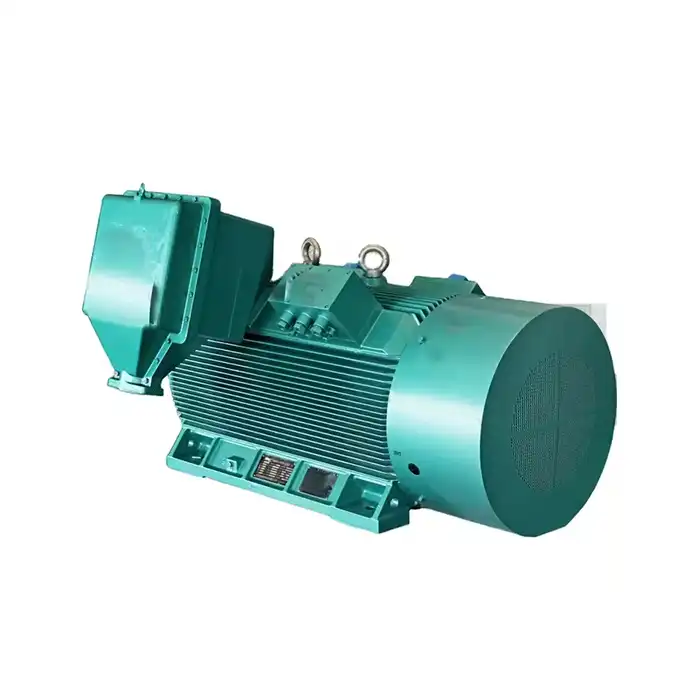
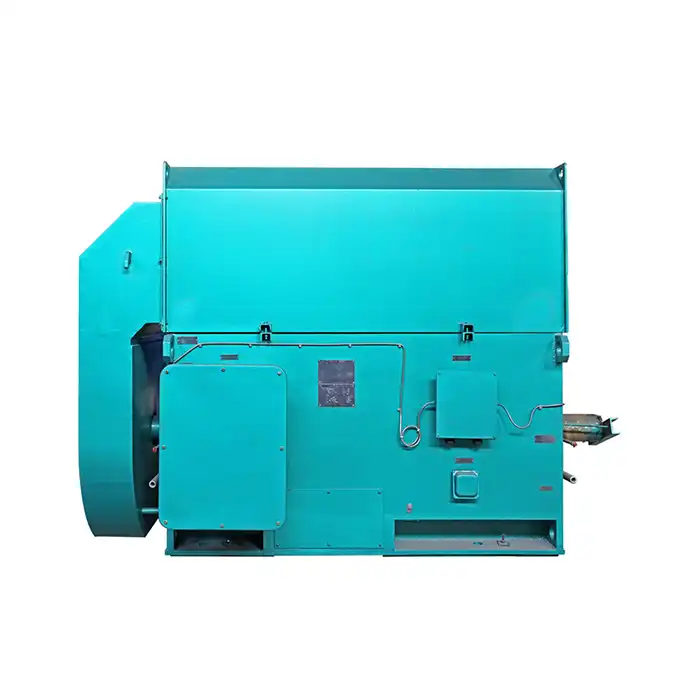
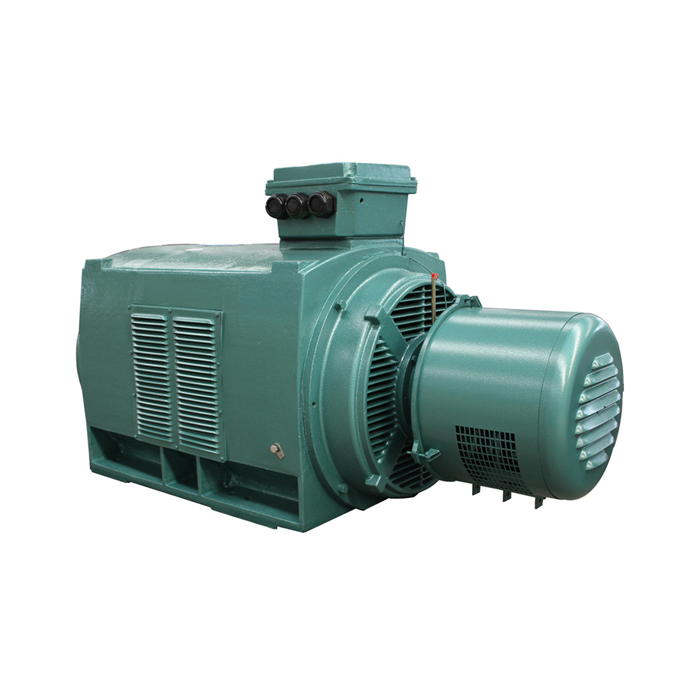
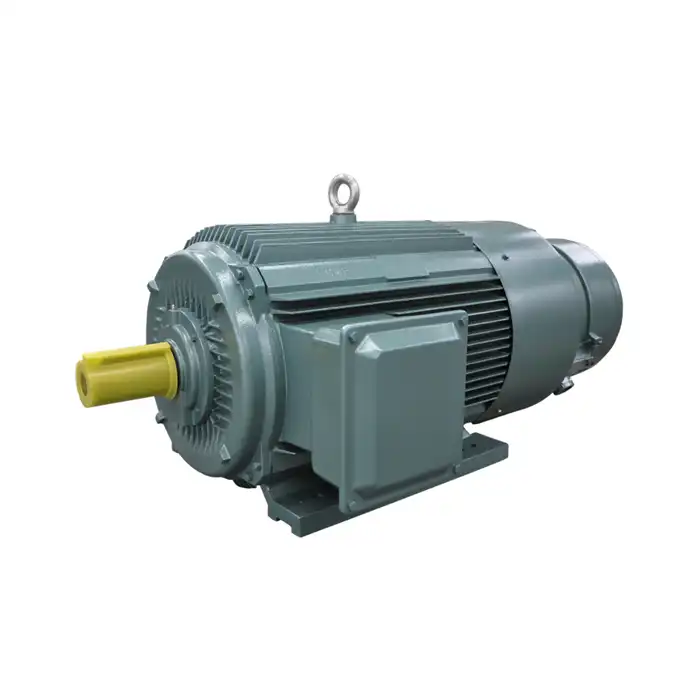
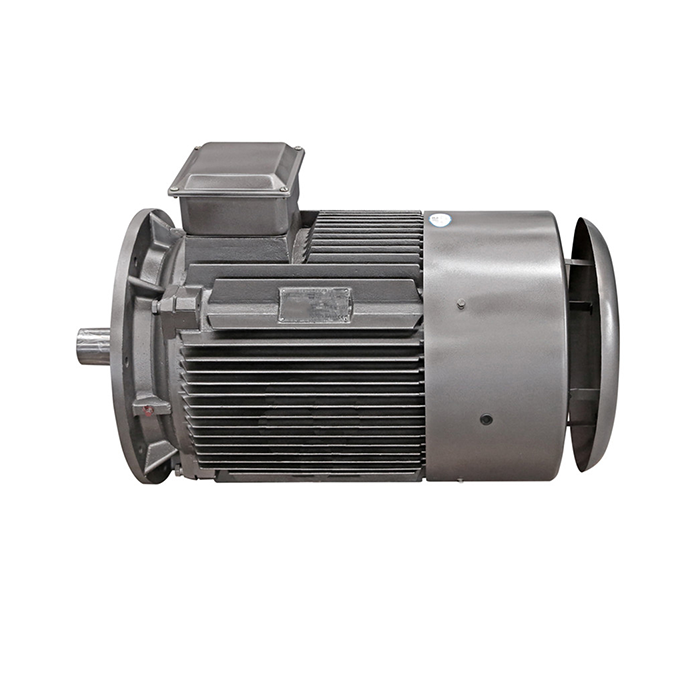
Series:YVF2
Protection level:IP54
Voltage range:3000V±5%,3300V±5%,6000V±5%,6600V±5%,10000V±5%,11000V±5%
Power range:160-1600 kW
Application:fans, water pumps, compressors, crushers, cutting machine tools, transportation machinery, etc.
Advantage:compact structure, light weight, low noise, small vibration, long service life, easy installation and maintenance.
Standard: This series of products complies with JB/T10444-2004 standards.
Others: SKF, NSK, FAG bearings can be replaced according to customer requirements.
What the Frequency Range of a 630 kW Motor Means
Rated, Base, and Operating Frequency
The electrical frequency range of a 630 kW motor is the range within which the motor may safely run continuously. It has the rated frequency, the lowest allowable frequency, the base frequency at which the motor’s rated voltage is attained and any field-weakening range above base. This band is greater than the nameplate frequency. The true restrictions are things like cooling, insulation, bearings and drive compatibility. You need to have the allowed range documented. Read the datasheet and the quotation together. The motor make is also important . In a US plant with a 60 hz grid the drive alters the supply thus the base frequency of the motor is the setting on the drive .
How Frequency Sets Speed and Torque
Synchronous speed is determined by frequency by n = 120 — f/P, where P is the number of poles. A four-pole motor at 50 Hz can run at 1,500 rpm. The real speed of the shaft is a bit slower because to slip. Rated torque = 9550 × P ÷ n Where P = kW, n = rpm. The motor is 630 kW and produces around 4,000 Nm of torque at 1,500 rpm. As the frequency gets lower, the speed goes down. Frequency alone never reveals the complete picture. Voltage, current and heat affect the motor’s ability to maintain that torque.
Where the YVF2 Series Fits?
The 630 kW motor is included in the usual power range of our YVF2 series, 160-1600 kW. The series features Class F insulation, IP54 protection and an independent cooling fan with its own power source. The speed control profile described is continuous power from 50 Hz to 100 Hz and constant torque from 5 Hz to 50 Hz. The voltage ratings are from 3000 V to 11000 V with a tolerance of ±5%. This series is based on JB/T 10444-2004. If you want, you may also obtain SKF, NSK or FAG bearings instead of the usual ones. These data are a fantastic beginning for your engineers to start their assessment.
Constant Torque vs. Constant Power in a 630 kW Motor
Constant Torque Below Base Frequency
When the frequency goes below the base frequency, the drive reduces the voltage and the frequency. This maintains the torque of the motor roughly the same. Mechanical power drops down with speed after P = T * ω. The 630 kW motor at 25 Hz produces roughly 315 kW (almost half of its full power) yet the torque is still near to its rated value. At 5 Hz just one tenth of the rated power remains. This profile may be used to positive-displacement pumps, crushers, conveyors and mills, all of which need a lot of torque at a low speed. Vector control is excellent for loads with high inertia or hard beginnings. Basic V/f control is preferable for simpler jobs.
Constant Power Above Base Frequency
When the frequency is above the base frequency the drive can not boost the voltage over the rated value. This reduces the field in the motor. The output power is roughly the same as speed rises while the available torque diminishes (T = P / ω). As the frequency increases from 50 Hz to 100 Hz, the available torque is about halved. In this location the pullout torque decreases much more rapidly, hence the overload margin shrinks. For winding systems, test benches, machine tools and certain compressor applications continuous power is often the best choice. It doesn’t let you move as quickly as you want.” The rotor, bearings, shaft, coupler and the driven machine should be kept within the limitations set out. Obtain a documented torque-speed curve before operating over 50 Hz.
Key Differences to Compare
What limits the motor is different in each region. In the region of constant torque, torque is limited by current, and power goes up as speed goes up. In the area of constant power, the motor is limited by voltage, and as speed goes up, torque goes down. Ask for the curve instead of assuming 50 Hz to find the transition point. It depends on how the motor is built and how it is driven. Not only look at the 630 kW rating, but also the continuous torque, breakaway torque, acceleration demand, overload capacity, and duty cycle. Low-speed torque is what crushers and mills care about the most. The speed range at low torque is important for machine tools and winders. A variable-torque law says that torque decreases as speed squared. This is true for most centrifugal pumps and fans.
Cooling, Insulation, and Load Matching at Variable Speed
Why Low-Speed Cooling Matters?
A standard motor has a fan on the shaft that cools it down. As the shaft slows down, so does the fan. It gets very cold in the windings at 5 Hz because a constant-torque load is still drawing almost full current. This is the main reason why regular motors on a drive get too hot when they're running slowly. In the YVF2 series, there is a separate forced cooling fan with its own power supply. This means that the airflow does not depend on the speed of the shaft. When the temperature is between -15°C and +40°C and the altitude is up to 1000 m, the series runs in continuous S1 duty. Before ordering a 630 kW motor, confirm these site limits.
Insulation and Converter Voltage Stress
The output of the drive is not a smooth sine wave, but a series of short voltage gaps. When the voltage is medium, these pulses add harmonic content and put stress on the insulation of the windings. Most windings can wear out quickly under that kind of stress. Class F insulated windings made for converter supply are used in the YVF2 series. The temperature class for Class F is 155°C, which is high enough to handle the extra heat that variable-speed duty brings. There are two things that can change the shape of the pulse at the motor terminals: the length of the cable and the output filters that come with the drive. Our engineers can check the compatibility with your 630 kW motor if you let them know the drive model during the quotation process, and 630 electric motors should be reviewed against the drive's pulse profile.
Matching the Load Curve
Do not start with the motor, but with the load. The constant torque region is the most important because a crusher or conveyor needs a lot of breakaway torque and a steady amount of low-speed torque. A variable-torque curve shows how much power a boiler fan or water pump needs as speed drops. Both may be needed by a compressor. The YVF2 series is used in fans, water pumps, compressors, crushers, cutting tools, and cars and trucks. For mining and metallurgy retrofits, I think you should send the nameplate of the old motor, the load curve, and the speed range. This information demonstrates whether a 630 kW motor can handle the duty with some extra power.
Voltage, Current, and Drive Selection for a 630 kW Motor
How Voltage Changes Current
I = P ÷ (√3 × V × · PF) gives you the input current. To show this, let's use a power factor of 0.88 and an efficiency of 0.95 as an example. A 630 kW motor consumes roughly 73 A at 6000 V. The same output draws about 1,090 A at 400 V. These numbers are just guesses, not exact numbers. When the voltage is high and the current is low, the cables and switchgear are small and light, which is helpful for long cable runs. Medium voltage also needs special tools and maintenance staff who have been trained. There are 3000 V, 3300 V, 6000 V, 6600 V, 10000 V, and 11000 V ratings in the YVF2 series. Each one has a ±5% tolerance.
Power Factor, Cables, and Switchgear
The size of cables, transformers, switchgear, and safety devices is based on the current and the power factor. Both should be checked where the motor will be loaded, since they change with load. The grid can see the drive input when there is a drive in front of the motor. This means that the supply-side power factor is determined by the design of the drive. Protection also needs to be coordinated. Protectors for overcurrent, earth fault, heat, and differential should be the same for both the motor and the drive. Your electrical engineer and drive supplier should look over the whole single-line diagram. Our team can give you motor data to back up that review.
What to Send Before Choosing a Drive
A motor and drive work best when they are paired together. We need to know the rated voltage, frequency range, target speed, torque demand, starting method, drive model, cable length, cooling conditions, site elevation, and delivery location before we can give you a quote. The drive supplier can check the continuous current, overload rating, and harmonic limits with that information. For an old building, add the foundation drawing and shaft measurements. When data isn't complete, assumptions have to be made, and it's in assumptions that problems begin. The 630 kW motor and drive are kept in line during commissioning by a complete package.
Installation, Testing, and Purchasing a 630 kW Motor
Foundation and Old-Base Fit
When you do a retrofit, the new motor has to land on the old base. Check your drawings to see how the frame size, foot hole pattern, shaft height, shaft extension, and coupling type match up. Our engineering team can change the sizes for installations with limited space and make custom shaft extensions and mounting arrangements. Check the alignment, soft foot, grouting, and vibration levels before the full-load operation. Plan early on how to move and lift things as well. The site should confirm the lifting weight from the datasheet before the 630 kW motor ships. A motor of this size requires a crane and a rigging plan, and 630 electric motors should be planned for with the same rigging discipline.
Factory Tests and Commissioning Checks
Every motor is checked by the factory. Some of the checks we do are multi-point vibration measurement under ISO 20816, monitoring temperature rise against Class F limits, and making sure the insulation resistance is at least 100 MΩ according to JB/T10444-2004. A voltage withstand test at 2 times the rated voltage plus 1000 V for one minute is also part of them. Other tests include an overspeed test at 120% of the rated speed for two minutes. Before we ship, we do full-load trials. I agree with the quote's test scope. On-site, check the insulation and winding resistance again, make sure the motor is turning, run the no-load and ramp tests, and record the temperature, vibration, and current of the bearing as starting points.
Common Frequency Range Mistakes
When you first make a mistake, you think that the 50 Hz nameplate covers the whole operating range. The second doesn't take cooling at low speed into account. The third is thinking that constant power lets you go overspeed as much as you want. The fourth is choosing a motor based only on its 630 kW rating, without looking at its torque curve. One fifth only looks at price quotes and doesn't look at test records, paperwork, spare parts, or warranty terms. A broken motor in a mill or fan line can cause more work to be stopped than the difference in prices. Rate each quote based on how well it fits your needs in terms of technical fit, test scope, documentation, and delivery.
Writing a Clear RFQ
A clear RFQ lets suppliers quote on the same things. You need to list the voltage, frequency range, load type, starting method, drive details, cooling, enclosure, insulation, mounting, site conditions, standards, quantity, destination, and due date. You can place a trial order for one to five units on our supply-capabilities page. There is a 15- to 30-day lead time, and the warranty lasts for 18 months from the date of shipment or 12 months from the date of installation, whichever comes first. Make sure you know the lead time and terms for your order. In the RFQ, you should say what kind of document package your boss or owner needs.
Conclusion
Two regions can be served by a 630 kW motor on a drive. It keeps torque pretty much the same below its base frequency, but power drops as speed goes up. It is suitable for crushers, mills and conveyors. Above base frequency it moves into field weakening. Power is about constant in field weakening and torque decreases. Simply put, the rotor, bearings and driven machine restrict the safe maximum speed. Cooling at low speeds . Insulation that can take the voltage spikes from the converter . The voltage option . This governs the current , the cable size , the form and the kilowatt rating . The YVF2 series provides a constant torque profile from 5 Hz to 50 Hz and a constant power profile from 50 Hz to 100 Hz. It also contains a self-working cooling fan which has been tested at manufacturing. A solid choice of frequency range is backed up by a documented torque-speed curve and complete load data.
FAQ
1. Can a 630 kW motor run above 50 Hz?
Yes, as long as the limits are okay. When the motor's frequency goes above its base, the field weakens, and as the speed goes up, the torque goes down. The constant power range for the YVF2 series goes up to 100 Hz. Ask for a written torque-speed curve and make sure the bearings, coupling, and machine being driven can handle the faster speed.
2. Does a 630 kW motor need a separate cooling fan on a drive?
Most of the time, yes, because a shaft-mounted fan loses airflow as the shaft slows down. For the YVF2 series, there is a separate forced cooling fan with its own power supply. This way, cooling is not affected by the speed of the shaft. This keeps the windings safe during long periods of low frequency use.
3. Which voltage should I choose for a 630 kW motor?
The choice you make will depend on your switchgear, drive, and cable length. When voltage is high, current is low, which is helpful for long cable runs. From 3000 V to 11000 V, the YVF2 series has it, and each one has a ±5% tolerance. We will check to see if the voltage from your drive matches what we get.
Request a 630 kW Motor Quote from XCMOTOR
XCMOTOR's engineers will examine your 630 kW motor requirement after receiving your load data, voltage, frequency range, and drive model at xcmotors@163.com. With SKF, NSK, or FAG bearing options, dimension changes for old foundations, and support on Saturdays and Sundays, we work as a 630 kW motor manufacturer and supplier of YVF2 units.
References
1. IEC 60034-1, Rotating Electrical Machines – Part 1: Rating and Performance, 2022
2. IEC TS 60034-25, Rotating Electrical Machines – Part 25: Guidance for the Design and Performance of A.C. Motors Specifically Designed for Converter Supply, 2014
3. NEMA MG 1, Motors and Generators, 2021
4. IEEE Std 112, Standard Test Procedure for Polyphase Induction Motors and Generators, 2017
5. ISO 20816-1, Mechanical Vibration – Measurement and Evaluation of Machine Vibration – Part 1: General Guidelines, 2016
6. U.S. Department of Energy, Improving Motor and Drive System Performance: A Sourcebook for Industry, 2014