



Inside a 3.3 kV Motor: Design, Cooling, and Efficiency
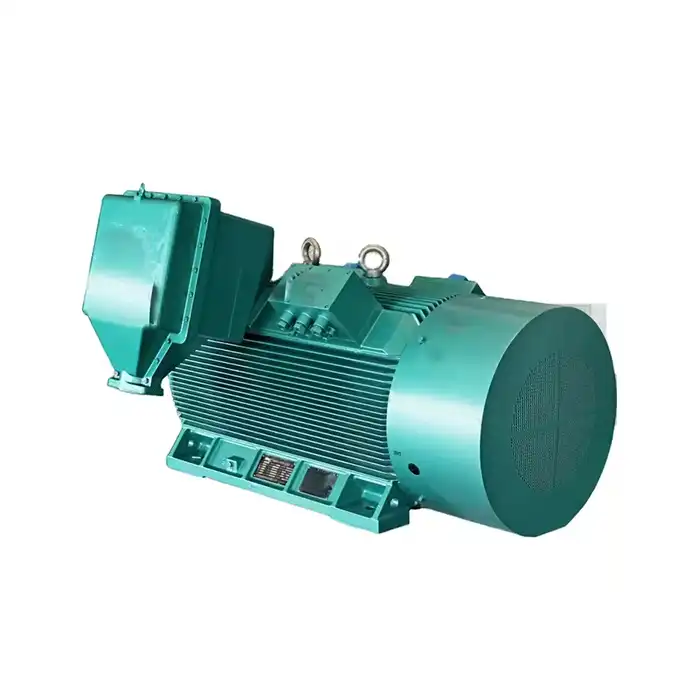
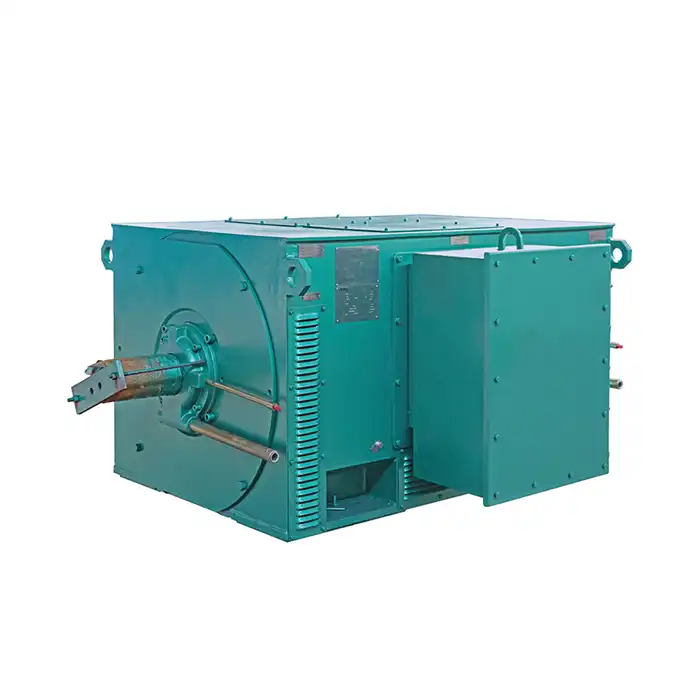
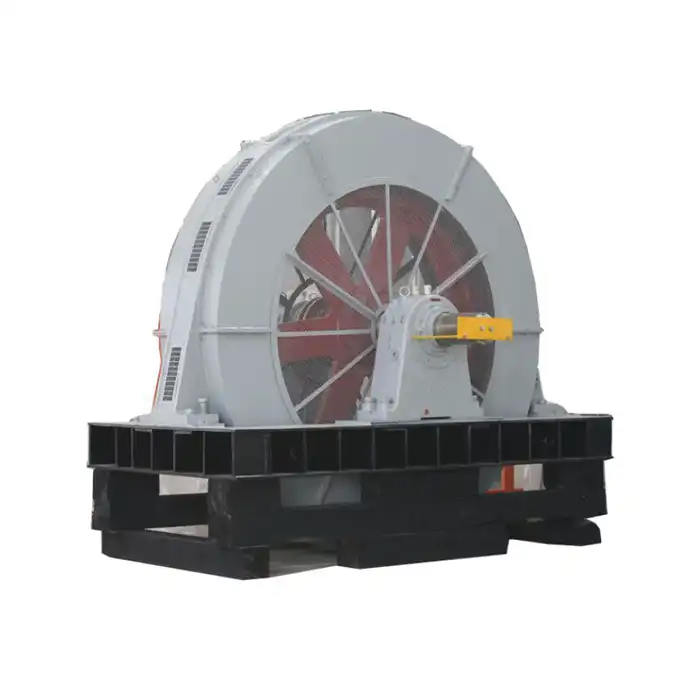
When you're managing large-scale mining or petrochemical projects, understanding what's actually happening inside your mid-voltage motors can make the difference between smooth operations and unexpected downtime. A 3.3 kv motor represents a critical power solution for heavy industrial equipment, from crushers and conveyors to high-capacity compressors and water pumps. These machines handle substantial power loads—typically between 160 kW and 1600 kW—while operating in some of the harshest environments imaginable. The internal design, cooling mechanisms, and efficiency characteristics directly impact your project's total cost of ownership, maintenance schedules, and operational reliability. Understanding these three elements helps procurement managers like you make informed decisions that align with both technical requirements and budget constraints.
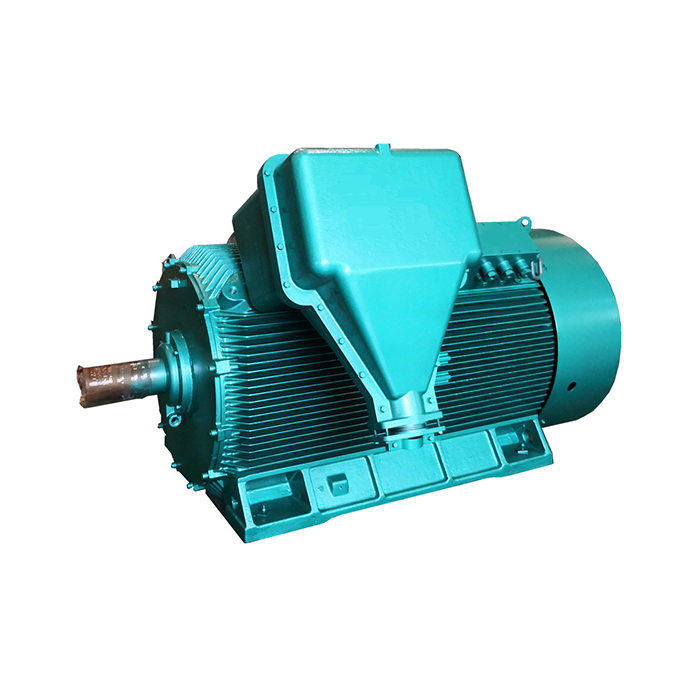
Series:YE5
Frame number: 80-450
Power range:0.75-1000kW
Protection level:IP55
Energy efficiency class: IE5
Voltage range: 380V,400V,415V, 660V,etc.
Application:can be used in various fields of the national economy, such as machine tools,water pumps,fans,compressors,and can also be used in transportation, mixing, printing, agricultural machinery, food and other occasions that do not contain flammable, explosive or corrosive gases.
Certificate: international standard IEC60034-30 "Efficiency Classification of Single-speed Three-Phase Squirrel Cage Induction Motors".
Advantage:The high quality of the electric motor guarantees high operational reliability.
Others: SKF, NSK, FAG bearings can be replaced according to customer requirements.
Understanding the Design of a 3.3 kV Motor
Core Components and Construction Standards
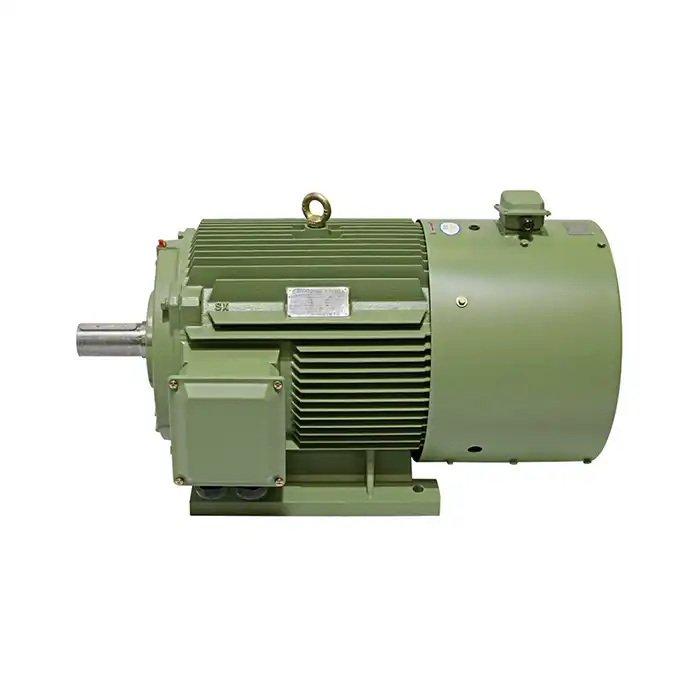
Every medium-voltage motor is made up of two parts: the stator and the rotor. Copper or metal windings inside the stator make the electromagnetic field needed for spinning. The rotor then uses this field to make mechanical power. The insulation system is what makes mid-voltage motors different from low-voltage motors. Manufacturers use Class F or Class H insulation materials for 3.3 kv motors because they can withstand higher electrical stress and higher temperatures. Usually, these insulation systems have many layers of mica tape, epoxy resin, and special varnishes that keep the motor frame and windings from losing their electrical integrity.[^1]
There are strict rules for the mechanical construction. The quality and performance of our products are always the same because they meet JB/T10444-2004 standards. The design of the frame emphasizes both compactness and structural integrity. This lets these motors produce a lot of power while still being relatively light compared to older models. This is important when setting up equipment in offshore bases or remote mines, where every kilogram affects the cost of shipping and the difficulty of the installation.
IP Protection and Environmental Durability
Strong protection against dust, water, and mechanical impact is needed in industrial settings. The IP54 level of security is a good compromise for most mining and industrial uses. With this grade, the motor is protected against dust getting in enough to stop it from working and water splashing from any direction. Higher protection levels, like IP55, can be chosen for settings that are very tough. These levels offer better protection against dust and water jets.
The design of the enclosure fits in perfectly with the cooling system and keeps the protection strong. Contaminants can't get into sealed bearing housings, and carefully designed cord entry points keep the IP rating even after the product is installed. You can add premium bearings from SKF, NSK, or FAG based on your load profiles and maintenance preferences. This will increase the time between services and lower the costs over the life of the bearing.
Technical Specifications That Matter
Voltage adaptability is one of the most important things to think about when buying something. Modern medium-voltage motors can work with voltages of 3000V±5%, 3300V±5%, 6000V±5%, 6600V±5%, 10000V±5%, and 11000V±5%, so you can match your tools perfectly to the way your electricity is set up. In many situations, this gets rid of the need for pricey step-down transformers or power filtering gear.
The current ratings change based on the voltage level and the power output. A common way to figure out the full-load current of a 3.3 kV synchronous motor running at 160 A with a 0.8 power factor lagging shows how complicated the electrical properties of these machines are. Knowing these specs helps electrical engineers make sure that the safety gear, cables, and switchgear they use are the right size during the planning steps of a project.
There are big differences between squirrel cage induction motors and wound rotor versions when it comes to starting power. Squirrel cage designs are easy to use and require less maintenance, which makes them good for applications like fans and pumps that have steady loads. Wound rotor motors are better at controlling starting power and speed, which is useful for breakers and conveyors that have changing loads.
Effective Cooling Methods for 3.3 kV Motors
Air Cooling Technologies
Managing heat has a direct effect on how long and how well a motor works. The most common way to cool industrial mid-voltage motors is the IC411 method, which has a completely enclosed fan-cooled surface. An external shaft-mounted fan in this system pushes air over motor surfaces with fins to get rid of the heat that is made by electrical losses and mechanical friction. The enclosed design keeps outside contaminants from getting into the motor while still transferring heat well in 3kv electric motors.
Different air cooling systems are available to meet the needs of different applications. Totally Enclosed Fan Cooled (TEFC) motors work well in dusty places where open air would let rough particles into the motor. Open Drip Proof (ODP) designs let heat escape more quickly in clean, controlled spaces, but they give up some protection. The choice you make will depend on how well the cooling works and how dangerous the surroundings is where you are.
The shaft-driven fan moves less air at lower RPMs, which makes it harder to cool down when the speeds are slowed down. When uses need frequency inverters to change the speed, extra cooling fans that are driven separately from the motor shaft make sure there is enough airflow at all speeds, from 500 to 3000 RPM. This is especially important to think about when using variable-flow pumps and drives for crushers.
Advanced Cooling Enhancements
Modern insulation materials help keep heat in or out in a big way. Inorganic insulating paints are better at resisting heat than standard organic materials, and they keep their protective qualities even when the temperature is high. This lets the motor handle more continuous loads without going over the safe winding temperatures, which increases its power density.
By designing their cooling systems better, mining companies have been able to extend the life of motors by 30 to 40 percent. During the busy summer months, one copper mine in South America had motor problems on their SAG mill drive all the time. After adding better airflow patterns for better external cooling and switching to high-temperature insulation systems, the motor works consistently even when it is overloaded for a long time. This kind of useful improvement directly leads to lower upkeep costs and fewer breaks in production.
Modern motors have temperature monitoring systems that let you know when the cooling system is breaking down early on. Real-time temperature data is sent to control systems by RTD sensors that are built into the windings. This lets predictive maintenance plans fix problems before they break down. This proactive method works well with the long project timelines and rural areas that are common in petrochemical and mining sites.
Enhancing 3.3 kV Motor Efficiency: Best Practices
Understanding Loss Mechanisms
Motors lose electrical and mechanical power, which turns it into heat instead of useful work. As the rotating magnetic field changes direction, magnetic hysteresis and eddy currents cause iron to be lost in the stator and rotor cores. The electrical resistance of the stator and rotor windings causes copper to be lost as current runs through them. Mechanical losses happen when the bearings rub against each other and the rotor spins.
It's possible for harmonic losses, extra eddy currents at slot openings, and magnetic flux leakage to all fall under the term "stray losses." Even though these losses are small on their own, they add up and make things less efficient overall. These losses are kept to a minimum in high-efficiency motors by making smart design choices. For example, thinner lamination steel lowers eddy currents, optimized slot geometry lowers harmonic effects, and precise manufacturing keeps air gaps between the stator and rotor.
The cooling system uses power, especially the fans that move the cool air around. A well-designed cooling system strikes a balance between removing enough heat and using too much power from the fans. During the planning process, computational fluid dynamics modeling is used to find the best fin geometry and fan blade profiles to get the most heat transfer for each watt of fan power.
Manufacturing Quality and Material Selection
Precision production has a direct effect on how well things work. Because the air gap between the stator and rotor is very small, less magnetizing current is needed, which lowers iron loss. Core losses can be cut down even more by using high-quality electrical steel with low distortion and thin laminations. Copper windings have less resistance than aluminum ones, which lowers copper losses but costs more in materials.
These new materials and manufacturing methods are what make replacing old motors with new ones more efficient by 15 to 20 percent. At full load, an older motor might be 92% efficient, which means that 8% of the power it receives is wasted as heat. Now, a high-tech motor might be able to reach 95% efficiency, which would cut those losses by almost half. Over thousands of hours of use, this difference saves a lot of money on energy costs, and the equipment is usually paid for within two to four years.
The choice of bearing affects both how well they work and how often they need to be serviced. Low-friction bearing designs cut down on mechanical costs and increase the time between cleaning cycles. If you choose premium bearings from companies like SKF, NSK, or FAG, you can find the best balance between starting cost and long-term maintenance costs based on how easy it is to get to your place and how much maintenance it needs.
Operational Optimization Strategies
Disciplined operational practices are needed to keep the motor running efficiently for as long as it lasts. When there is a voltage difference of more than 2% between stages, losses are much higher and the motor lasts less long. Regularly checking the voltage and fixing supply imbalances keeps equipment working well and lasts a long time. In the same way, running motors much less than their rated load lowers their efficiency because fixed losses make up a bigger part of total power in 3kv electric motors.
IoT sensor networks have made predictive repair possible, which is a big step forward in keeping motors running well. Vibration monitors find problems like worn bearings or an uneven wheel before they break. Temperature tracking finds problems with the cooling system or situations where it is overloaded. Current signature research shows that electrical problems are starting to appear in the windings or rotor bars. By gathering and analyzing this information, maintenance teams can plan their work to happen during planned shutdowns instead of having to fix problems as they happen during production runs.
When comparing 3.3 kv motors to higher voltage options like 6.6 kV or 11 kV systems, the efficiency gaps get smaller as the power levels go up. Higher voltages have benefits like lower current for the same amount of power, which lets conductors be smaller, and lower I²R losses in the distribution system instead of the motor itself. When making a purchase choice, the economy of the motor should be weighed against the costs of the whole electrical system design, which includes transformers, switchgear, and cables.
Maintenance and Troubleshooting of 3.3 kV Motors
Preventive Maintenance Protocols
Regular maintenance prevents minor issues from becoming major failures. Monthly visual checks and quarterly measurements monitor noise, vibration, temperature, leaks, and insulation. Annual overhauls inspect windings, cooling passages, bearings, and electrical systems. Proper lubrication is essential, while synthetic lubricants suit high-temperature duty. Bearing replacement should consider operating hours, load conditions, environment, and condition-monitoring data.
Diagnostic Approaches for Common Faults
Common motor faults can be diagnosed through insulation resistance, vibration, current, and temperature monitoring. Megohmmeters detect insulation deterioration, while vibration analysis identifies bearing wear, rotor imbalance, and misalignment. Phase-current checks reveal electrical or supply problems, with differences above 5% requiring attention. Thermal imaging detects winding hotspots, cooling issues, overloads, and power-related abnormalities.
Procurement Considerations for 3.3 kV Motors
Evaluating Manufacturers and Suppliers
Evaluating manufacturers requires considering price, certifications, production capacity, lead times, and technical support. Factory-direct suppliers can reduce markups while providing engineering assistance. Understanding production schedules helps prevent critical-path delays, especially for customized motors. Strong after-sales support, including documentation, remote diagnostics, spare parts, and weekend or holiday assistance, is particularly valuable for remote industrial projects.
Total Cost Analysis and Customization
Total cost includes purchase, energy, maintenance, and lifecycle expenses. Over 20–30 years, energy costs can greatly exceed the initial price, making efficient motors economically valuable. Customization supports special shafts, mounting, corrosion protection, and voltage requirements, avoiding costly modifications. Although customization costs more and takes longer, clear warranty terms and extended coverage provide additional protection for critical equipment.
International Logistics and Delivery Management
International logistics for heavy industrial motors requires careful planning of shipping methods, Incoterms, inspections, and payment terms. Break-bulk or container shipping suits different motor sizes, while third-party inspections may add 1–2 weeks. Overall procurement typically takes 3–9 months, covering technical clarification, bidding, production, testing, and shipping, so timely planning helps prevent project delays.
Conclusion
Knowing how mid-voltage motors are built on the inside, how they cool, and how efficient they are can help you make better purchasing choices for tough industrial uses. Modern 3.3 kv motor designs meet the demanding needs of mining, petrochemical, and power production projects thanks to their sturdy construction, adaptable voltage options, and established reliability. Paying close attention to the design of a cooling system can make equipment last longer and keep working well for longer periods of time. Comprehensive repair programs keep things running smoothly and stop problems from happening out of the blue that stop activities. When choosing a supplier, it's important to weigh the initial costs against the total costs of ownership, the reliability of delivery, and the availability of ongoing technical support. All of these things will show if your investment in a motor gives your projects the long-term value and operational reliability they need.
FAQ
1.What does the voltage rating actually mean for motor selection?
The voltage number tells you the motor's recommended working voltage and the range of voltage changes that are okay. Between 3135V and 3465V, a 3.3 kv motor with a rating of 3300V5% can work safely. By exactly matching this to your facility's electrical source voltage, you can keep the motor from losing efficiency, overheating, or breaking down early, which can happen when the voltages don't match and force it to work outside of its design limits.
2.How do I determine the correct power rating for my application?
Figure out how much power your equipment needs by looking at how it works mechanically. For crushers and conveyors to work, the motors need to be the right size for the maximum load and have the right service factors. Centrifugal pumps and fans work with affinity laws, which say that power changes as speed cubes. This makes it easier to get the right size. Our technical team can help you figure out the right motor for your application by analyzing the load.
3.What maintenance intervals should I plan for?
Visual checks done once a month catch obvious problems early. Trending data is gathered through thorough checks that happen every three months and include readings of vibration and temperature. Comprehensive upkeep is done once a year and includes checking the bearings, lubricating them, and testing the electricity. Critical installations may need more frequent maintenance, while accessible motors in non-critical service can have these intervals slightly pushed back based on the results of condition monitoring.
4.Can these motors operate in hazardous locations?
There are versions that can't explode and are suitable for hazardous area classifications. Specialized enclosures, cable entries, and building details in these designs keep ignition sources out of explosive environments. Giving your hazardous area rating during the inquiry part makes sure that the right motor is chosen and that the right paperwork is kept for approval.
Partner with XCMOTOR for Reliable Medium-Voltage Motor Solutions
Choosing the right 3.3 kv motor supplier is important for making sure that your project meets its goals for performance and dependability. XCMOTOR offers complete options for power tools, along with quick expert help and direct factory access to high-quality manufacturing. Our product line has 160–1600 kW of power and voltages ranging from 3.3 kV to 11 kV, so it can be used in a wide range of industrial settings, from mine crushers to petrochemical compressors. We offer competitive delivery times of 8 to 12 weeks for standard specifications. We can also make changes to meet the specific needs of each project without causing too many delays. Premium parts, like SKF, NSK, and FAG bearings, make service times longer. IP54 protection and tried-and-true cooling systems make sure the machine works reliably in harsh conditions. Our support team helps with technical issues at all stages of a project, from the initial selection phase to commissioning and ongoing use. You can talk to our engineering team at xcmotors@163.com about your specific motor needs, or you can go to motorxc.com to see all of our high-voltage motor options. International builders and project managers count on XCMOTOR for their technical know-how and reliable supply, whether they need a single replacement motor or full power packages for big projects.
References
1. Stone, G. C., Boulter, E. A., Culbert, I., & Dhirani, H. (2014). Electrical Insulation for Rotating Machines: Design, Evaluation, Aging, Testing, and Repair. IEEE Press.
2. Bonnett, A. H., & Yung, C. (2008). Increased Efficiency Versus Increased Reliability. IEEE Industry Applications Magazine, 14(1), 29-36.
3. Nailen, R. L. (2005). Motor Maintenance and Troubleshooting. Electrical Apparatus, 58(3).
4. Boglietti, A., Cavagnino, A., Staton, D., & Shanel, M. (2009). Evolution and Modern Approaches for Thermal Analysis of Electrical Machines. IEEE Transactions on Industrial Electronics, 56(3), 871-882.
5. Chapman, S. J. (2012). Electric Machinery Fundamentals (5th ed.). McGraw-Hill Education.
6. Yao, L., Lu, D., Li, J., & Zhang, W. (2018). Predictive Maintenance Strategy for High-Voltage Motors Based on Condition Monitoring. Journal of Electrical Engineering & Technology, 13(2), 782-791.