




DC Motor Selection Guide: Duty, Cooling and Service
To choose the proper dc motor, match 3 things to your machine: duty cycle, cooling technique, and servicing plan. Duty informs you what range of torque and speed the motor must produce, and how frequently it starts, stops or reverses. Cooling keeps the windings and commutator within their temperature limitations. Service includes brushes, bearings, replacement parts and lead times for the life of your motor. This guidance is intended for OEM engineers and maintenance purchasers in the United States who need to regulate speed smoothly and have a clear route to placing the right order. Each selection step is linked to publicly available XCMOTOR data.
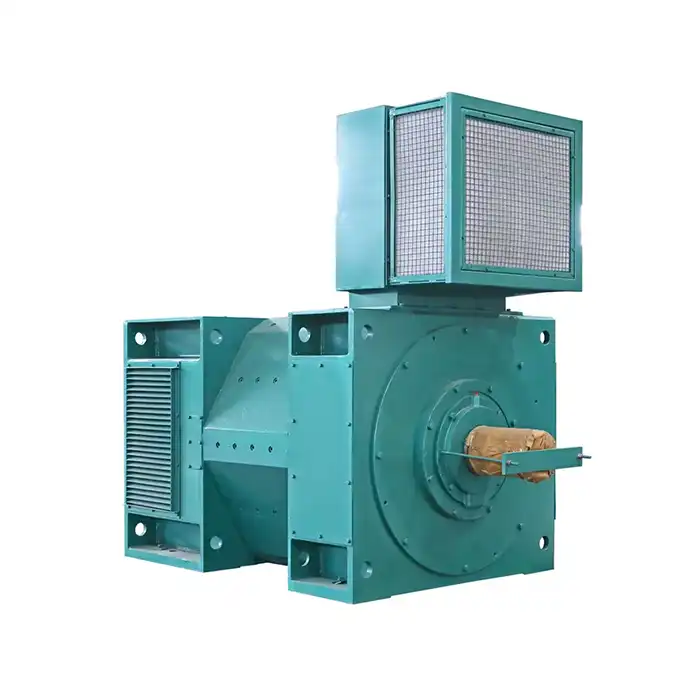
ZSeries:Z
Application:Metallurgical industrial rolling mills, metal cutting machine tools, papermaking, dyeing and weaving, instant brushing, cement, plastic extrusion machinery.
Power range:59-1600kW
Standard: JB/T9577-1999
Define the Application and Duty Before Choosing a DC Motor
Document the Machine, Load, and Environment
We start with the machine, not the catalogue. State kind of load, speed range, armature voltage from your drive, ambient temperature and dust/moisture level. Log instances of beginning, braking, reversing and peak-load as discrete items instead of using a single maximum load figure. Please also note the regular hours of operation. A press that runs for hours at a time is not the same as a machine that jogs and reverses for a whole shift. A complete record also assists a provider in selecting the appropriate dc motor series and model for the application. To determine this, our R&D team will look at your load profile and environmental constraints and provide a model recommendation.
Read Duty Ratings Against the Real Cycle
Duty rating is a measure of the ability of a dc motor to work through a certain cycle without overheating. In continuous operation with frequent starts and repeated overloads, the windings undergo varying heating conditions. Standard-range XCMOTOR machines are certified for 1.5 times rated torque for peak demands, while the high-power Z series class is rated for up to 200% overload under particular reverse roughing-mill working circumstances. These numbers are should be used as stated peak limits, not continuous-load ratings. Right size the motor for the root mean square torque for the whole cycle (and ensure that the peak torque is within the overload limits). The duty classes are defined in IEC 60034-1. Talk its language when you talk with the provider about your needs.
Match Torque and Speed Range to the Machine
Printing, papermaking and web lines need low speed torque and wide speed range. The Z4 series offers 20:1 speed control for constant-torque duty and 4:1 speed regulation for constant-power duty. These ratios are for diverse working situations and should not be understood as absolute ranges of speed. The Z2 series is suited for applications within the parameters stated for it and has a 2:1 speed regulation range in constant power operation. The medium dc motor of Z series is used for large beginning loads. In certain designs the armature and field windings are linked in series, to provide a strong beginning torque. Don’t simply look at no-load RPM, look at the torque-speed curve. A motor may run fast with no load and yet stall at low speed with your real load.
Select Cooling and Thermal Design for Your DC Motor
Match the Cooling Code to the Duty
Cooling affects the life of a DC motor's insulation, bearings and brushes. Our range includes self-ventilated IC0141, forced-air IC06 and IC17, and water cooling ICW37A8, depending on the series. Self-ventilated IC0141 is suitable for dry, clean environments under appropriate operating conditions. However, a shaft-mounted fan provides less airflow at lower motor speeds. Maintaining a constant temperature under continuous high load may require separate forced-air cooling. This is particularly important across a large speed range, since a fan mounted on the shaft delivers less air at low speeds. A lengthy run at low speed and high torque sometimes requires a separate blower. Our engineers choose the approach based on your operating cycle and surroundings. These IC cooling codes are defined in IEC 60034-6, so quote them accurately.
Pick an Insulation Class With Margin
The temperature limit is determined by the insulation system. The dc motors of the Z4 and Z series are Class F, with a thermal class limit of 155°C, while the Z2 series is Class B. Some high-power units employ Class H resin systems with vacuum pressure impregnation. Machines that run long shifts need sufficient thermal resistance and an insulation system suited to their operating conditions. Class F provides a higher thermal class limit than Class B, but the actual service life also depends on operating temperature and other design factors. At your duty cycle, request the temperature-rise data. Then measure winding or housing temperature during a trial run with the actual load and drive.
Balance Enclosure Protection and Airflow
A more protective casing keeps dust away from the dc motor, but may trap heat. Protection ratings range from IP21 and IP22 on the Z2 series to IP21, IP22 and IP23 on the Z4 series and IP21 and IP23 on the Z series. Most of these motors are designed for specified indoor industrial environments. The Z2 series may also be suitable for certain outdoor applications when the environmental and corrosion-protection requirements are met. Make sure to keep vents and fan inlets clean and provide enough space for exhaust air in your machine design. If the facility handles combustible dust or flammable vapors, check whether an explosion-proof enclosure certified to ATEX or IECEx is required. Confirm with the relevant authorities that the certification matches the site's applicable standards.
Compare DC Motor Types and Match the Controller
Choose Between the Z2, Z4, and Z Series
We have three series of dc motors covering a power range from 0.8 kW to 1600 kW. The Z2 series is available in 110 V and 220 V configurations, with a speed range of 600–3000 r/min and a power range of 0.8–200 kW, using shunt excitation. The fourth-generation Z4 delivers 1.5–600 kW at 160 V and 440 V, with additional features compared with the previous Z2 and Z3 generations. The Z series spans 59–1600 kW with shunt, compound or separately excited configurations. We also provide product information for 20 hp and 200 hp motor configurations. The Z4 specifications list 160 V and 440 V configurations, so ask for the precise armature voltage and rated speed when requesting a price quotation.
Match the Drive: Rectifier, SCR, and Digital Control
The controller must be matched to the dc motor voltage, rated current, starting current, speed range, braking and reversing requirements. Z4 and Z series motors work with compatible DC unit supplies or static rectifier supplies, making them suitable for certain older thyristor (SCR) drives and modern digital drives. Z series motors are separately excited and can achieve speed regulation below 2% under varying loads when paired with compatible digital DC speed controllers and operated under specified conditions. You can change the direction of rotation by reversing the appropriate armature or field connections according to the manufacturer's wiring instructions and operating limits. Send us your drive type, armature and field voltage, and current-limit settings, and we will check whether your existing DC bus can be used.
Specify and Test the DC Motor Before Volume Orders
Build a Complete Specification
A complete specification for a dc motor reduces quotation mistakes and makes supplier pricing comparable. List voltage, current, speed, torque, duty, insulation class, cooling code and degree of protection. Include frame size, shaft diameter, keyway, mounting pattern, terminal box location, and bearing type. Many US machines require inch-based drawings, so supply the relevant dimensional drawings in the required measurement system. We modify frame dimensions, shaft extensions, keyways, terminal boxes and mounting provisions according to client designs. Other voltages and speeds may be available to accommodate an existing DC bus. When replacing an existing unit, provide a clear nameplate image and dimensional drawings to make matching faster.
Check Commutator Quality and Sparking
The commutator surface is regularly exposed to electrical contact and may generate small sparks during normal operation. We finish the commutators of DC motors on CNC machines to a Ra 0.4 micron finish and keep the bar-to-bar variation under 0.005 mm. The electrolytic tough-pitch copper segments have an insulation resistance of more than 100 MΩ at 500 V DC and a hardness of 80–120 HV, providing a robust contact surface for the brushes. High power units use silver-bearing copper segments; runout reported below 0.008 mm after 10,000 hours operation. Smooth, well-finished surfaces assist to prevent excessive sparking and brush wear. Get bar-to-bar inspection data from vendors. Brushed motors may still produce minor sparks, thus use authorised equipment while working in hazardous settings.
Validate With Factory and Trial Testing
Each dc motor is subjected to multi-stage electrical tests, dimensional checks, balancing and final inspection. Tests include insulating resistance, no-load, full-load, overspeed and high-potential tests at 2 × rated voltage plus 1000 V AC for 60 seconds. Type testing involves 72-hour runs at 110% of rated load and heat cycling from -10 to +50 °C. We balance rotors to ISO 1940 Grade G2.5 (G6.3 on the 200 hp class) with vibration less than 2.8 mm/s at rated speed. Then do your own test with the real drive and load and record temperature, current and vibration. IEEE 113 provides testing methodologies for DC machines while IEEE 43 provides insulation-resistance testing.
Plan Service, Spare Parts, and Supply for Your DC Motor
Set a Preventive Maintenance Routine
Most dc motor issues can be traced to a short list of causes: electrical difficulties, overload, improper cooling, worn brushes, bearing damage, voltage drop, or misalignment. These problems can be detected early through a routine maintenance program. Check bearings and mountings, clean vents and examine electrical connections. Inspect brushes and the commutator regularly. Monitor current, temperature, vibration and sound. Log values at commissioning as a baseline. A gradual increase in any of these values may indicate a developing problem before it causes an unexpected shutdown. Assign the routine to the maintenance staff and record inspection intervals on the equipment service sheet so that maintenance is not left to individual employees' memory.
Secure Spare Parts and Lead Times
Get your bearings and brushes before you need them. XCMOTOR OEM-quality parts are supplied from certified manufacturers. Each series has its applicable published specifications and standards. The Z2 series references JB1104-68, the Z4 series references GB/T 755 and VDE 0530, and the Z series references JB/T 9577-1999. Confirm the exact standards applicable to the selected model and components with the supplier. We quote 15 days for common setups and 4–6 weeks for the high-power class, with specialized work often adding 2–3 weeks. We guarantee replacement parts availability for more than 15 years on the high-power class, subject to the applicable product and supply conditions. We can arrange delivery by sea, land, air or multimodal transport and provide export documentation. All lead times and delivery obligations should be confirmed in your contract.
Score Suppliers With a Weighted Matrix
The final decision becomes more objective with a weighted matrix. Evaluate application fit, duty capacity, torque and speed, thermal performance, service life, protection grade, controller compatibility, quality consistency, lead time, supply continuity and overall cost. Rate each factor from 1 to 5 according to project priority. Press and paper OEMs often rate speed range and commutator quality highly. Maintenance purchasers consider lead time and direct installation compatibility. Judge vendors by their documented specifications and performance data, not their promotional claims. You also have the opportunity to try a dc motor through our 30-day open-buy period, including the right of return under the applicable terms. We are open seven days a week, including weekends.
Conclusion
A good dc motor selection is based on the machine's actual duty cycle, including starts, reversals, peak torque and speed range under constant-torque or constant-power operation. Then consider cooling. The cooling code, insulation class and enclosure must match the application, and extended low-speed runs may need forced air. The motor type and series must also match the drive, regardless of whether it uses a DC unit supply or a static rectifier supply. Commutator quality, factory testing and trial runs help verify the fit before bulk orders. A maintenance schedule, spare parts, confirmed lead times and a weighted supplier comparison finally make service more predictable. Duty, cooling, and servicing, taken together, determine the performance of a dc motor during its service life, more than voltage or price alone.
FAQ
1. What speed range does a Z4 series dc motor offer?
The Z4 series provides 20:1 speed regulation for constant-torque duty and 4:1 for constant-power duty. These ratios describe its speed-regulation capabilities under different operating conditions, rather than a fixed minimum-to-maximum RPM range. The exact operating speed range depends on the specific motor model, armature voltage, cooling arrangement and drive configuration. For comparison, the Z2 series has a published speed range of 600–3000 r/min. Contact XCMOTOR to confirm the rated speed range of the selected Z4 model.
2. Does my dc motor need forced-air cooling?
Self-fan IC0141 is suitable for dry, clean areas under moderate loads and appropriate operating conditions. Forced air is usually needed for continuous high-load or extended low-speed operations, when the shaft-mounted fan cannot provide sufficient airflow. Larger units may be water-cooled. Send us your duty cycle, load profile and ambient temperature, and we will advise on the appropriate cooling configuration.
3. Can I replace an older dc motor without changing my drive?
Often, yes, provided the armature voltage, field supply, rated current, speed range, mounting and shaft dimensions are compatible. Z4 and Z series motors can be supplied through compatible DC units or static rectifiers. However, compatibility cannot be determined by voltage alone. The controller's current capacity, starting requirements, braking functions and reversing logic must also be checked. Provide the existing motor nameplate, drive model, electrical diagrams and mechanical drawings for examination. Our engineers can assess whether the existing drive can be retained or requires modification.
4. How long does delivery take?
For typical setups we offer a lead time of approximately 15 days, while high-power motor classes generally require 4–6 weeks. Custom work usually takes an additional 2–3 weeks, depending on the technical requirements. Confirm the production schedule and delivery date for your project before placing an order.
5. How much does a DC motor cost?
The price of a dc motor depends on rated power, armature voltage, speed, torque, cooling method, insulation class, protection rating and customization requirements. Shaft dimensions, mounting arrangements and special electrical configurations may also affect the quotation. Provide your technical specifications, application details and drawings to receive an accurate quotation from XCMOTOR.
6. What warranty and spare parts support are available?
Warranty coverage and duration should be confirmed in the quotation or purchase agreement for the specific motor model. Check the warranty period, covered components and applicable service conditions before ordering. XCMOTOR supplies replacement parts, including brushes and bearings, and states that replacement parts for its high-power motor class are available for more than 15 years. Confirm the specific parts-support period and availability for your selected model.
7. Are XCMOTOR DC motors compatible with existing controllers?
Z4 and Z series motors can work with compatible DC unit supplies and static rectifier supplies, including certain SCR and digital DC drive systems. Compatibility depends on armature voltage, rated current, starting current, field excitation, speed regulation, braking and reversing requirements. Provide your existing controller model and electrical specifications so that XCMOTOR engineers can assess whether it can be reused.
Request a DC Motor Recommendation From XCMOTOR
XCMOTOR is a dc motor supplier in Xi'an with 20+ years in power equipment, helping OEM and maintenance teams match the proper series to the task. Please provide your duty cycle, voltage, shaft drawing and cooling requirements to xcmotors@163.com. Our engineers will respond with a Z2, Z4 or Z series suggestion. We provide original components, free shipping subject to applicable conditions, a 30-day open-buy period under the stated terms, and weekend assistance. Full specs motorxc.com.
References
IEC 60034-1: Rotating Electrical Machines – Rating and Performance, 2010
IEC 60034-6: Rotating Electrical Machines – Methods of Cooling (IC Code), 1991
IEEE Std 113: Guide: Test Procedures for Direct-Current Machines, 1985
IEEE Std 43: Recommended Practice for Testing Insulation Resistance of Electric Machinery, 2013
NEMA MG 1: Motors and Generators, 2021
Electric Motors and Drives: Fundamentals, Types and Applications (Hughes and Drury), 2019