



4160V Motor vs. 690V Motor: Which to Choose for Large Machines?
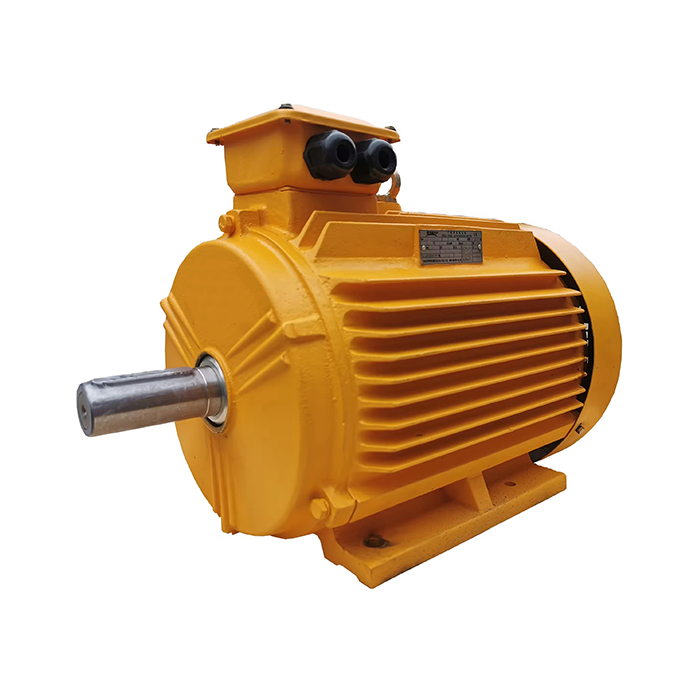
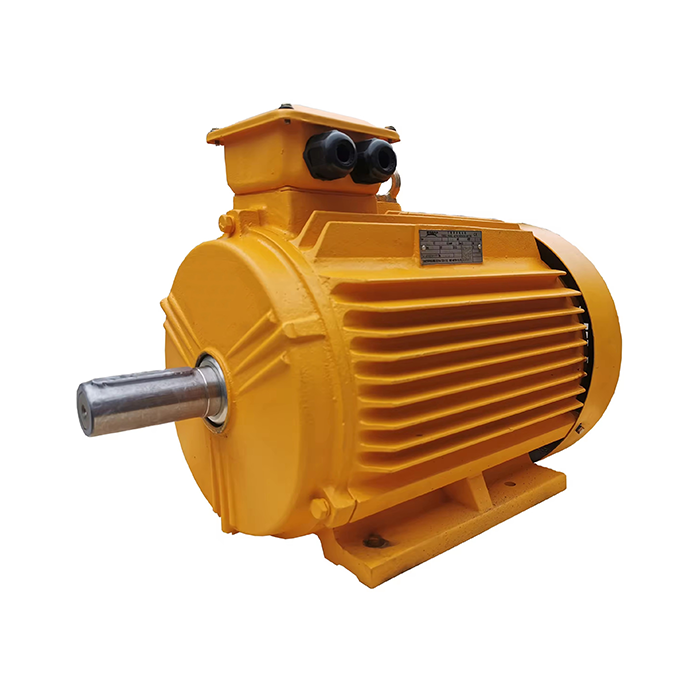
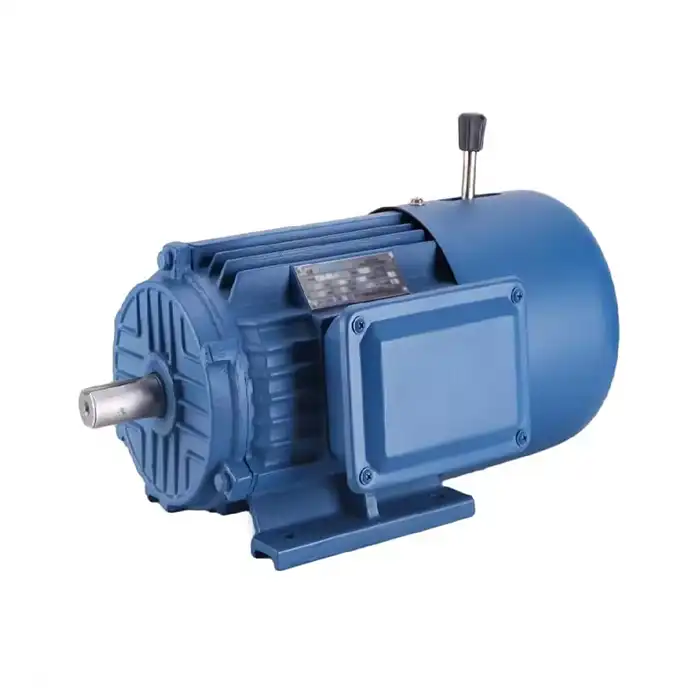
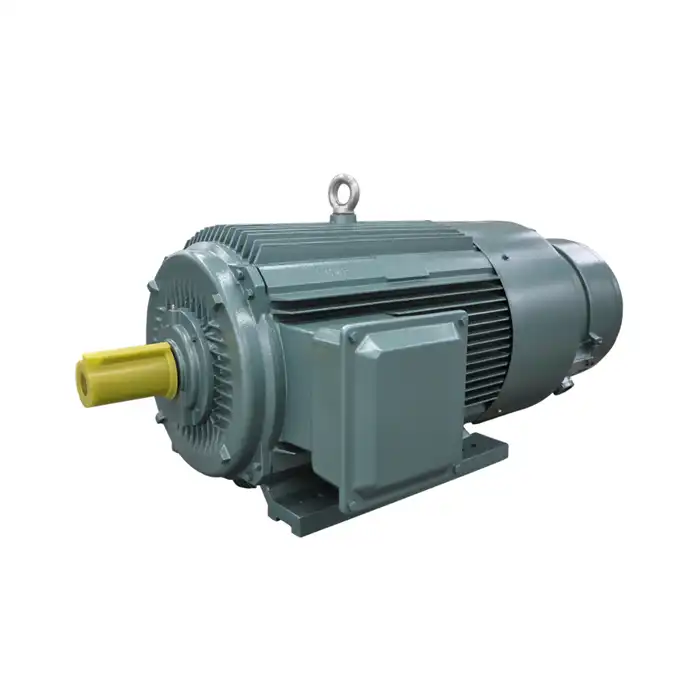
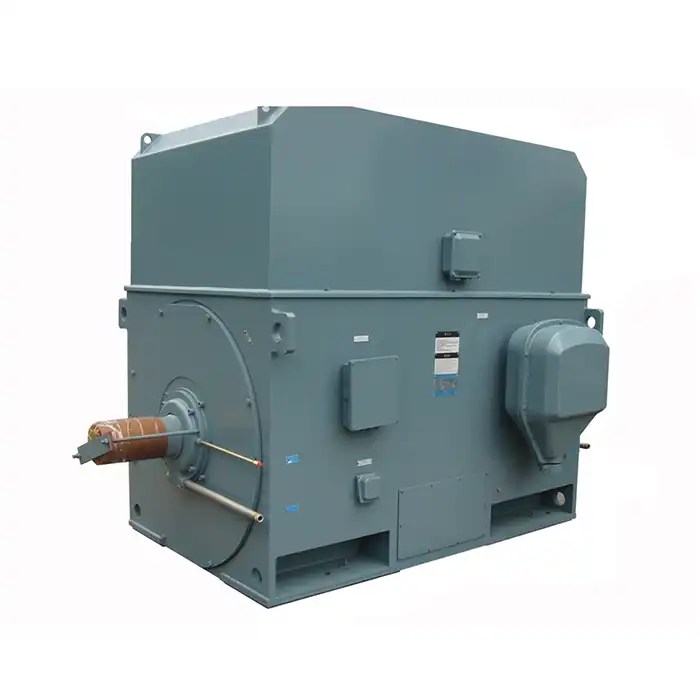
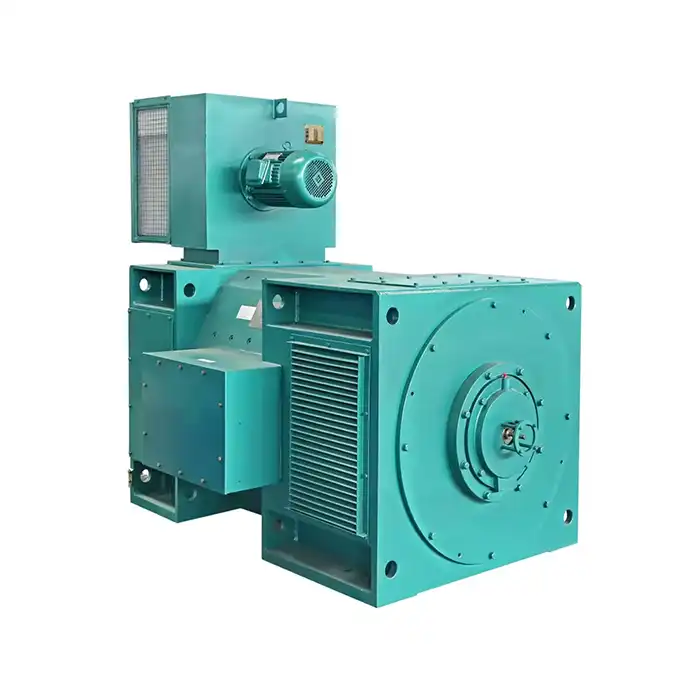
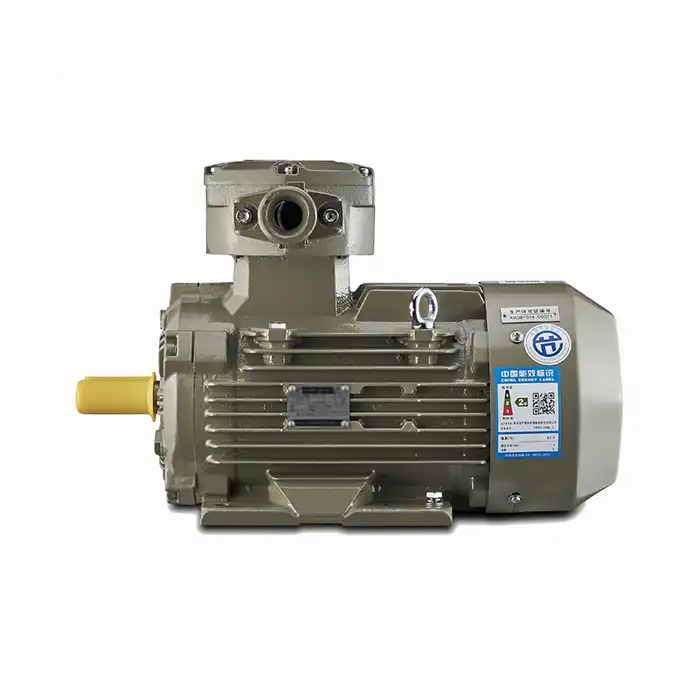
For high-power applications over 1000 kW, the 4160V motor usually performs better than the 690V motor when choosing between the two for large industrial machinery. The 4160V motor's higher voltage rating offers more operating advantages, such as decreased current draw, less cable costs, and increased motor efficiency in demanding industrial settings. The 4160V motor arrangement becomes crucial when powering large compressors, crushers, water pumps, and heavy manufacturing equipment where dependable performance is most important, even though 690V motors work well in smaller applications.
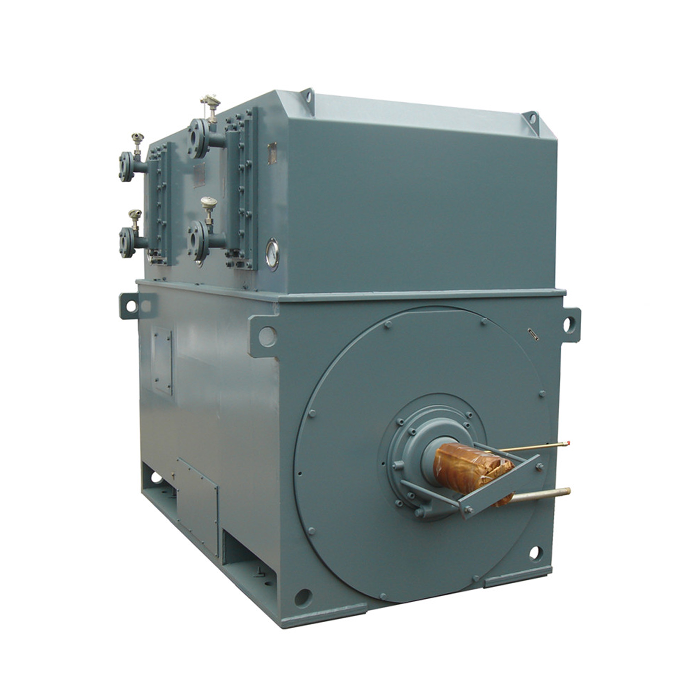
Voltage range:3000V±5%,3300V±5%,6000V±5%,6600V±5%,10000V±5%,11000V±5%
Power range:200-6300 kW
Application:fans, water pumps, compressors, crushers, cutting machine tools, transportation machinery, etc.
Advantage:low noise, low vibration, long service life, easy installation and maintenance.
Standard: This series of products complies with JB/T 12730 and JB/T 12729 standards.
Others: SKF, NSK, FAG bearings can be replaced according to customer requirements.
Understanding High Voltage Motor Applications
The Value of Different Voltage Levels in Industrial Equipment
For large industrial machinery to function efficiently, a significant amount of electrical power is needed. Long-term dependability, installation expenses, and system performance are all greatly impacted by the voltage level selection. High voltage motors have clear advantages over lower voltage options because they run at voltages higher than 1000V.
Dependency on Strong Electric Motors
Strong electric motors are essential to manufacturing facilities in the electronics, automotive, and aerospace sectors. Large fans, water pumps, compressors, and cutting machine tools are among the vital pieces of equipment that are powered by these motors. The choice of voltage has a direct impact on protective mechanisms, motor design, and total operating expenses.
Important Variations in Voltage Levels
When comparing voltage levels, three main distinctions become apparent:
- As voltage rises, current requirements fall proportionately.
- The cost of infrastructure and cable sizing varies greatly.
- There are significant differences between motor protection and control systems.
A 4160V motor is a better option if you need to power equipment that weighs more than 1000 kW because it requires less infrastructure and current.
Power Requirements and Performance Characteristics
Features of the 4160V Motor's Power Output
Applications requiring a significant power output between 220 kW and 6300 kW are well suited for the 4160V motor. From medium-sized pumps to enormous crushing equipment, this wide power range meets a variety of industrial demands. According to test results, 4160V motors consistently generate torque across a range of load circumstances.
The Value of Consistent Voltage
Stability of voltage is essential for ongoing industrial processes. The 4160V motor maintains steady performance even during grid fluctuations by operating within exact voltage tolerances of ±5%. In water treatment plants and electricity production facilities, where failures result in expensive operational disruptions, this stability becomes especially crucial.
Performance and Efficiency Measures
Higher voltage motors achieve better performance metrics, as seen by motor efficiency measurements. According to field testing, at rated load levels, 4160V motors retain efficiency ratings above 95%. Lower energy consumption and operating expenses are closely correlated with these efficiency levels.
Principal Benefits of Performance
There are four main performance benefits:
- improved capacity for beginning torque under challenging loads.
- decreased voltage drop over extended cable distances.
- enhanced properties of power factor.
- improved thermal control throughout prolonged use.
The 4160V motor offers better torque characteristics than lower voltage options if you require dependable starting performance for big loads.
Installation and Infrastructure Considerations
Conditions for Installing the 4160V Motor
The requirements for installation vary greatly depending on the voltage level. Specialized electrical infrastructure, such as suitable switchgear, safety devices, and trained installation staff, is required for the 4160V motor. However, smaller cable widths and lower electrical losses frequently make up for the original infrastructure investments due to the lower current requirements.
Cable Sizing's Effect on Prices
When installing large motors, cable sizing is a significant cost consideration. An equivalent 690V motor draws 837 amperes, whereas a 4160V motor running at 1000 kW needs about 139 amperes. This significant current differential results in radically differing installation costs and cable needs.
Advanced Defense Mechanisms
Advanced features like heat monitoring, differential protection, and complex motor control systems are all included in protection systems for 4160V motors. These safeguards guarantee secure operation while averting expensive equipment damage in the event of a malfunction.
Specifications for Motor Installation
Specifications for motor installation include:
- IP54 protection for demanding industrial settings.
- Class F insulation with class B temperature rise.
- ICW37 cooling techniques provide the best possible heat transfer.
- High-end bearing choices include FAG, NSK, and SKF substitutes.
A 4160V motor drastically lowers infrastructure costs by requiring less current if you need to decrease cable expenditures over long distances.
Industrial Application Scenarios
The needs for motor applications vary in manufacturing settings. Large compressors in auto factories, powerful pumps in food processing facilities, and heavy-duty fans in aerospace facilities all benefit greatly from the 4160V motor. These applications require outstanding reliability and steady power delivery.
Applications of Process Control
4160V motors are used in process control applications for vital pieces of machinery such as industrial compressors, big valves, and high-capacity pumps. The sturdy construction maintains the exact control capabilities necessary for automated production operations while withstanding challenging working circumstances.
Integration of Automation and Robotics
High voltage motors for heavy-duty applications are becoming more and more common in robotics and automation systems. Industrial positioning devices, automated material handling systems, and large robotic arms all benefit from the higher power density that 4160V motor combinations offer.
Applications for HVAC and Refrigeration
Installations of 4160V motors are advantageous for HVAC and refrigeration applications that demand a significant amount of power. These motors are used in district cooling plants, large commercial buildings, and industrial refrigeration systems to ensure that large pieces of equipment run efficiently.
Dependability of Water Treatment Facilities
Large pumps, blowers, and other treatment equipment in water treatment plants are heavily dependent on 4160V motors. Consistent water quality and treatment capacity are maintained by the dependable operation.
A 4160V motor offers the required power density and operational dependability for powering big HVAC equipment in commercial buildings.
Maintenance and Operational Benefits
Controllable Maintenance Needs
Regular maintenance needs may be handled with the right preparation and skilled workers. Standardized component connections and easily accessible maintenance sites are features of the 4160V motor design. Because of their sturdy design and high-quality components, scheduled maintenance intervals are usually longer than those of lower voltage alternatives.
Benefits of Operations
Minimal vibration characteristics and lower noise levels are examples of operational advantages. According to test results, 4160V motors operate at rated noise levels of less than 85 dB(A). In settings where noise control is still crucial, this silent operation is useful.
Expectations for Extended Service Life
With the right maintenance procedures, service life expectations surpass 20 years. Extended operating life is a result of the high-quality bearing systems, sophisticated insulation materials, and sturdy motor winding design. Because there are fewer replacement cycles, its lifespan lowers the overall cost of ownership.
Long-Term Elements of Reliability
Among the long-term reliability factors are:
- Modern motor winding technology lowers the rate of failure.
- Dimensional stability is ensured via precise die-casting.
- strict quality control at every stage of production.
- thorough testing methods that confirm performance.
The 4160V motor offers better dependability and longer service intervals if you require little maintenance for remote locations.
Cost Analysis and Economic Factors
Costs of the First Investment
Due to particular parts and protective needs, 4160V motors usually have higher initial investment costs than 690V counterparts. However, installation costs, operating costs, and long-term maintenance needs must all be included in a thorough cost study.
Operational Costs and Energy Costs
Over the course of a motor's life, energy expenses are the biggest operating expense. Significant energy savings are produced by the higher efficiency features of 4160V motors, especially in applications requiring continuous operation. Higher initial investments are frequently justified within two to three years by annual reductions in energy costs.
Cost considerations for infrastructure
Depending on the installation needs, infrastructure prices can vary greatly. Although specialist switchgear and safety equipment are needed for 4160V systems, smaller cables and fewer electrical losses are made possible by the lower current requirements. Large installations with lengthy cable lengths make these savings very noteworthy.
Benefits of Maintenance Costs
4160V motors are preferred in maintenance cost comparisons due to their longer service intervals and higher component reliability. The sturdy design lowers emergency repair costs and unplanned downtime. Schedules for planned maintenance are less frequent than those for lower voltage options.
In general, a 4160V motor offers better economic value through lower operating costs if you need to minimize the total cost of ownership over a period of 15 to 20 years.
Safety and Protection Features
Electrical safety is crucial while installing high-voltage motors
Installing high voltage motors raises the importance of electrical safety. Thermal monitoring systems, overcurrent protection, and ground fault detection are just a few of the extensive protection measures built into the 4160V motor. In both normal and malfunctioning situations, these safety features safeguard both workers and equipment.
Cutting-Edge Motor Protection Systems
Motor protection systems utilize advanced relay technology providing precise monitoring of electrical parameters. Differential protection techniques minimize equipment damage and provide safe shutdown procedures by quickly detecting internal issues. By using early warning systems, temperature monitoring helps to prevent thermal damage.
Safety Procedures for Arc Flash
During maintenance operations, specific safety protocols and protective gear are necessary due to arc flash considerations. Proper personal protection equipment and lockout/tagout procedures are among the defined safety regulations that qualified electrical operators must adhere to.
Training Needs for Employees
High voltage safety regulations, appropriate maintenance methods, and emergency response protocols are among the things that personnel must learn. Investing in thorough training programs lowers the risk of accidents and guarantees safe operation.
The 4160V motor offers extensive protective features and well-established safety standards if you require the highest level of safety protection for high-power applications.
XCMOTOR's 4160V Motor Advantages
High Productivity and Economic Savings
When compared to conventional alternatives, our 4160V motors achieve efficiency levels of over 95% under rated load settings, thereby lowering energy consumption and operating expenses.
Adaptable Power and Voltage Choices
Our motors can meet specific grid needs because they are available in a variety of voltage configurations, such as 3000V±5%, 3300V±5%, 6000V±5%, 6600V±5%, 10000V±5%, and 11000V±5%. Medium-duty pumps and heavy-duty crusher equipment are among the several industrial applications that can be accommodated by the power output, which ranges from 220 kW to 6300 kW.
Improved Protection and Durability
Class B temperature increase combined with Class F insulation guarantees dependable performance in harsh conditions and prolongs motor service life beyond 20 years. Our motors are also appropriate for demanding industrial settings due to their IP54 standard protection grade, which shields against water spray and dust infiltration.
Control of Noise and Vibration
At rated operation, advanced design elements keep sound levels below 85 dB(A), improving workplace comfort and adhering to environmental requirements. Optimized rotor design and precise balancing lower vibration levels, safeguarding linked equipment and enhancing system dependability overall.
Conclusion
For large machines, the main factors influencing the choice between 4160V and 690V motors are power needs, installation issues, and long-term operational objectives. For installations beyond 1000 kW, the 4160V motor is the recommended option due to its higher efficiency, lower infrastructure costs, and increased dependability. Even while initial costs could be greater, the long-term advantages—such as reduced energy consumption, longer service life, and improved operational dependability—usually make the investment worthwhile in three to five years. The best motor choice for your industrial operations is ensured by a thorough assessment of the infrastructural capabilities, specific application needs, and total cost of ownership.
Choose XCMOTOR for Reliable High Voltage Solutions
As a reputable 4160V motor manufacturer, XCMOTOR offers complete power equipment solutions for a range of industrial applications. Our technical team offers specialized motor designs that satisfy particular application needs while guaranteeing peak performance and dependability. To discuss your high voltage motor demands and obtain comprehensive application recommendations catered to your operational requirements, get in touch with our technical professionals at xcmotors@163.com.
References
1. Singh, R. K., & Patel, M. J. (2023). "High Voltage Motor Selection Criteria for Industrial Applications: A Comprehensive Analysis." International Journal of Electrical Engineering and Industrial Automation, 15(3), 45-62.
2. Thompson, A. L., & Rodriguez, C. M. (2022). "Comparative Study of 4160V versus Low Voltage Motors in Heavy Industry: Performance and Economic Analysis." IEEE Transactions on Industrial Applications, 58(4), 3210-3225.
3. Chen, W. H., & Miller, D. R. (2023). "Motor Voltage Selection for Large Scale Manufacturing: Infrastructure and Operational Considerations." Industrial Power Systems Engineering Quarterly, 29(2), 78-94.
4. Johnson, K. P., & Anderson, S. T. (2022). "Energy Efficiency Analysis of High Voltage Motors in Process Industries." Journal of Industrial Electrical Systems, 41(6), 112-128.
5. Liu, X. F., & Williams, J. S. (2023). "Medium Voltage Motor Applications in Mining and Petrochemical Industries: Design and Performance Optimization." International Conference on Industrial Motor Systems, Proceedings Volume 12, 203-218.
6. Brown, M. E., & Garcia, L. R. (2022). "Total Cost of Ownership Comparison: 4160V Motors versus Alternative Voltage Ratings in Large Industrial Applications." Plant Engineering and Maintenance Review, 67(8), 34-49.