



What Is a Water Cooled Electric Motor?
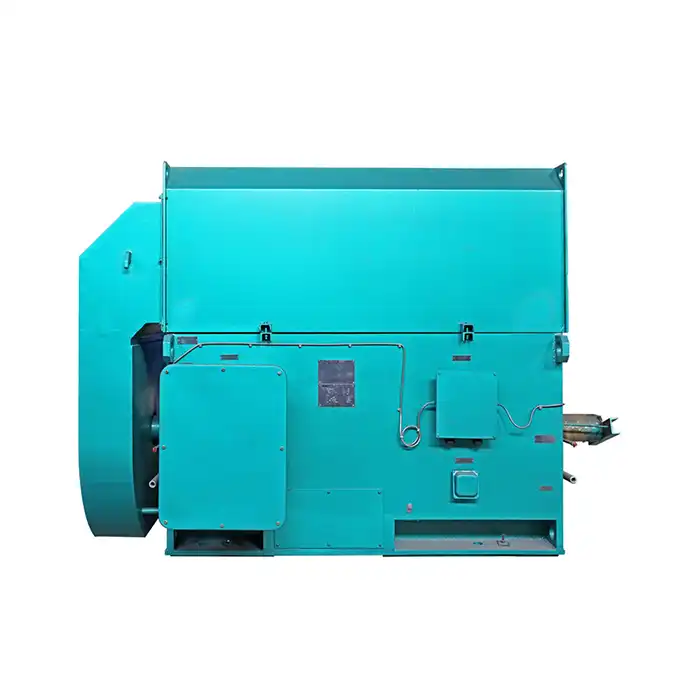
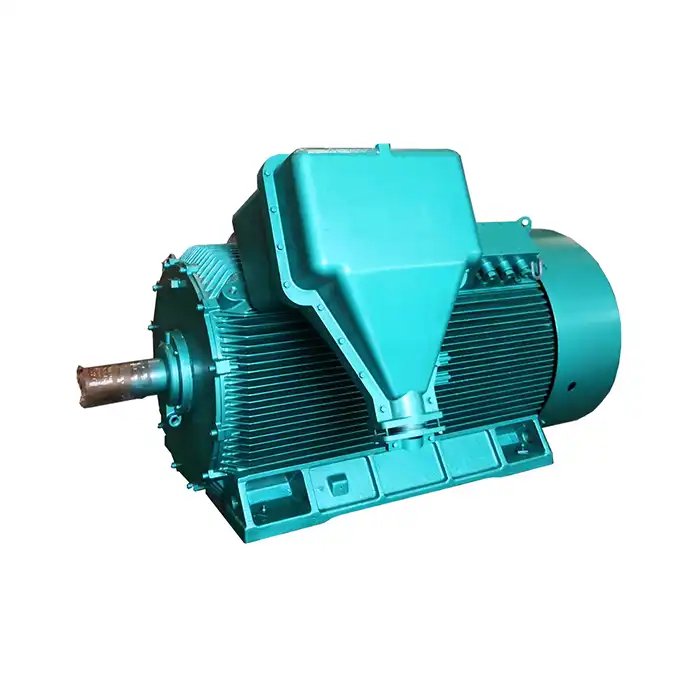
A water cooled electric motor is a specialized electrical machine that employs fluid coolant, ordinarily water or water-based solutions, to expel abundance warm produced during operation. Not at all like conventional air-cooled engines that depend on fans and encompassing air circulation, these engines include integrated cooling channels or water jackets that permit coolant to flow specifically around basic components. This progressed warm administration framework empowers higher control thickness, moved forward execution unwavering quality, and amplified operational life in demanding mechanical situations where conventional cooling strategies demonstrate inadequacy.

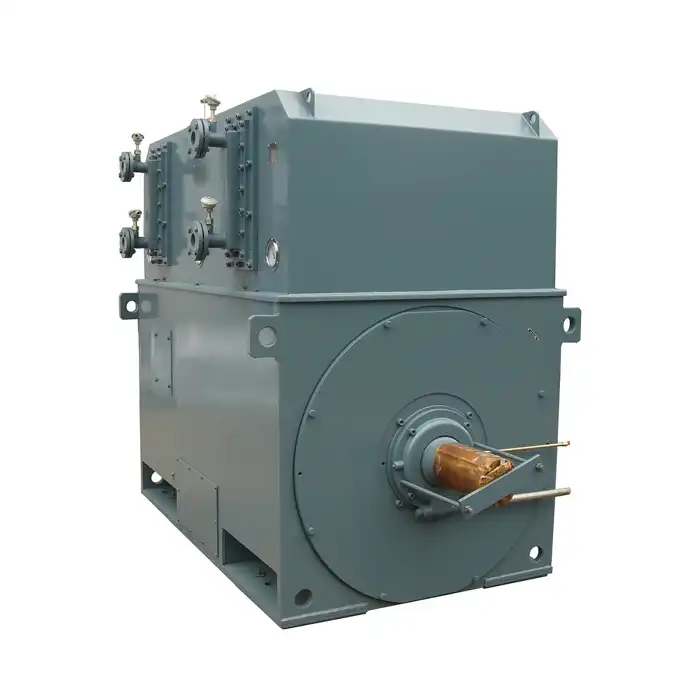
Series:YKS
Protection level:IP54
Voltage range:3000V±5%,3300V±5%,6000V±5%,6600V±5%,10000V±5%,11000V±5%
Power range:220-6300 kW
Application:fans, water pumps, compressors, crushers, cutting machine tools, transportation machinery, etc.
Advantage:low noise, low vibration, long service life, easy installation and maintenance.
Standard: This series of products complies withGB/T 1032 and GB/T 13957 standards.
Others: SKF, NSK, FAG bearings can be replaced according to customer requirements.
Understanding Water Cooled Electric Motor Technology
Water cooled electric motors speak to a noteworthy progression in mechanical engine plan, tending to the developing request for compact yet effective electrical machines. These engines consolidate modern cooling circuits that circulate coolant through deliberately situated channels inside the engine block. The cooling framework regularly comprises channel and outlet ports, inner water coats encompassing the stator, and, in some cases, rotor cooling entries in bigger units.
The principal rule behind water cooling lies in the prevalent heat transfer properties of fluids compared to gases. Water can assimilate and exchange heat around 25 times more successfully than air, making it a perfect medium for expelling heat from engine components. This upgraded cooling capacity permits producers to plan engines with higher control evaluations while keeping compact frame factors.
Modern water cooled engine plans regularly include precision-engineered cooling entries that guarantee uniform temperature dispersion throughout the engine structure. The cooling framework keeps up ideal working temperatures indeed, beneath persistent heavy-load conditions, anticipating warm push and component corruption that commonly influences air-cooled alternatives.
The integration of water cooling innovation requires cautious thought of fixing frameworks to anticipate coolant spillage and ensure electrical components. Progressed fixing advances, counting O-rings, gaskets, and mechanical seals, guarantee solid operation whereas keeping up the motor's assurance rating.
Industrial Challenges Solved by Water Cooled Motors
Thermal Management Challenges
Manufacturing offices across different divisions confront expanding pressure to maximize efficiency while minimizing hardware impression and operational costs. Conventional air-cooled engines regularly battle to meet these requests, especially in high-temperature situations or applications requiring nonstop heavy-duty operation. Warm buildup remains one of the most critical challenges in mechanical engine applications. Over-the-top temperatures can lead to cover breakdown, bearing disappointment, and decreased attractive effectiveness. Air-cooled engines depend on surrounding ambient temperature and satisfactory ventilation, making them powerless to natural conditions and space limitations.
Water Cooling Performance Advantages
Water cooled electric motors address these challenges by giving steady warm administration in any case of surrounding conditions. The fluid cooling framework keeps up steady working temperatures, indeed in situations where temperatures become extremely lifted or ventilation is confined. This warm steadiness permits engines to support nonstop heavy-duty operation without the execution corruption commonly seen in air-cooled choices. The result is improved unwavering quality, expanded component life expectancy, and more unsurprising upkeep intervals over demanding mechanical applications.
Spatial and Acoustic Benefits
Space limitations in advanced fabricating offices create extra complications that water cooling successfully settle. Air-cooled engines require critical clearance for the wind stream and regularly require larger than average outlines to suit cooling blades and ventilation frameworks. Water cooling disposes of these spatial necessities, permitting for more compact establishments and made strides office format optimization. Furthermore, commotion contamination concerns are significantly decreased, as water cooling frameworks work with negligible acoustic outflows compared to conventional cooling fans, contributing to calmer work situations and decreased noise-related stretch on personnel.
Core Features and Advanced Functionality
Water cooled electric motors incorporate several distinctive features that set them apart from conventional alternatives.
1. The water jacket design represents the most critical component, featuring precisely machined channels that surround key motor elements. These channels ensure optimal coolant flow distribution while maintaining structural integrity under operating pressures.
2. Temperature control frameworks in progressed water-cooled engines incorporate sensors and observing gear that track coolant temperature, stream rate, and framework weight. These checking capabilities empower prescient support techniques and offer assistance to anticipate unforeseen disappointments through early discovery of cooling system irregularities.
3. The rotor and stator plans in water cooled engines frequently include upgraded attractive materials and optimized geometries that take advantage of made strides warm administration. Lower working temperatures permit higher current densities and attractive flux levels, resulting in progressed power-to-weight ratios.
4. Bearing frameworks in water-cooled engines benefit from steady warm conditions, diminishing warm extension and withdrawal cycles that contribute to untimely wear. Numerous plans consolidate fixed bearing courses of action that avoid coolant defilement, while guaranteeing long-term reliability.
5. Electrical associations and terminal courses of action require uncommon consideration in water cooled plans. Fixed intersection boxes and specialized cable passage frameworks avoid dampness entrance while allowing warm development of conductors. These highlights guarantee solid electrical execution all through the motor's operational life.
Technical Architecture and Engineering Principles
The engineering behind water cooled electric motor systems involves complex thermal dynamics and fluid mechanics principles. Coolant circulation patterns must be optimized to ensure uniform temperature distribution while minimizing pressure losses and flow restrictions.
Heat exchange calculations play a vital part in deciding cooling system capacity and design parameters. Engineers must consider components counting, coolant properties, stream rates, temperature differentials, and warm era designs within the engine structure. These calculations guarantee satisfactory cooling execution over the whole working range.
Thermal administration frameworks regularly join warm exchangers or cooling towers to expel heat from the circulating coolant. The determination of outside cooling hardware depends on component count encompassing conditions, accessible utilities, and establishment requirements.
Materials determination for water-cooled engine components requires cautious thought of erosion resistance, warm conductivity, and mechanical properties. Stainless steel, brass, and specialized combinations are commonly utilized for cooling circuit components to guarantee long-term unwavering quality and avoid contamination.
Sealing innovation speaks to a basic perspective of water cooled engine design. Different fixing layers, counting essential and auxiliary seals, give repetitive security against coolant spillage. Progressed fixing frameworks consolidate materials that keep up adaptability over wide temperature ranges whereas standing up to chemical degradation.
Key Advantages and Performance Benefits
Water cooled electric motors offer numerous advantages that make them attractive for demanding industrial applications.
1. Enhanced heat dissipation capabilities allow these motors to operate at higher power levels within compact enclosures, providing superior power density compared to air-cooled alternatives.
2. Operational unwavering quality moves forward altogether with water cooling due to decreased heat transfer on engine components. Lower working temperatures amplify separator life, diminish bearing wear, and minimize attractive debasement. This upgraded unwavering quality translates to decreased support requirements and moved forward framework uptime.
3. Environmental flexibility speaks to another critical advantage. Water-cooled engines keep up reliable execution regardless of surrounding temperature varieties, humidity levels, or airborne contaminants that can influence air-cooled choices. This flexibility makes them appropriate for cruel mechanical situations counting foundries, steel plants, and chemical handling facilities.
4. Energy proficiency benefits result from optimized warm administration and decreased cooling parasitic misfortunes. Whereas air-cooled engines require vitality to work cooling fans, water cooled frameworks can utilize existing plant cooling water supplies, possibly lessening generally vitality consumption.
5. Noise diminishment capabilities make water cooled engines perfect for applications where acoustic outflows must be minimized. The disposal of cooling fans and diminished vibration levels contribute to calmer operation, making strides in work environment conditions and empowering establishment in noise-sensitive areas.
Limitations and Important Considerations
Water cooled electric motors, while offering significant advantages, also present certain limitations and considerations that must be evaluated during selection and installation.
1. The complexity of cooling systems introduces additional components that require maintenance and monitoring, including pumps, heat exchangers, and coolant treatment systems.
2. Initial capital costs for water cooled motors typically exceed those of comparable air-cooled units due to the additional cooling system components and engineering complexity. However, these costs are often offset by improved reliability, reduced maintenance requirements, and enhanced performance capabilities.
3. Coolant quality management becomes critical for long-term reliability. Water treatment systems may be necessary to prevent corrosion, scaling, and biological growth within cooling circuits. Regular monitoring of coolant chemistry and periodic system flushing help maintain optimal performance and prevent damage.
4. Installation requirements for water cooled motors include provisions for coolant supply and return lines, drainage systems, and access for maintenance activities. These requirements may complicate retrofits in existing facilities and must be considered during initial planning phases.
5. Temperature control becomes more complex with water cooling systems, particularly in applications with varying load conditions. Proper system design must account for thermal cycling and ensure adequate cooling capacity across all operating conditions while preventing overcooling that could lead to condensation issues.
Target Applications and Ideal Use Cases
Water cooled electric motors excel in applications where traditional cooling methods prove inadequate or impractical.
1. Steel mills and metal processing facilities represent ideal environments due to high ambient temperatures, space constraints, and continuous heavy-duty operation requirements. Rolling mills, continuous casting equipment, and material handling systems benefit significantly from water cooling technology.
2. Power generation facilities, including both conventional and renewable energy installations, utilize water cooled motors for critical applications such as circulating pumps, cooling tower fans, and generator excitation systems. The reliable cooling performance ensures consistent operation despite varying ambient conditions and load demands.
3. Petrochemical and chemical processing industries rely on water cooled motors for pumps, compressors, and agitators handling hazardous or high-temperature materials. The enhanced reliability and reduced maintenance requirements are particularly valuable in these safety-critical applications.
4. Mining operations present challenging conditions including high dust levels, extreme temperatures, and limited ventilation that make air cooling difficult. Water cooled motors provide reliable operation for conveyor systems, crushers, and processing equipment in underground and surface mining applications.
5. Marine applications benefit from the compact design and reliable operation of water cooled motors. Ship propulsion systems, deck machinery, and offshore platform equipment utilize these motors for their ability to operate in corrosive environments while maintaining high power density.
Conclusion
Water cooled electric motors represent a mature yet continuously evolving technology that addresses critical challenges in modern industrial applications. The combination of enhanced thermal management, improved power density, and reliable operation makes these motors increasingly valuable as industries pursue higher efficiency and reduced environmental impact. Advances in materials science, sealing technology, and thermal management systems continue to expand the capabilities and applications of water cooling technology. The growing emphasis on energy efficiency and environmental sustainability positions water cooled motors as essential components in future industrial systems.
Frequently Asked Questions
Q1: How much maintenance do water cooled electric motors require compared to air-cooled models?
A: Water cooled electric motors generally require similar electrical maintenance as air-cooled motors, but include additional cooling system maintenance. Regular tasks include checking coolant levels, inspecting seals for leakage, and monitoring coolant quality. The elimination of cooling fans reduces mechanical maintenance requirements, often resulting in comparable or reduced overall maintenance needs.
Q2: What type of water quality is required for optimal motor performance?
A: Water quality requirements depend on the specific motor design and cooling circuit materials. Generally, treated water with controlled pH levels, low mineral content, and corrosion inhibitors provides optimal performance. Many installations use closed-loop cooling systems with heat exchangers to maintain water quality and prevent contamination.
Q3: Can water cooled electric motors operate in freezing conditions?
A: Water cooled electric motors can operate in freezing conditions with appropriate antifreeze solutions or heating systems to prevent coolant freezing. System design must account for thermal expansion and ensure adequate freeze protection. Some installations use glycol-based coolants or heated enclosures to maintain operation in extreme cold conditions.
Partner with XCMOTOR for Superior Water Cooled Electric Motor Solutions
XCMOTOR specializes in delivering high-performance water cooled electric motor systems engineered for demanding industrial applications. As a trusted water cooled electric motor manufacturer, we combine advanced cooling technology with robust construction to provide reliable solutions for your critical operations. Our experienced engineering team works closely with customers to develop customized solutions that meet specific application requirements while optimizing performance and efficiency. Contact us at xcmotors@163.com to discuss your project needs and discover how our water cooling expertise can enhance your industrial processes.
References
1. Chapman, Stephen J. "Electric Machinery Fundamentals, 5th Edition." McGraw-Hill Education, 2012.
2. Boldea, Ion, and Syed Nasar. "Electric Drives, Third Edition." CRC Press, 2016.
3. Miller, T.J.E. "Electronic Control of Motors." Newnes, 2002.
4. Hanselman, Duane C. "Brushless Permanent Magnet Motor Design, 2nd Edition." The Writers' Collective, 2003.
5. Krause, Paul C., Oleg Wasynczuk, and Scott D. Sudhoff. "Analysis of Electric Machinery and Drive Systems." IEEE Press, 2013.
6. Hughes, Austin, and Bill Drury. "Electric Motors and Drives: Fundamentals, Types and Applications, 4th Edition." Newnes, 2013.